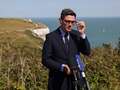
Mark Carney signals austerity as Canada balances defence spending and cuts

Mark Carney has informed Canadians to brace for austerity measures, and his finance minister has warned of “tough choices” in the coming months, as the government strives to balance near-record defence spending, cuts to government programs, and a trade conflict with the United States.
Carney, who transitioned from a central banker and economist to a politician, has been meeting with senior ministers in preparation for the fall budget and hinted that cuts were forthcoming within the federal bureaucracy.
“It’s an austerity and investment budget at the same time. And that is possible if we’re disciplined,” he stated, adding that there would be no cuts to healthcare spending, education transfers, or individual transfers.
In remarks critical of his predecessor, Justin Trudeau, Carney mentioned that the rate of government spending was excessive and surpassed the growth of Canada’s economy—a view shared by senior cabinet ministers who also held top-level positions under the previous prime minister.
“Will there be tough choices to make? Definitely. Is the nation ready? I would say yes. I mean, Canadians have elected us to do things differently,” the finance minister, François-Philippe Champagne, commented on Thursday regarding the “leaner” federal workforce he and Carney envisioned.
“We said we’re going to spend less so we can invest more. And you know, people understand that. My mother understands that.”
Meanwhile, Carney has promised a significant boost in defense spending and faster development of major infrastructure projects—both requiring billions in government expenditure. In June, Carney stated that Canada would achieve NATO’s 2% military expenditure target this fiscal year, five years ahead of his previously announced schedule.
“One of the reasons that the Liberals have become known as the ‘natural governing party of Canada’ is because they tend to adjust their policies toward wherever the voters are going and have less of an ideological core than a right-leaning party like the Conservatives or a left-leaning party like the New Democrats,” said Elizabeth McCallion, a professor of political science at the University of Toronto. “Their main capability is being able to straddle that center line to wherever the voters are most interested, capturing those votes and sufficient votes to gain seats.”
McCallion stated that the recent focus on austerity and the sharp departure from Trudeau’s spending on progressive programs “is not surprising” because the party “acts like a chameleon” to capitalize on what voters desire at the moment.
These policy shifts have posed challenges for Carney, however.
Running April’s federal election on a combative policy that vowed to counter the threat from Donald Trump, Carney has had to confront the reality that the American and Canadian economies are deeply intertwined.
“There’s a dichotomy within his image of this person who’s going to fight for Canada versus someone who won’t exacerbate an inflammatory situation,” she remarked. “Carney is trying to walk this fine line between someone who will fight, which is what Canadians wanted, and then being the person who’s not going to, you know, have inflammatory policies and worsen things by fighting back too aggressively.”
In August, Carney announced that his government would remove a handful of retaliatory tariffs as a gesture of goodwill towards the US while the two sides worked to finalize a trade deal.
Jean-Marc Léger, a prominent Canadian pollster, was invited by the Liberals to speak with ministers and told reporters that tariffs had declined in importance among Canadians.
“Last year, they were the No 1 issue, and that’s one of the reasons this government was elected,” Léger stated. “Today, it’s changed. Now, they only rank fourth.”
Léger mentioned the economy was a central issue among voters, and that Carney’s team was trying to make it the “center” of their government.
In addition to attempting to reconcile seemingly contradictory promises to save and spend, Carney also appears to be seeking a balance in his relations with Trump, whose threats to Canadian sovereignty defined the prime minister’s election.
Eyebrows were raised when Carney invited Kevin Roberts, the president of the Heritage Foundation, a right-wing thinktank with close ties to the White House, to address the ministerial meeting. The Heritage Foundation was a key architect of Project 2025, a proposal that envisioned an ultra-conservative reshaping of the US federal government.
Roberts canceled his appearance, but not before the invitation stirred controversy within the Liberals.
“It’s an interesting strategy to kind of invite the opponent into your fold, and try and understand them a little better,” said McCallion. “Because when it comes to figuring out what the White House wants, it increasingly feels challenging to determine where the goalposts are. Maybe talking to the Project 2025 team will help with understanding what is a genuine demand and what is a distraction?”

Head of Investigations
Read more similar news:
Comments:
comments powered by Disqus