Faces in the crowd: the chilling tech Iran uses to hunt its enemies

As they bomb Iran, Donald Trump and Benjamin Netanyahu are calling on its people to rise up against the dictatorial regime, which is shaken but still standing. Iranian authorities have a sophisticated weapon for monitoring the population: a powerful Russian facial recognition software — acquired in complete secrecy. Thanks to a data leak from Russian and Iranian companies, Forbidden Stories and its partners reveal the workings of this mass surveillance system.
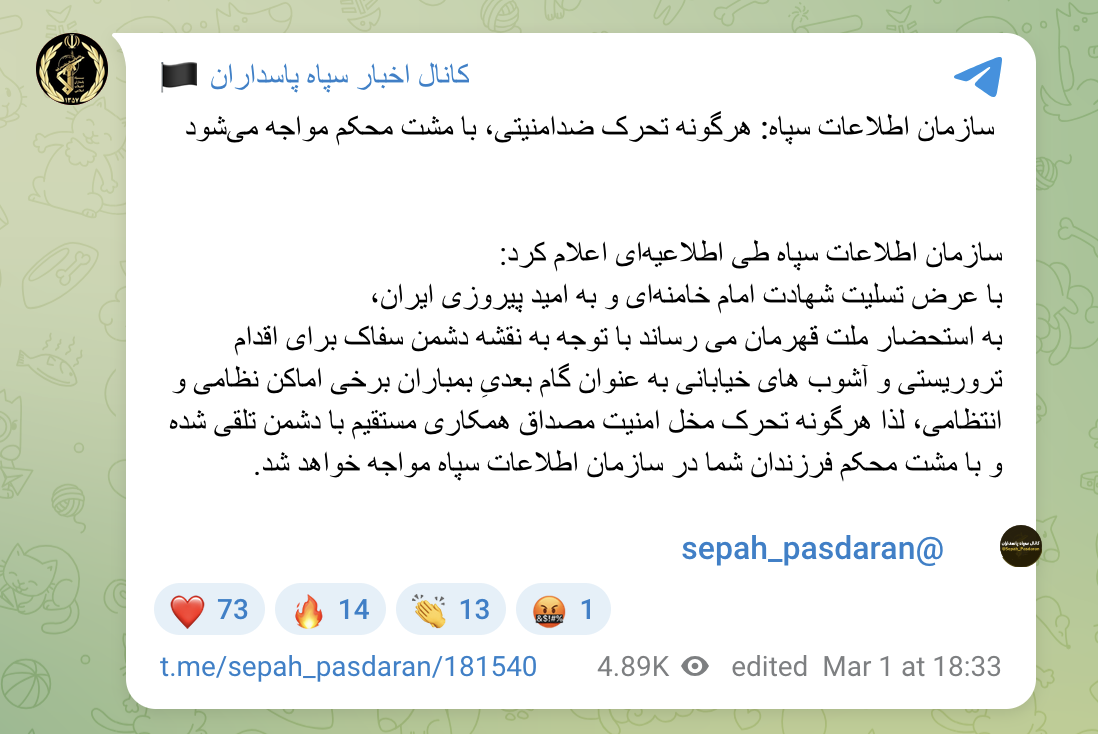
On the morning of Sunday, March 1, as Israel and the United States bombed Iran, Iranians received a threatening text message from the Islamic Revolutionary Guard Corps (IRGC). The regime’s armed wing remains in power, despite blows from the American and Israeli armies.
“Any action that disrupts security will be viewed as cooperation with the enemy and will be dealt with firmly,” the text read.
The message was a direct response to Donald Trump and Benjamin Netanyahu’s calls for an uprising the previous day at the start of their military strikes.
“The hour of your freedom is at hand… when we are finished, take over your government. It will be yours to take. This will be probably your only chance for generations,” the US president said in a video statement posted to social media.
“Any action that disrupts security will be viewed as cooperation with the enemy and will be dealt with firmly,” the text read.
The message was a direct response to Donald Trump and Benjamin Netanyahu’s calls for an uprising the previous day at the start of their military strikes.
“The hour of your freedom is at hand… when we are finished, take over your government. It will be yours to take. This will be probably your only chance for generations,” the US president said in a video statement posted to social media.
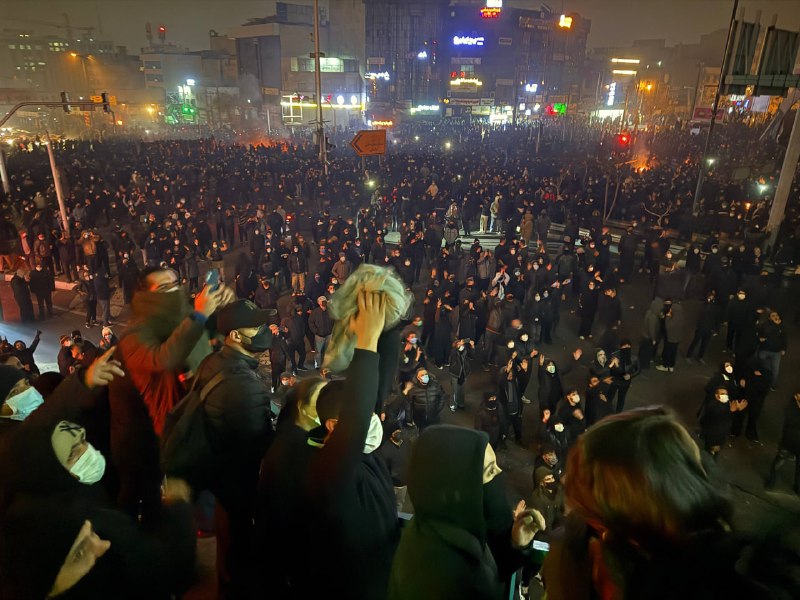
Scenes of jubilation followed the announcement of the death of Supreme Leader Ali Khamenei, who was killed when his compound was bombed on Saturday, February 28. Some Iranians celebrated the death of a tyrant with singing and dancing in the streets, applause and shouts of joy. But rising up against the regime, even a weakened one, is something else. The Revolutionary Guards’ warning is clear. They won’t tolerate any protest. During the uprisings in December 2025 and January 2026, at least 30,000 Iranians were massacred with machine guns, assault rifles, and other weapons of war (see sidebar).
During the recent protests, Iranians suspected that the authorities had such a repressive tool at their disposal, as evidenced by several similar videos from Iran. In one of them, a hooded man dressed in black climbs a pole and strikes a surveillance camera perched several metres above the ground. It falls to pieces. Below, a crowd of demonstrators cheers the climber on.
Now, with the “Eyes of Iran” project, Forbidden Stories and media partners Le Monde, Paper Trail Media, Der Spiegel, Der Standard, Tamedia and ZDF reveal the Iranian regime’s widespread use of a particularly powerful Russian facial recognition software — in collaboration with The Signals Network, a whistleblower support organization. This software has potentially devastating consequences for people who want to take to the streets again.
The women and men behind these brave acts of sabotage conceal their faces with surgical masks, scarves, or hoods — for good reason. In the summer of 2022, the Iranian authorities announced the use of facial recognition in public spaces, particularly to monitor women’s attire.
At the end of 2022, Arya was shot in the leg during a protest organized after the death of Mahsa Amini, killed on September 16, 2022, after being arrested by the morality police for wearing a hijab that wasn’t in accordance with the laws. Iranians took to the streets, sparking the Woman, Life, Freedom movement. Hundreds of people died during the resulting crackdown.
“We went to city centers, where we would see surveillance cameras [that could rotate] 180 or 360 degrees, capable of filming at night, in any conditions, and record voices,” Arya told Forbidden Stories.
Mansur almost lost his daughter, Hasti, because of the invasive technology. A bank’s surveillance camera filmed Mansur distributing leaflets in support of Woman, Life, Freedom, and security forces recovered the footage.
“That’s how they found Hasti. They went to her school to arrest her,” Mansur said.
Pursued by the intelligence service, the 13-year-old girl was seriously injured. She survived but is left with neurological damage.
The mullahs’ mass surveillance project
In December 2023, a journalist from Khorasan, a media outlet with close ties to the government, posted a photo on Instagram of a control screen from the subway’s surveillance camera network in Mashhad, the second most populous city in Iran, with more than 3 million inhabitants, and a holy site for Shia Muslims.
Wyświetl ten post na Instagramie
“Photos of everyone passing in front of these cameras are displayed on large screens along with their age and gender. Can the municipality explain the purpose of this?” he wrote, not providing any other information.
On March 14, 2025, the UN Independent International Mission on the Islamic Republic of Iran published a report condemning the “far-reaching use of technology to restrict freedom of expression.” The report also cited “new facial recognition software [that] was reportedly installed in April 2024 at the entrance gate of the Amirkabir University of Technology in Tehran.”
But during these years, no journalist or media outlet was able to document or describe the specific details of this technology.
It was impossible for local journalists to investigate this topic. Any investigation in Iran is a forbidden story. The country remains one of the worst in the world for press freedom, ranked 176 out of 180 by the NGO Reporters Without Borders. No independent reporter is safe there. Even renown does not protect journalists: Reporters Without Borders counts 12 of them in prison, including Nobel Peace Prize winner Narges Mohammadi, who was arrested on December 12, 2025, and sentenced to seven and a half years in prison.
For the first time, Forbidden Stories, whose mission is to continue the work of journalists who are threatened or killed, and its partners are revealing the relentless mechanics behind Iran’s repressive AI-powered surveillance system. It’s still impossible to assess the exact damage to this infrastructure following the Israeli-American attack on February 28, but the system poses a serious threat to any Iranian who wants to rise up against the dictatorship.
Tracking thousands of people simultaneously
This state secret started to take shape in the summer of 2019, one year after the FIFA World Cup in Russia. The international competition also served as an international showcase for Russian video surveillance tech, including FindFace, produced by NtechLab. The software enables cameras to identify a face in a crowd from a database of 500 million faces in less than a second, with “98% probability,” according to the company’s promotional document, reviewed by Forbidden Stories.
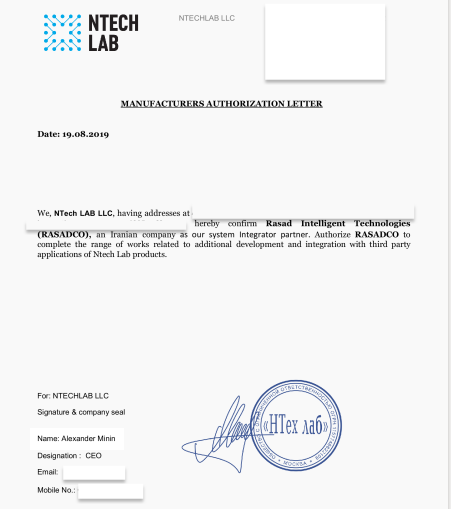
In August 2019, NtechLab, a company with close ties to the Russian regime (see sidebar), granted an Iranian company the right to use its flagship product. This contract, signed by then Russian CEO Alexander Minin, authorized the startup Rasad Intelligent Technologies (Rasadco) to act as a “systems integration partner.” Two years later, the company Kama took over from Rasadco after a financial and administrative merger. But this sale of FindFace in Iran remains confidential until this day.
“Many people know that video surveillance exists. But that’s only part of the problem,” said Ali, an Iranian speaking under a pseudonym due to safety concerns, who has intimate knowledge of technology and security ecosystems. The conversation occurred via an encrypted video conference, where Ali spoke from a nondescript room with white walls, no windows and no personal belongings — nothing to indicate where he is.
“Facial recognition and other features that connect individuals based on their travel history, or their connections [to each other], these are things that many people ignore.”
Using an image of a face captured on the subway platform in Tehran or Mashhad, authorities equipped with the Iranian version of FindFace can compile lists of each targeted individual’s dozens of relatives. Called “interaction tracking” by the Russian company, Iranian officials kept the function.
“This system not only detects their faces and movements, but also creates a ‘social map’ of their friends and relationships, along with other information such as license plates,” said Nima Fatemi, founder of Kandoo, an NGO working on cybersecurity for vulnerable populations, after consulting the confidential documents. “It allows you to track the targeted person’s movements and monitor everyone, everywhere. It is a centralized tool for learning who is who and how individuals are connected.”
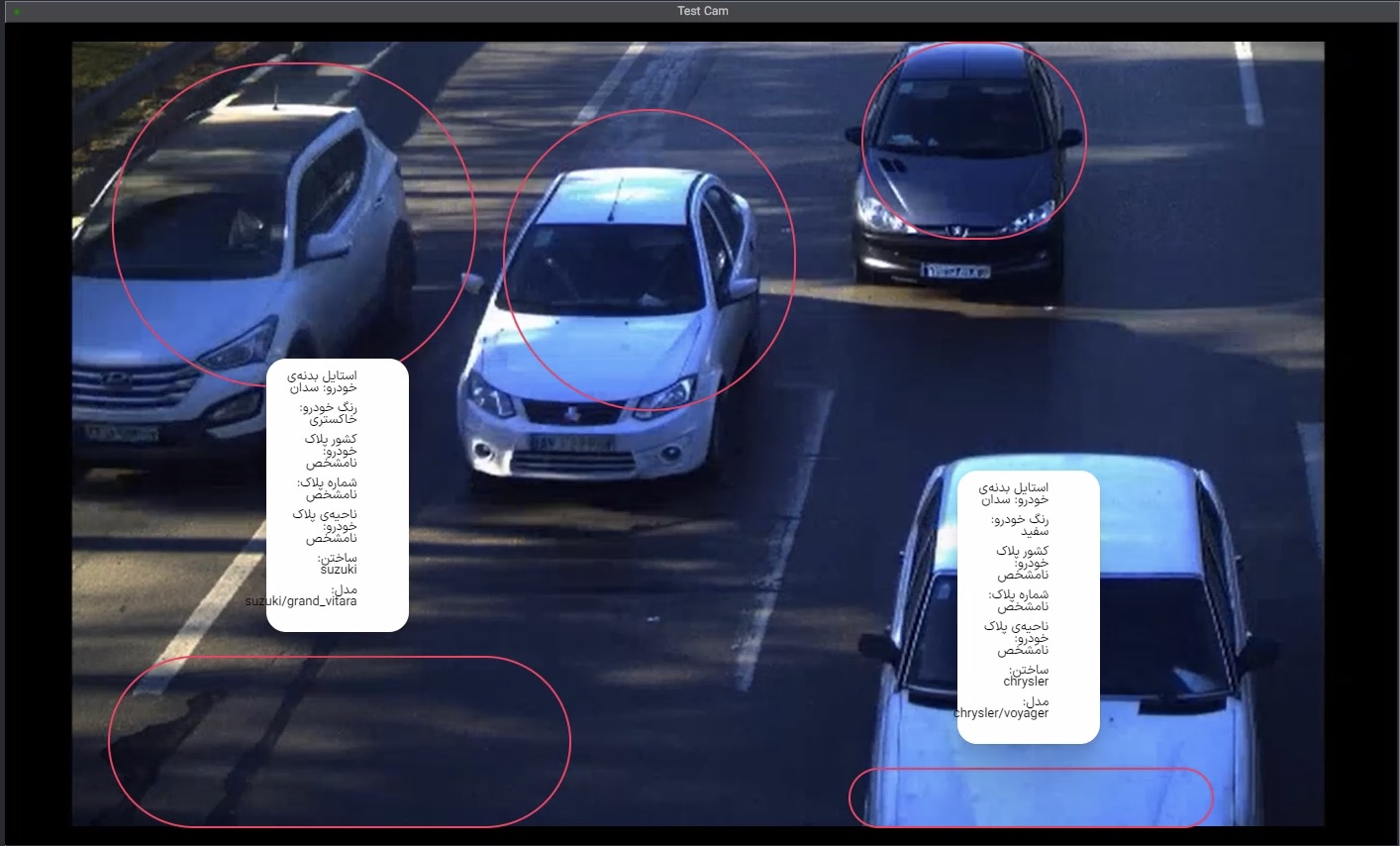
It’s enough to track thousands of people simultaneously, including the crowds of protestors who recently took to the streets to demand the regime’s end.
These capabilities are particularly concerning, given that Kama is not a typical company. According to information consulted by Forbidden Stories and its partners, the head of the company is a member of the Revolutionary Guards, the organization most feared by Iranians. The IRGC led the crackdown on recent protests and was designated by the EU a “terrorist organization” on January 29, 2026.
“The IRGC does not report to a normal chain of command. It reports directly to the Supreme Leader” [Ali Khamenei was killed on February, 28], explained Matthew Levitt, counterterrorism and intelligence specialist at the Washington Institute.
“Unlimited” licenses
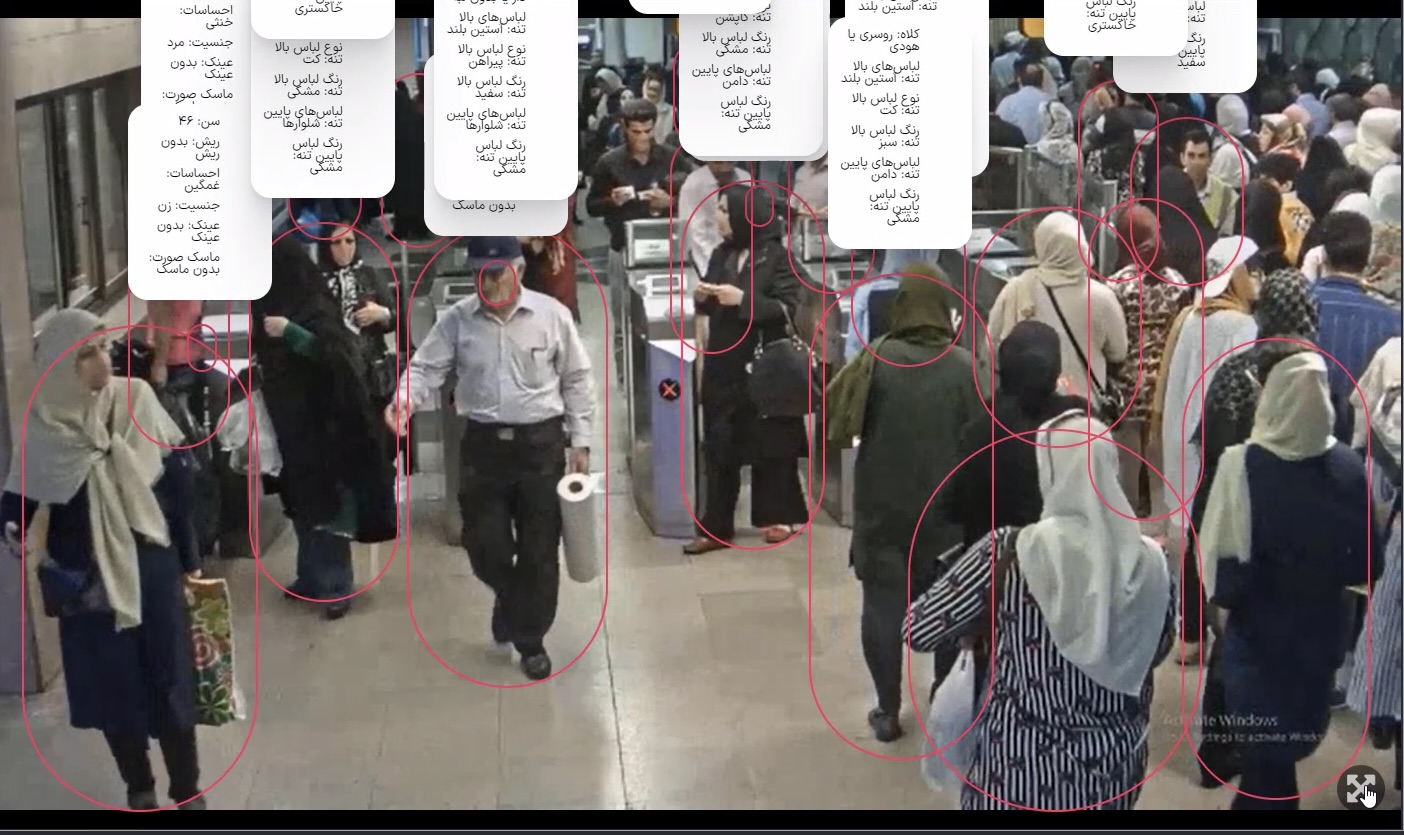
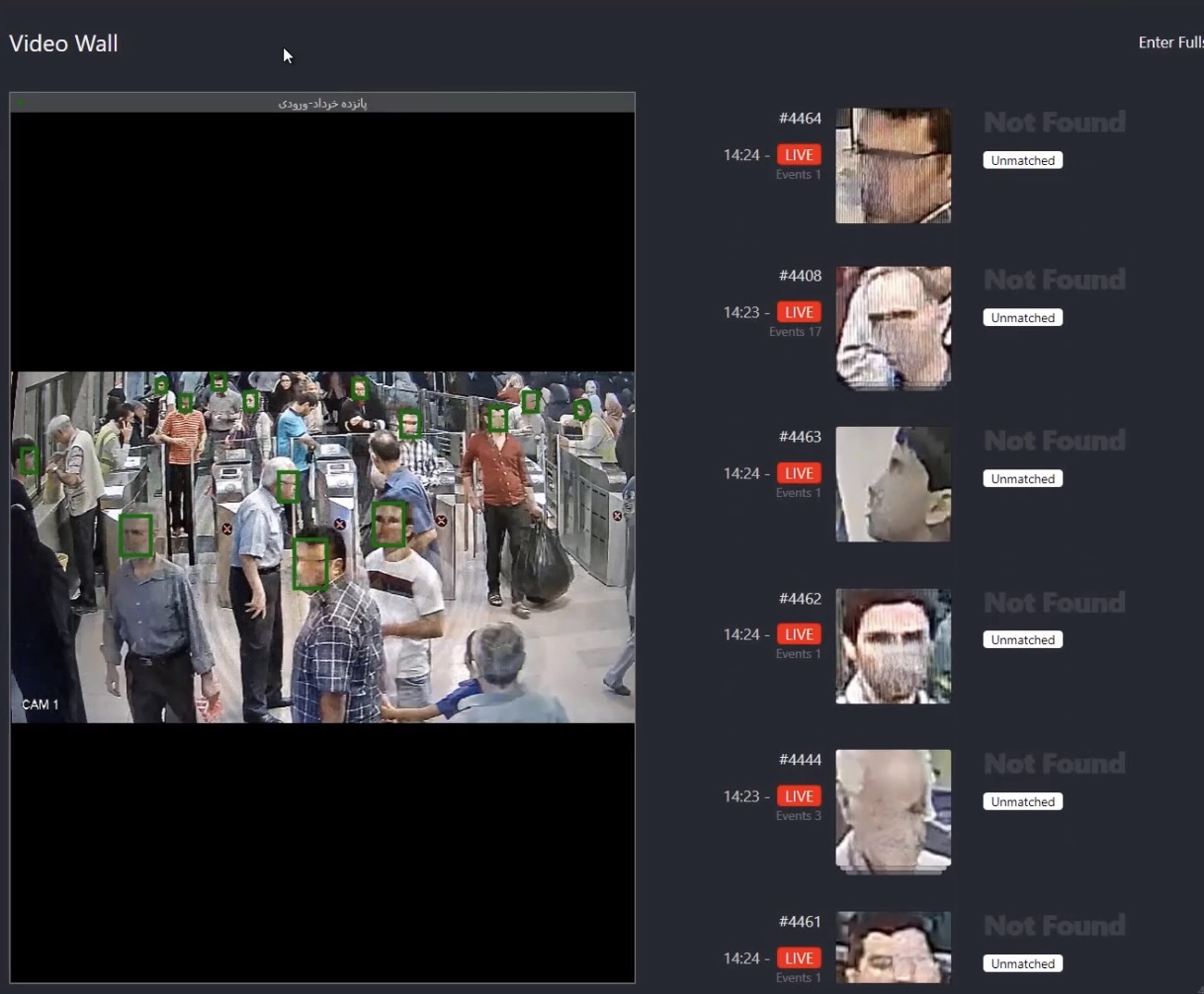
To understand how the local version of FindFace works, Forbidden Stories gained exclusive access to several 2021 videos promoting the Russian software to potential customers in Iran. In one of them, surveillance camera footage shows the turnstiles at the Panzdah E Khordad subway station in Tehran, where dozens of people pass through during a busy period.
A dense crowd with a wide range of ages moves under the camera’s watchful eye — no one notices. In a digital live stream, each face is circled in green and listed on the right side of the screen, along with estimated age, gender, detected emotion, and whether the person is wearing glasses, a surgical mask, or has a beard.
For Ali, this technology is more effective than anything available on the Iranian domestic market. “Some might work, but not as a live stream with moving faces,” he said.
FindFace gradually spread through the Islamic Republic starting in 2020, according to contracts consulted by Forbidden Stories and its partners. One contract revealed that Kama granted a company called BPO a license for the facial recognition software on November 3, 2020, for an “unlimited period.”
The tool, purchased for 4 billion rials, or approximately €80,000 at the time, could identify “100 million faces” from previously recorded images and videos later uploaded to the system “in less than 3 seconds.” Furthermore, the “system has no intrinsic limit.”
“Offline mode” is incredibly effective, according to Fatemi.
“They can save every possible video, download anything from social media, capture all kinds of data, and integrate it. Then they can process the images offline to identify each person, without deploying law enforcement officers on the streets. They can arrest people later, once the situation is calmer, and they have the necessary resources to arrest or interrogate that person.”
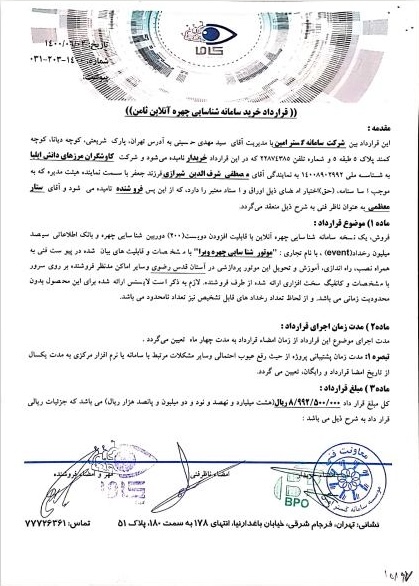
BPO is not only “one of the largest suppliers of electronic, telecommunications and IT equipment in Iran,” as the company’s website states. It is also a shell company that the regime uses to conceal its confidential acquisitions. Signatures on a different contract link BPO to Iranian authorities. The contract, signed in 2021 for nearly 9 billion rials (approximately €180,000 at the time), focused on real-time identification from surveillance cameras, rather than running previously recorded footage or images through the technology. The contract provided for 200 of these cameras, supported by a database of “300 million events” — with “event” referring to the algorithm identifying a face. Again, there are no limits on the license duration or the number of faces that can be recorded.
There are two buyers’ stamps on the contract: BPO and Samaneh Gostar Amin’s company. Both bear the same single signature. Samaneh Gostar Amin was a shareholder in a subsidiary of Zaeem Technology Development Company, which provided IT and telecommunications services to the Revolutionary Guards, the Ministry of Defense and the Ministry of Intelligence. The latter, known for targeting dissidents, journalists and ordinary citizens, has been under U.S. sanctions since 2022. An internal Kama document consulted by Forbidden Stories confirmed that the two security agencies used this software.
Ali emphasized the penchant for secrecy.
“Not only do they not use public tenders, but they also know exactly which company to approach. The contracts also include a tax exemption clause… There are no records or registers. All these shell companies collaborate with each other.”
Contacted by Forbidden Stories and its partners prior to the joint Israeli-American attack, none of the entities mentioned in this investigation responded to requests for comment.
Iran’s security apparatus is not the only one to acquire the valuable software. In 2020, Sharif University of Technology in Tehran signed two contracts for “surveillance” purposes and said it was “delighted” with the service offered, according to documents studied by Forbidden Stories and its partners. The municipality of Mashhad also purchased facial recognition software for 3 billion rials (approximately €65,000 at the time) for an “unlimited” period.
“The situation has become much harder for the people of Iran to rise up,” Ali declared. Even though the Islamic Republic is weakened by the ongoing war, it will remain unforgiving towards its population. “The regime is fighting for its survival now. People are not armed and can easily be massacred.”

Technology & Business Editor
Read more similar news:
Comments:
comments powered by Disqus