NHS midwives given anonymity to expose maternity care failures
Midwives will be granted anonymity to reveal the truth about why mothers and babies are being failed by the NHS, The Telegraph can reveal.
Health chiefs will launch a national forum on Monday allowing maternity staff to expose problems anonymously and suggest how services should be reformed.
Doctors, nurses and midwives will be encouraged to speak freely about what they have seen and the changes they want to be enacted, without giving their names.
The exercise follows repeated maternity scandals that exposed cultures where staff were afraid to raise concerns about unsafe care.
It comes after Yvette Cooper used her first statement as Health Secretary to pledge “urgent” action to improve maternity services.

Prof Francesca Swords, national medical director for NHS England, said the forum was “completely anonymous” so staff could speak freely.
She told The Telegraph: “To make real change, we need to hear from the people doing the job every day, which is why we have created a space where doctors, nurses, midwives and other staff can be honest about what they’re seeing and experiencing.
“It’s completely anonymous too, to encourage people to feel completely comfortable sharing their experiences, feelings and suggestions.”
The move comes less than three months after the largest maternity inquiry in NHS history exposed catastrophic failures at Nottingham University Hospitals.
Donna Ockenden’s inquiry examined the experiences of more than 2,500 families, predominantly between 2012 and 2025.
The review found more than 500 mothers and babies suffered potentially avoidable harm or death, including 162 potentially avoidable deaths.
Staff told the inquiry that “a lot of people were frightened to speak up” because they feared being blamed for failings they highlighted.
Her report found midwives were fearful of escalating concerns to consultants, while staff described bullying, poor leadership and a lack of “psychological safety”.
The scandal followed maternity disasters at Shrewsbury and Telford, East Kent and Morecambe Bay.
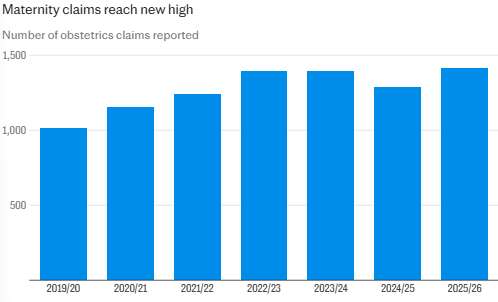
Senior doctors have warned that the culture of fear extends beyond individual trusts.
Charlie Massey, chief executive of the General Medical Council (GMC), has warned that harm to mothers and babies is “at risk of being normalised”.
Latest GMC data show 27 per cent of obstetrics and gynaecology trainees feel hesitant about escalating deteriorating patients to senior doctors.
Mr Massey said: “That doctors are making life and death decisions in environments where they feel fearful to speak up is profoundly concerning.
“Those are the very factors that lead to cover-up over candour and obfuscation over honesty.”
Regulators have also raised repeated concerns about the quality of maternity care.
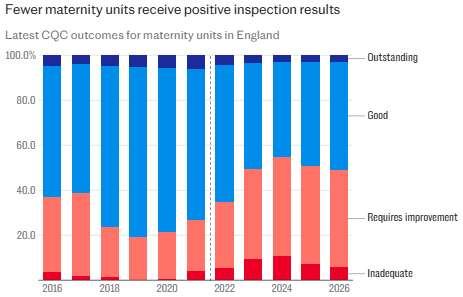
The Care Quality Commission’s latest figures show two thirds of maternity services inspected under its new framework were inadequate or required improvement.
Just one third were rated good and none was outstanding.
Ms Cooper now chairs the National Maternity and Neonatal Taskforce and has vowed to make maternity one of her top priorities.
The taskforce was established following a national investigation led by Baroness Amos, which examined maternity and neonatal services at 12 NHS trusts.
It concluded that the system was no longer consistently capable of providing high-quality, compassionate care and required urgent reform.
Women were too often “not being listened to, heard or believed”, with serious consequences including avoidable harm and trauma, it found.
The initiative being launched on Monday, called Your Voice, will be independently run and remain open for three weeks.
Staff will be able to anonymously describe their experiences, suggest changes and comment on ideas posted by colleagues.
Trusts will receive tailored reports based on what their staff say, while national findings will be used to draw up reforms.
Officials describe the information gathered from maternity and neonatal workers as “frontline intelligence”.
They hope the exercise will become the largest conversation ever held about a single NHS service.
Prof Swords said: “Those different perspectives and voices will help us understand where things have gone wrong and what needs to change.
“We need to learn from past failings and act on the staff insights to ensure better, safer care for women and babies.”
Duncan Burton, chief nursing officer for England, said recent reviews were “clear about where maternity and neonatal care must improve”.
“We must listen to women and families, learn from their experiences and act on what they tell us,” he said.
“We also need to hear from the staff delivering and supporting care every day.”
He said Your Voice would allow workers to help shape what happens next and support “lasting improvement for women, babies and families”.
Baroness Merron, the health minister, said front-line workers were “the first to know when there are systemic problems in a particular area”.
She said: “Those front-line staff have the insight and ideas that can make a difference to thousands of mothers and babies.”
She urged every member of staff to take part so maternity teams could “help shape the changes we need”.
The evidence will feed into the National Maternity and Neonatal Taskforce and a new Modern Service Framework.
The exercise forms part of the NHS’s 10-point plan of urgent action to improve maternity and neonatal services.

Editor-in-Chief
Read more similar news:
Comments:
comments powered by Disqus