Labour opens door to backing first-cousin marriage ban after Sudanese migrant cas
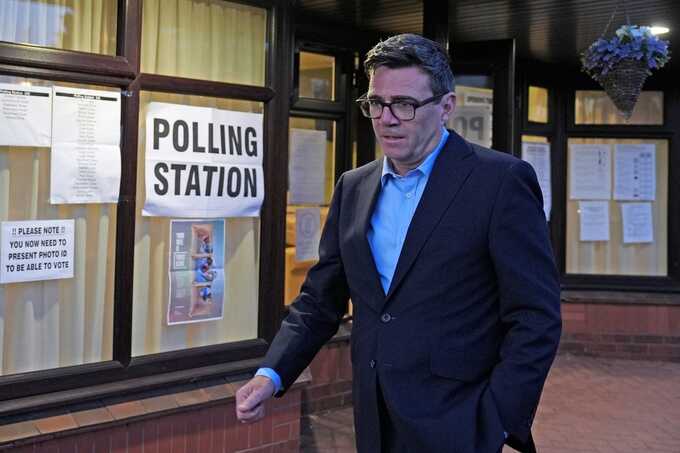
Labour has finally opened the door to backing a Private Members’ Bill to ban cousin marriage after a case involving a Sudanese migrant reignited the debate.
The Ministry of Justice is now considering whether legislative change is the best way to tackle the issue just months after Sir Keir Starmer’s Government was accused of "secretly" supporting the practice.
First-cousin marriage, which was outlawed until Henry VIII broke with Rome in 1540, returned to the House of Commons on June 17 when Shadow Health Minister Dr Luke Evans brought forward his own Private Members’ Bill.
Dr Evans invited Andy Burnham to cross-party talks on the practice just last night after it was revealed Isra Abdallah Ibrahim was allowed to remain in the UK with her first cousin when an Upper Tribunal judge ruled their marriage was legitimate.
A Ministry of Justice spokesman told GB News: "We recognise the serious concerns that have been raised around this issue.
"As any responsible Government would do, we must look at whether legislation is the best solution to tackle this."
GB News understands Mr Burnham’s Government will carefully consider Dr Evans’s legislation as it progresses through the Commons.
Consanguineous marriage rates stood at 43 per cent among British Pakistanis in inner-city Bradford in 2023.
Research has found children of first-cousin marriages face higher risks of speech and language difficulties, developmental delays and birth defects, with some studies suggesting they are twice as likely to suffer from a birth defect.
Sir Keir’s Government came under fire in January after Shadow Transport Secretary Richard Holden’s efforts to bring forward a Private Members’ Bill were consistently stalled.
Speaking to GB News yesterday, Mr Holden said: “Andy Burnham should lead Labour in a sensible U-turn and back the Bill to ban first-cousin marriage.
“This latest crazy case highlights yet another reason why we must end the practice. We should never be in a situation where first-cousin marriage can strengthen someone’s claim to remain in Britain.

“I brought forward legislation to ban first-cousin marriage because the risks associated with the practice are well established, and our laws should be clear about the standards we expect in our country.
"With Dr Luke Evans taking that Bill forward in this session, the Prime Minister has a golden opportunity to do the right thing. We’ll see if he takes it.”
Dr Evans’s First Cousins (Prohibited Relationships) Bill is not expected to return to the House of Commons for its second reading until at least January 15 next year.
Dr Evans added: "I have already introduced legislation to prohibit marriage, civil partnerships and sexual relationships between first cousins, both because of the serious genetic health risks involved and because our law should be clear about where the boundaries of close family relationships lie.

"This provides an excellent opportunity for the Prime Minister and the Government to work with me to close this loophole."
However, Mr Holden warned earlier this year that Labour was fearful of a backlash if it opted to ban the practice.
A YouGov poll released last year found Pakistani and Bangladeshi Britons were the least likely to support a ban on first-cousin marriage, with just 47 per cent backing the proposal compared with 77 per cent of white and Indian Britons.
Labour won 44 per cent of the Pakistani and Bangladeshi vote at the 2024 General Election, with a backlash over Sir Keir’s stance on Palestine propelling four pro-Gaza independent candidates into the House of Commons.

Labour MPs have already openly voiced disagreements about the proposed ban on first-cousin marriage.
During an appearance on GB News in January, former Labour frontbencher Barry Gardiner confirmed he would not vote to ban the practice and pointed out that Queen Victoria had married her maternal cousin.
Home Secretary Shabana Mahmood previously insisted Labour was looking at “broader reform of marriage law”, while Victims Minister Alex Davies-Jones described the debate as “complex and sensitive”.
However, Labour MP Neil Coyle argued: "The prevalence of infant mortality and birth defects alone warrants the ban."

Editor-in-Chief
Read more similar news:
Comments:
comments powered by Disqus