Extreme heat forces NHS surgeons to abandon operations mid-procedure
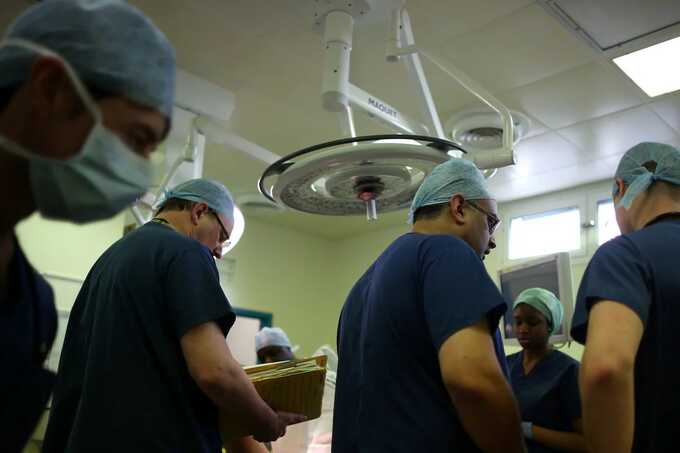
Surgeons are breaking off operations midway after becoming overwhelmed by Britain’s heatwaves, medical leaders have claimed.
As reported by The Telegraph, they said NHS hospitals were reaching extreme temperatures in the sweltering conditions, leaving theatre staff dehydrated, dizzy, and in some cases close to fainting.
Tim Lane, who began his presidency at the Royal College of Surgeons of England on Thursday, said too many operations were being delayed and cancelled because NHS buildings designed for a different era were unable to cope with the heat.
The leading medic said some surgeons were having to de-scrub to cool down and rehydrate mid-procedure before returning to finish operations.
NHS guidance says air conditioning should only be used in “essential areas”, which includes operating theatres. The drive has been enforced as part of net zero strategies that promote natural ventilation, but doctors say ageing infrastructure means many hospitals are unable to cope with rising summer temperatures.
Cooling systems struggle to keep temperatures down in operating theatres, while wards and other parts of hospitals often have little or no air conditioning.
Meanwhile, obsolete heating systems leave radiators continuing to blast out heat even as staff deploy fans, the Royal College said. One hospital was forced to cancel operations when the humidity became so excessive that a fire alarm was triggered.
Mr Lane said the NHS was ill-equipped to cope with hotter summers because of ageing buildings and outdated ventilation systems after decades of under-investment.

Writing for The Telegraph, he said: “Reports from across the country warn that high temperatures can affect the ability of health services to function, with hospital buildings at risk of overheating and pressure placed on both staff and infrastructure.
“In some operating theatres, humidity is so high that condensation collects on surgical instruments. Patients wait for surgery in rooms with only a small fan to keep cool. Just along the corridor, a radiator remains stubbornly stuck on.
“This is nothing extraordinary, nor is it an isolated incident. It is a symptom of a deeper problem: too many of our hospitals are no longer equipped to deal with the hot summers Britain now experiences.”
His warning follows weeks of disruption across the NHS during recent heatwaves, with hospitals declaring critical incidents as cooling systems fail and temperatures make some clinical areas unsafe.
Meanwhile, the medical director of NHS England warns that the health service is facing a “summer onslaught”, with record A&E attendances as temperatures soared last month.
Dr Frankie Swords said: “What we’re seeing on the ground is really busy Mondays following weekends of [World Cup] football and sunshine – so please don’t delay coming forward for care when you need it, even if it’s in early hours on a weekend.”
Queen Alexandra Hospital in Portsmouth was forced to cancel planned operations after chiller units failed, leaving theatres, cardiac catheter laboratories and diagnostic scanning facilities affected by the soaring temperatures.
Norfolk and Norwich University Hospital cancelled more than 250 appointments after MRI scanners stopped working when their cooling systems failed. University Hospitals of North Midlands also postponed some surgery because theatres and scanners could not operate normally in the heat and humidity.
Research by surgeons at the University of Birmingham has suggested that as many as 4,000 operations could be cancelled during four days of extreme heat because of unsafe operating conditions, staff shortages and increased pressure on hospitals.
Previous surveys have found almost one in five surgeons reported operations being cancelled during hot weather, while four in 10 operating theatres had no effective means of controlling temperature.
Mr Lane said reports were coming in from across the NHS of overheated buildings, in particular operating theatres, where surgeons work under intense lights, often wearing heavy protective equipment.
“The consequences go far beyond discomfort. Dehydration, fatigue and dizziness become genuine concerns and, on occasion, staff need to step away mid-procedure to recover,” he said. “At a time when millions of people are already waiting for treatment, the NHS cannot afford care to be disrupted by predictable periods of hot weather.”
Earlier this week the Government announced a 10-year capital plan to invest in NHS buildings, equipment and technology.
But Mr Lane highlighted a maintenance backlog close to £16bn, saying the NHS would remain “at the mercy of the next heatwave” without a fundamental overhaul to ensure buildings were fit for purpose.
James Murray, the Health Secretary, said: “Even in the face of record temperatures and the busiest summer in NHS history, healthcare staff have continued to deliver for patients and I want to thank every one of them for their extraordinary dedication.
“More people are now being treated within 18 weeks than at any point since 2021, while three in four A&E patients were seen within four hours.”
Safe healthcare depends on safe environments
As another heatwave grips England and the UK Health Security Agency issues an amber alert, many NHS hospitals may once again struggle to cope with temperatures they were never designed to withstand. The Government’s announcement of its 10-year capital plan for the NHS could not be more timely.
Reports from across the country warn that high temperatures can affect the ability of health services to function, with hospital buildings at risk of overheating and pressure placed on both staff and infrastructure.
In some operating theatres, humidity is so high that condensation collects on surgical instruments. Patients wait for surgery in rooms with only a small fan to keep cool. Just along the corridor, a radiator remains stubbornly stuck on.
This is nothing extraordinary. Nor is it an isolated incident. It is a symptom of a deeper problem – too many of our hospitals are no longer equipped to deal with the hot summers Britain now experiences.

Head of Investigations
Read more similar news:
Comments:
comments powered by Disqus