Reoffending reaches record high after Labour’s early prison release scheme
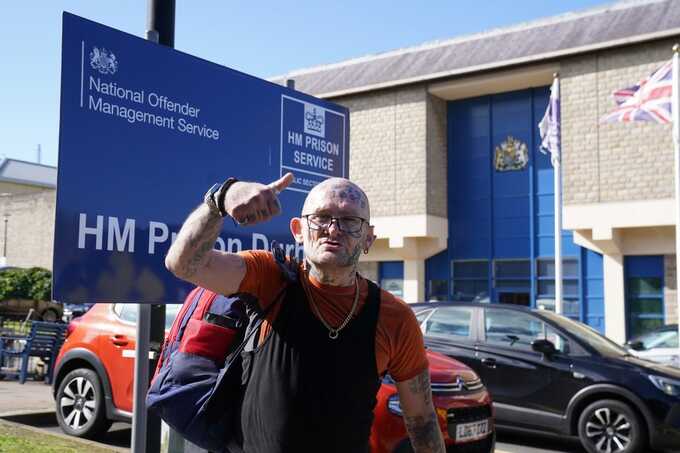
Reoffending has hit a record high following the release of more than 70,000 convicted criminals under Labour’s scheme to combat jail overcrowding.
Almost a third (31.9 per cent) of convicted adult criminals reoffended from 2024 onwards, up from 29.2 per cent on the previous year, according to data from the Ministry of Justice (MoJ).
That represented nearly 25,000 criminals committing more than 127,000 further offences, many after being released from jail.
Among those who have committed further offences after being freed early are a knife offender who has been charged with murder and a 31-year-old man who sexually assaulted a woman on the same day he was freed.
Some 69,974 offenders have been freed early since Labour launched its scheme in September 2024, enabling prisoners to be released 40 per cent of the way through their sentences rather than halfway.
It was put in place by Shabana Mahmood, the then justice secretary, after prisons in England and Wales came close to running out of space with fewer than 100 spare places.
However, the MoJ is projecting that jails will still run out of places in November unless it goes ahead with plans in September to free some 6,000 prisoners, including killers, rapists and violent offenders.
The new “earned progression” early release scheme will see serious offenders freed halfway rather than two-thirds of the way through their sentences unless they have behaved badly in jail. Lower-level criminals will be freed as little as a third rather than 40 per cent of the way through their sentences.
The scale of the prisons crisis was underlined on Thursday by separate MoJ data which showed the number of offenders being recalled to prison for breaching the terms of their licences had overtaken the numbers being released for the first time.
It revealed that between January and March 2026, 12,977 people were freed from prison, while 13,193 offenders were recalled.
This meant that for every 100 prisoners released, 101 offenders were recalled, undermining efforts by the Government to get a grip on the prison overcrowding crisis.
Andy Burnham has paused September’s early release scheme after an outcry provoked by The Telegraph’s revelation that two of Pc Andrew Harper’s killers are eligible for early release half way through their 13-year sentences for manslaughter rather than two-thirds.
The Prime Minister has ordered a review to establish who can and cannot be safely freed early and what extra safeguards can be put in place for victims. He has said no offenders will be released until the review is complete.
Data show that the proportion of reoffending has been steadily increasing from a low of around 25 per cent before the Covid pandemic, to 31.9 per cent for the cohort released in July to September 2024. The number of reoffences also nearly doubled from under 70,000 to more than 127,000 in the same period.
The number of recalls also rose by 73 per cent to 51,419 in 2025, from 37,573 in 2024. This was the highest annual figure on record and nearly double the 27,820 recorded in 2023.
The most common reasons for recall were “non-compliance” with their licence, failing to keep in touch with their probation officers and facing another charge.
Among those who have reoffended after being released early was Jason Hoganson, 53, who was found guilty of attacking his former partner the day after being freed.
The former Hollywood actor was photographed raising a thumb as he was released from HMP Durham after his 18-month sentence for assaulting his ex-partner Rachel Usher and breaching a restraining order.
He was arrested in Newcastle’s West End the following day after going to Ms Usher’s flat and slapping her.
The most serious offence allegedly committed by an early-release prisoner is murder, by a man who was freed early after being jailed for knife offences.
For the cohort of prisoners released from June to September 2024, proven reoffenders committed 21.2 crimes on average. That is the highest on record bar the April-June 2020 cohort, who committed 24.3 crimes.
Labour is under pressure from MPs, victims, campaigners and the Prison Officers’ Association (POA) to halt the early release of the most serious sexual and violent offenders under its new scheme following the backlash.
However, David Gauke, the former Tory justice secretary whose independent report for Labour recommended the “earned” early release scheme, warned Mr Burnham that his “pause” and review of the plans could backfire by raising expectations among victims that he would not be able to satisfy.
“The reality is that there are no easy options on this matter and he has set expectations at a level that he will struggle to meet. Burnham may come to regret announcing the pause before reaching any conclusions,” said Mr Gauke.
“Presumably, Burnham’s review will come up with a means to ensure that some high-profile offenders stay behind bars, but he should not kid himself into believing that this will satisfy every victim or much of the media. For all the calls to exclude every violent or sexual offender from earlier release, the nature of our prison population is such that we cannot achieve this without a capacity crisis.”
An MoJ spokesman said: “Protecting the public will always be our top priority. That’s why we took the decisive action needed to prevent the total collapse of our prison system after just 500 net prison places were added and 23 prisons closed in the 14 years before July 2024 – risking a breakdown of law and order.
“Now we’re making sure it never happens again. We’ve already delivered 3,200 prison places as part of the largest prison building programme in over a century, alongside a £700m investment in probation to deliver tougher community punishment as well as record investment for victim services to ensure we can always lock up dangerous criminals and protect the public.”

Deputy Editor
Read more similar news:
Comments:
comments powered by Disqus