Putin used shadow fleet tankers to launch spy drones over Britain’s nuclear bases
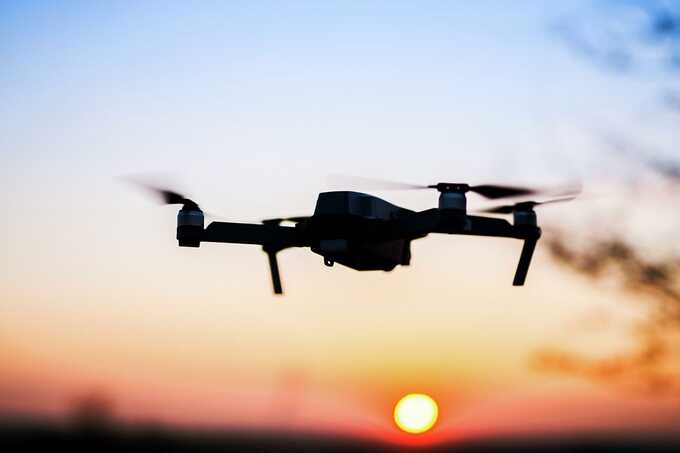
Vladimir Putin launched drones from his fleet of sanctioned oil tankers to spy on nuclear weapons in Britain, intelligence experts have claimed.
As reported by The Telegraph, the drones “exploited numerous gaps” in Nato air defences during a “sustained” 15-month campaign by the Kremlin, according to a report published by the International Institute for Strategic Studies (IISS).
Among them was RAF Lakenheath, a US base in Suffolk that is preparing to host nuclear bombs. In November 2024, drones breached its airspace, along with three other US sites in England. A sanctioned Russian tanker docked in Hull at the time has since been blamed for launching the drones.
Bases across Europe were also spied on. A secret submarine base at Île Longue in Brittany, northern France, which houses the bulk of the country’s nuclear missiles, was targeted as well as air bases containing nuclear bombs in Belgium and the Netherlands.
Analysts pinpointed the dates and times of drone sightings at military bases, airports and critical civilian infrastructure in 13 European countries between August 2024 and February 2026. On each occasion, one or more Russian shadow fleet tankers happened to be nearby.
During one incident, drones were seen deploying from a Russian spy ship before flying towards a French aircraft carrier, according to the report.

The IISS suggests this paints a picture of a widespread “coordinated” operation over Europe’s skies, making it “likely” that the Kremlin was using its sanctioned ships to deploy drones and spy on Nato’s most sensitive military locations.
“The pattern of sightings across 15 months and 13 countries cannot be explained by misidentification or opportunism alone,” said Charlie Edwards, IISS’s senior fellow for strategy and national security and a co-author of the report.
“Russia has demonstrated, repeatedly and in public, that it can penetrate the airspace of Nato member states – including over nuclear sites – without triggering a collective allied response. That gap between capability and political will is now a strategic vulnerability.”
It is thought that the alleged Kremlin campaign was to test Nato air defences, gather intelligence on sensitive sites and target logistics hubs supporting Ukraine’s effort to resist Russia.
The report said the mass expulsion of Russian intelligence officers from European capitals following the 2022 invasion had severely degraded the Kremlin’s spy network on the Continent.
British intelligence chiefs have long warned about the threat Russia poses to the UK.
The Kremlin has allegedly used its fleet of submarines to spy on critical underwater cables. In April, the British military intercepted an Akula-class attack boat and two submarines from the Main Directorate of Deep Sea Research, which were believed to be carrying out a covert operation in UK waters.
Proxies and criminal groups recruited by Russia are also believed to be involved in cyber attacks across the UK.
Moscow’s shadow fleet is critical in funding Putin’s war machine in Ukraine and in keeping Russia’s economy afloat.
The clandestine fleet of more than 700 ageing vessels is responsible for carrying 75 per cent of Russia’s sanctioned oil, according to the Ministry of Defence (MoD).
In March, Sir Keir Starmer gave the military the approval to board and seize the shadow fleet tankers in UK waters. It followed similar actions undertaken against the shadow fleet in the Mediterranean and Atlantic by French and American forces.
One ship linked to spate of drone sightings
Drones harassed RAF Lakenheath for a week in November 2024, along with American bases RAF Mildenhall, RAF Fairford and RAF Feltwell.
At the time, government officials were unable to squarely point the finger at Moscow as being behind the incursions, which Downing Street and Washington broadly downplayed.
But IISS analysts have suggested a sanctioned Russian tanker called the Hav Dolphin, which was docked near Hull at the time – about 100 miles to the north of RAF Lakenheath – may have been the “likely” source of the unmanned aerial vehicles (UAVs).
The ship has been linked to another spate of drone sightings over military bases in Germany and the Netherlands in May 2025. Experts suggested the Hav Dolphin had acted as a carrier, deploying “sophisticated” long-range drones late at night.

It was also close to the French submarine base during the drone incursion there in December 2025. It was sailing through the Channel near Portsmouth, 200 miles east at the time. Three other sanctioned Russian ships were also nearby, to the west of the French naval base.
Experts believe the ship could have been packed with long-range UAVs, similar to the Orlan-10, a compact, multi-purpose UAV that has been in service with the Russian military since 2010 that has a range of more than 300 miles.
On another occasion, UAVs flew above an Irish navy ship off Dublin on the day of the first state visit by Volodymyr Zelensky, the Ukrainian president, to Ireland on Dec 2, 2025.
Ireland had donated a large number of its ageing Giraffe Mark IV air defence systems earlier in the year to protect Ukrainian towns and cities from Russian aerial attacks.
But on the night of Mr Zelensky’s visit, four UAVs were seen in the air off the coast of Dublin.

“The UAVs were described as ‘large, hugely expensive, of military specification’ and flew for up to two hours over the Irish Navy ship LÉ William Butler Yeats,” IISS’s report said. “By the time its crew had spotted the UAVs, they were heading towards the Irish coast.”
At the time, the Maltese-flagged ship Vezhen was “loitering” about 37 miles away. The ship, owned by Bulgarian firm Navigation Maritime Bulgare, was previously seized and its crew detained by Swedish authorities on Jan 27, 2025, “in connection with damage to Baltic undersea fibre-optic cable”, analysts added.
In the Irish Sea at the time of the UAV incident was another vessel, visible on satellite imagery. However, it had its transponder switched off, meaning it was invisible to other vessels. Experts believe both ships were involved in the drone operation.
In Belgium, the Kleine Brogel Air Base, which also houses US nuclear weapons, was buzzed by drones on three nights between Oct 31 and Nov 2, 2025.
Volkel, an air base in the Netherlands, was also targeted by UAVs for three days in November and December last year. The site hosts dual-capable fighter jets that can carry American B61 gravity-bomb nuclear weapons, which Nato can deploy.
On Nov 21, 10 drones flew over the base while “simultaneously” disrupting the nearby Eindhoven Airport, which co-hosts the royal Netherlands air force’s transport and aerial refuelling aircraft. Troops in Volkel shot at the drones but failed to hit them.
Days later, on Dec 7, two F-35As chased away another drone near the base.
Sizing up Nato’s defences
“The UAV incidents suggest a deliberate effort to evaluate Nato’s integrated air-defence protocols,” IISS’s report said.
Analysts said at the time of the incursions, “multiple suspicious vessels” such as the Arctica, the CGAS Leopard and the Tranquil Sea “were loitering in international waters and at anchorages off the Dutch and French coasts near Rotterdam and Dunkirk”.
The ships, which are part of Russia’s shadow fleet, provided a “plausible offshore launch and recovery platform capable of penetrating deep into European airspace”, the IISS claimed.
The report’s most significant findings include an incident involving the Charles de Gaulle, the French nuclear-powered aircraft carrier.

In February, the Swedish military assessed that a UAV jammed near the carrier was of Russian origin and had been launched from the Russian spy ship Zhigulevsk.
According to the report, the findings confirmed the deployment of drones at sea was no longer “theoretical but an operational reality already being deployed against allied assets”.
Security officials from Russia’s intelligence agencies and military are also routinely deployed on ships in pairs to act as drone operators, the IISS claimed.
The UAV campaign represented “a technological workaround: substituting airborne reconnaissance for the networks and capabilities Russia had lost”.
The Kremlin’s success, the report argues, rests on a basic strategic insight: Europe’s air-defence network is designed for conventional, high-altitude threats. But it was not built for low-cost UAVs making deniable incursions below the threshold of a collective allied response.
“As long as Russian-linked vessels and its shadow fleet can loiter in international waters or European exclusive economic zones and launch UAVs with effective impunity, the campaign’s primary enabling mechanism remains intact,” the report concluded.
Nato said it was working to “understand emerging threats, including drones” launched from the sea or ships.
A spokesman for Nato’s Allied Maritime Command added: “Our message to any actor considering malign activity is clear: Allies are watching everything that occurs in the maritime domain, and we have the capabilities to respond, whether that involves attempts to sabotage critical undersea infrastructure or drones launched from maritime platforms. We remain vigilant.”

Head of Investigations
Read more similar news:
Comments:
comments powered by Disqus