King Charles abandons Buckingham Palace as main residence after £369m revamp
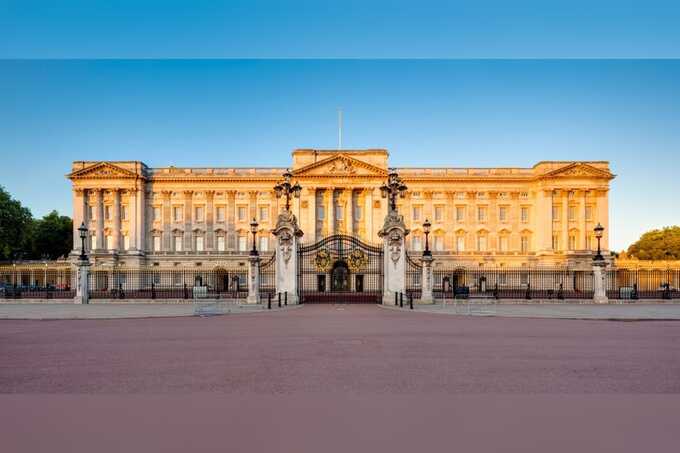
A British monarch is unlikely ever to use Buckingham Palace as their main home again after the King and Queen decided against moving back following its £369 million refurbishment. Charles and Camilla initially planned to return there after the ten-year re-servicing programme finishes next March.
But with the Palace now hosting around 700,000 visitors every year they want to give the public more access to the historic building.
Instead their Majesties will continue to use nearby Clarence House as their main London residence.
Prince William is understood to have no plans to move to Buck House when King — having found his “forever home” with wife Kate and their three children at Forest Lodge in Windsor.

Keeper of the Privy Purse James Chalmers confirmed last night: “I can update you that after careful consideration, and to greatly increase opportunities for public access, the King and Queen have decided not to adopt Buckingham Palace as a personal residence and will instead continue to use Clarence House as their London home.
“Their Majesties will, however, have access to private rooms within the Palace where they can retire during the course of a working day, and which could be utilised as potential residential accommodation in times ahead.”
Buckingham Palace has been the official London residence of the British monarch since 1837.
Victoria was the first reigning sovereign to live there, followed by Edward VII, George V, Edward VIII, George VI and Elizabeth II.
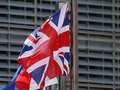
The Royal Standard will continue to fly at the Palace and Clarence House simultaneously whenever the King is in London.


Charles will continue to host events at the Palace, from garden parties to receptions, and hold audiences with new ambassadors.
Last night a Buckingham Palace spokesman said: “The Palace will continue in every traditional way to be the beating heart of the Monarchy, just not its resting head.”
They added: “It will be a buzzing hive of activity in every other way.
“His Majesty retains huge affection for Buckingham Palace and a deep respect for its role in royal and public life.
“It will remain a working home but we are seeking to widen public access precisely to maximise the national benefit of a publicly-funded building.”
Mr Chalmers added: “This is both a change from the past and a recognition of the future.
“Let me be clear, however, in all other ways the Palace will continue to be both the ceremonial and operational centre of royal life.”
Abandoning Buckingham Palace was unthinkable for previous monarchs and during World War Two’s Blitz the family refused to leave despite the building being hit nine times by German bombs.
Queen Elizabeth the Queen Mother, wife of George VI, said in September 1940: “I’m glad we have been bombed. It makes me feel I can look the East End in the face.”
The announcement that the current King and Queen will never move back in comes as a report into the Royal Family’s finances today reveals the Sovereign Grant will increase to £137.9million.
It includes a core grant at £97.6million, as well as £40.3million for the re-servicing programme.
In the 2025/26 year, the Sovereign Grant increased by £45.8million to £132.1million. It included £72.1million as the core grant, with £60million for the re-servicing.


But it will be reset to £99.9million next year once the restoration works are complete.
When the re-servicing project was announced, the Palace said it was to “ensure Buckingham Palace remains fit for purpose as the principal residence of The Sovereign”.
The £369million project included refurbishing the Sovereign’s private apartments used by Elizabeth II.
Boilers, electrical cables and pipes are also being replaced to reduce fire and flood risk.
Security arrangements mean more of the building has to be closed and numbers limited when the monarch is in residence.
A planned Consorts Library in the north wing, inspired by Camilla and drawing on Prince Albert’s legacy, aims to build on the Palace’s appeal to visitors.
Elizabeth II first opened Buckingham Palace to the paying public in August 1993, which generated funds to restore Windsor Castle after a fire the year before.
The Royal Collection Trust was set up to ensure income from ticket sales went on conserving the art collection and looking after visitors.
It also contributes to the Sovereign Grant — including £11million in 2025/26, which reduced any need for higher public funding.
The Palace started as Buckingham House. It was commissioned in 1703 by John Sheffield, the first Duke of Buckingham and stayed as a private residence until 1761.
George III then bought it for £28,000, although St James’s Palace remained the official royal seat.
Buckingham House was intended as a quiet retreat for his wife, Queen Charlotte, and it became known as The Queen’s House.

Later, George IV transformed it into a palace when he ascended to the throne in 1820.
Victoria became the first monarch to officially reside there after she took the throne aged 18 in 1837.
After marrying Prince Albert, she transformed the palace to accommodate their growing family.
She commissioned a new wing, enclosing what was a U-shaped courtyard, which became the public facade that includes the central balcony where the Royal Family gathers on for historic events.
The Palace has become a national symbol of Britain’s strength, resilience and stability ever since.
In World War Two amid pressure for Princesses Elizabeth and Margaret to be moved to Canada, the Queen Mother said: “The children won’t go without me.
“I won’t leave without the King. And the King will never leave.”
When Elizabeth became Queen in 1952, she and Prince Philip wanted to stay living at Clarence House.
But Prime Minister Winston Churchill insisted the monarch must live at Buckingham Palace, so Elizabeth II moved into the private apartments on the north wing.
This became her main base for seven decades, living at the Palace from Monday to Friday, and Windsor Castle at weekends.
The Queen lived at the Palace when re-servicing began in April 2017.
She moved to Windsor Castle full-time in 2020’s pandemic and stayed until she died at Balmoral aged 96 in September 2022.
The last time a sovereign stayed overnight at the Palace was on March 18, 2020.

Politics Editor
Read more similar news:
Comments:
comments powered by Disqus