EU launches Entry/Exit System for non-EU travellers from October 2025
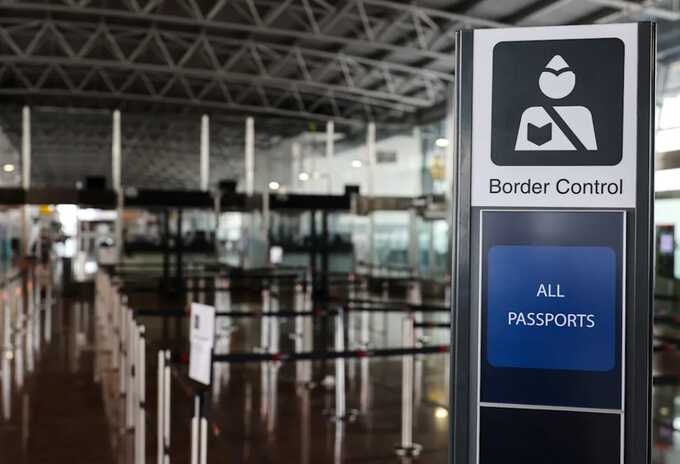
Europe is gearing up for one of the most significant changes in the process of how non-EU visitors enter and exit the Schengen area.
Starting from 12 October 2025, the EU’s Entry/Exit System (EES) will begin its phased rollout, introducing new requirements for nationals from outside the EU.
For travelers accustomed to relatively straightforward border checks, this change signifies more procedures, including fingerprinting, biometric facial data collection, and tighter tracking of entries and exits.
“The upcoming EU’s new EES scheme represents a significant change for our passengers, particularly those traveling from the UK,” stated Yvonne Moynihan, managing director of Wizz Air UK.
This “double red tape” during the transition period could lead to longer queues and possible missed flights and delays, airline and airport economist Oliver Ranson warns. “If a system fails, the airport cannot manage, passengers have to wait for hours, and eventually, flights must be canceled.”
The UK government has assured travelers that it is making efforts to prevent this: “We are in constant and close dialogue with our European partners to try and minimize the impact on the British public,” it stated in a statement in September.
Those planning to travel to Europe when EES comes into effect need to be aware of the changes – read on to learn how to prepare ahead of your upcoming trip…
What is the EES, and why now?
The EES is a digital automated border system designed to replace the traditional passport stamp for non-EU nationals. Under this system, whenever a non-EU citizen enters or leaves the Schengen area, their details will be recorded in a central database: names, dates of birth, entry/exit points – and importantly, their biometric data (fingerprints, facial scan). The aim is to better monitor overstays, enhance border security, and modernize immigration enforcement.
Although the system has been planned for many years, its implementation has faced multiple delays. The EU now plans a gradual rollout over six months, from 12 October 2025 to 9 April 2026, with full mandatory use at all Schengen border crossings by the end of this period.
According to the Independent, Estonia will be the first country that is fully prepared for the new system at air, sea, and road frontiers from day one.
Since Brexit, UK nationals are considered “third-country nationals” when traveling to the EU. British passport holders no longer benefit from the freedom of movement rules that once allowed simple entry with minimal checks. They will be subject to the same EES requirements as other non-EU travelers.
Which countries are in the Schengen area?
The countries in the Schengen area are: Austria, Belgium, Bulgaria, Croatia, Czech Republic, Denmark, Estonia, Finland, France, Germany, Greece, Hungary, Iceland, Italy, Latvia, Liechtenstein, Lithuania, Luxembourg, Malta, Netherlands, Norway, Poland, Portugal, Romania, Slovakia, Slovenia, Spain, Sweden, and Switzerland.
The Republic of Ireland and Cyprus are not part of the Schengen area, and therefore EES does not apply.
What the ‘double red tape’ means for travelers
The overlapping systems during the transition period mean travelers will need to submit biometric data while still having their passports manually stamped for some months. In practice, this means border checks are likely to take longer, especially at busy airports and land crossings.
On your first entry to Europe under EES (once your arrival point is EES-enabled), you will be required to undergo fingerprinting (not for children under 12), a facial scan, and have your passport stamped.
Passport stamping will eventually be phased out, but biometrics will still be applied.
The rollout is gradual, and not all border points (airports, ports, land borders) will be operational with EES from day one. Travelers should check whether their entry/exit points are EES-enabled.
Border authorities have acknowledged that queues may be longer, particularly in the early phases, as staff and systems adjust.
Who is affected and how?
Any non-EU/non-Schengen nationals (or ‘third-country nationals’) will be subject to EES. This includes tourists, business travelers, and anyone entering under visa-free agreements. EU, EEA, and Swiss nationals are not subject to EES.
If you are entering the Schengen area via the Port of Dover, Eurotunnel at Folkestone, or St Pancras International, EES checks will be conducted at the border before departing the UK.
How can travelers prepare?
Verify in advance if your airport, port, or border crossing is EES-enabled. Refer to official sources or your airline for information.
Allow additional time, “as the new system comes into effect, our advice to customers is to plan ahead,” advised Moynihan. “We recommend checking in online and allowing extra time at the airport, especially if traveling in large groups, with young children, or during busier periods such as the October half-term.”
Have your documentation ready. This means a valid passport, ideally with six months remaining, proof of onward travel (return ticket), proof of sufficient funds, and accommodation details.
Be prepared to provide biometrics the first time you encounter EES. Expect to undergo fingerprinting and facial scanning.
Stay informed. The rollout is gradual, and live EES crossings will change. Check EU or national government websites for updates.

Deputy Editor
Read more similar news:
Comments:
comments powered by Disqus