Putin revives Russia’s "Dead Hand" nuclear system in secret Urals bunker
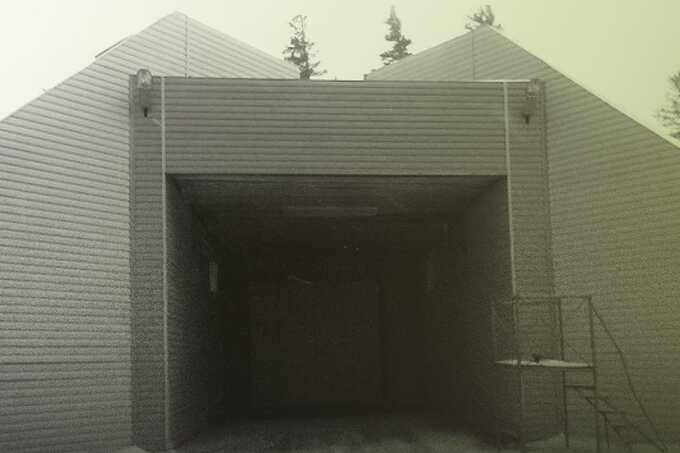
On the side of a remote mountain in the Urals is a gateway. Troops guard it around the clock from a machinegun turret.
It is the entrance to one of Russia’s most secret facilities.
From here, President Putin has revived a Cold War programme to launch retaliatory nuclear strikes on the West. The base is a giant underground command centre that can survive an attack by American bunker-busting bombs.
It is a doomsday strategy intended to guarantee mutually assured destruction if Russia suffers a nuclear strike.
Its existence can be revealed in an investigation by The Sunday Times, the Danish media group Danwatch and the Dossier Center. Using open-source journalism, we have obtained the first images of the facility and the military operation behind it, evidence of the vast construction work that has gone on there and intelligence that reveals the nuclear missile programme is fully operational.
Operation Dead Hand
Few places are more remote than the village of Kytlym. About 1,300ft above sea level, it sits in the foothills of Kosvinsky Kamen, a granite mountain in the Urals.
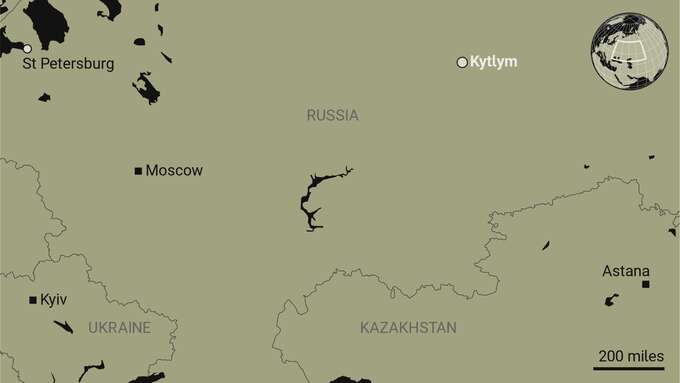
One road goes in, and one road goes out. About 2,000 people live there. There are a handful of shops, a post office, a school and a monument to Russian “defenders of the fatherland”.
Coniferous forests and impassable terrain stretch for hundreds of miles in almost every direction. Visitors stand out. Until you get close, the tunnels do not.
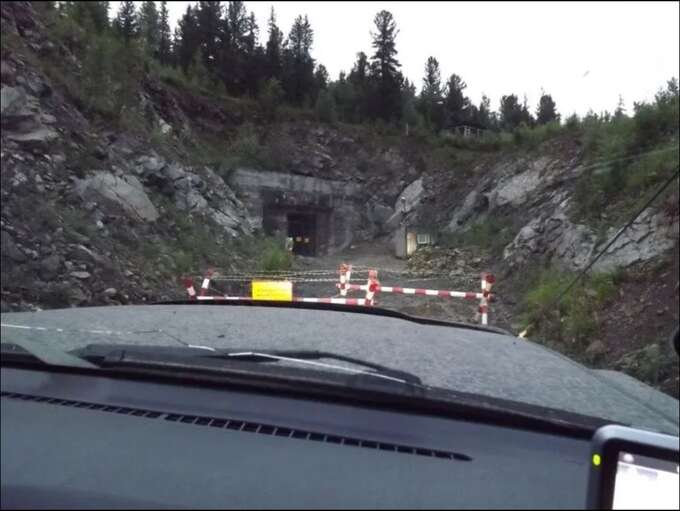
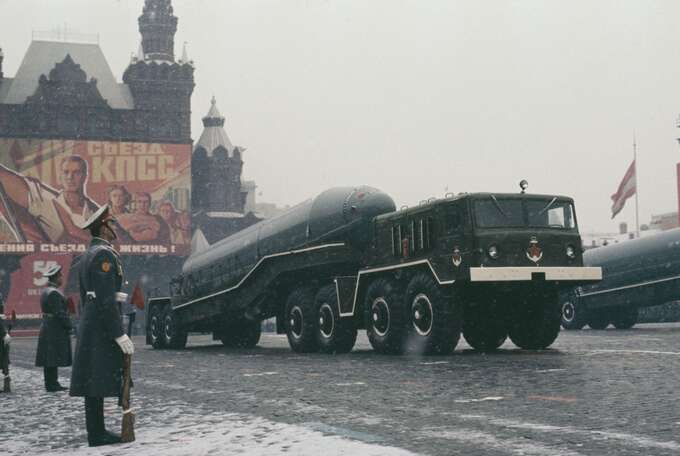
What’s unusual about this town is the military presence guarding the tunnels. Soldiers were first stationed here in the 1980s, initially in small numbers. The Soviet Union became so paranoid about a nuclear attack that it developed a doomsday strategy called Perimeter — known in the West as Dead Hand,Dead Hand, because it would have led to mutually assured destruction.
Bunkers able to survive an atomic blast were developed across Russia. The mountain here, Kosvinksy Kamen, was chosen for one of them and codenamed Facility 1335.
If a nuclear explosion occurred in Russia and communication with the leadership was lost, back-up control channels at Facility 1335 could be activated. These could transmit long-wave radio signals to mobile missile launchers which themselves carried communications gear. When launched, these missiles could in turn transmit an encrypted order to surviving launch silos for them to launch too.
“Perimeter is actually a communication system,” said Pavel Podvig, a UN nuclear disarmament expert and head of the Russian Nuclear Forces project. “If you are struck, you need to make sure you can transmit the order for retaliatory action.”
With the end of the Cold War, it is thought the subterranean facility in Kosvinsky Kamen fell dormant.
But our joint investigation reveals how, away from the eyes of the world, the Dead Hand project has been revived as Putin prepares for the threat of attack from the West.
A vast new bunker has been constructed. A senior Russian military figure has described Facility 1335 as the place where “strategic missile forces will fulfil their historic mission of retaliation against any enemy”.
We have obtained millions of pages of contracts, plans and tender documents that highlight the huge construction project. Satellite imagery shows the building work and large military presence, and through open sources we found the first pictures of the site.
Vast sums spent on construction
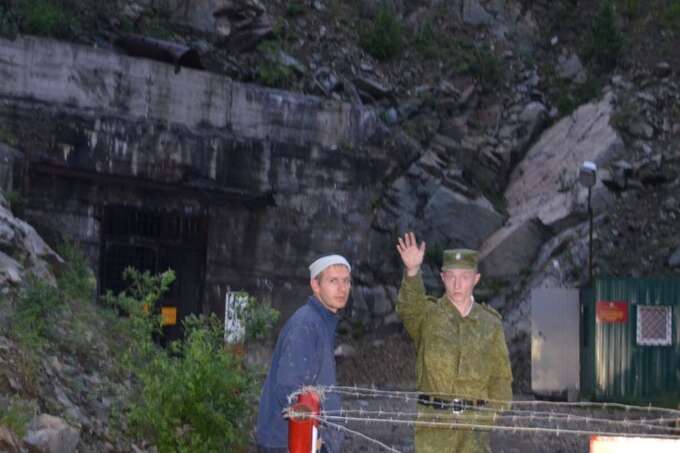
Among the images are photos that appear to show a tunnel from the original Dead Hand bunker, guarded by a small garrison to ensure its true layout is kept secret.
Analysis of about 2.5 million Russian documents and public records — gathered by Danwatch in early 2024 and spanning tenders dating back to 2011 — reveals a massive construction programme costing the equivalent of hundreds of millions of pounds to construct new underground complexes.
Procurement data shows that since 2018 Moscow has bought heavy excavation and rock-drilling equipment, mine ventilation systems, air filtration units capable of screening chemical, biological, and radioactive fallout, seismic-resistant air conditioning, and enough steel, piping, cabling, and concrete to construct an apartment building deep beneath the mountain. Orders were placed for dozens of drilling rigs, bulldozers, excavators and dumper trucks. The site used three million litres of fuel and 823,000 litres of gas.
About 20,000 tonnes of steel were bought, the weight of roughly three Eiffel Towers. The tenders make reference to at least 24 underground chambers, fitted with a compressed air system. Technical details show the straight-line distance between the main and emergency exits of the facility is about two and a half kilometres.
Per Goltermann, a professor at the Institute for Construction and Mechanical Technology at the Technical University of Denmark, gave a conservative estimate that the concrete used would build at least 150,000 square meters of surface area — enough for a multi-storey building. “It is an enormous construction,” he said.
Procurement documents also reveal work to enlarge the military camp. Throughout the documents the site is known as Facility or Object 1335.
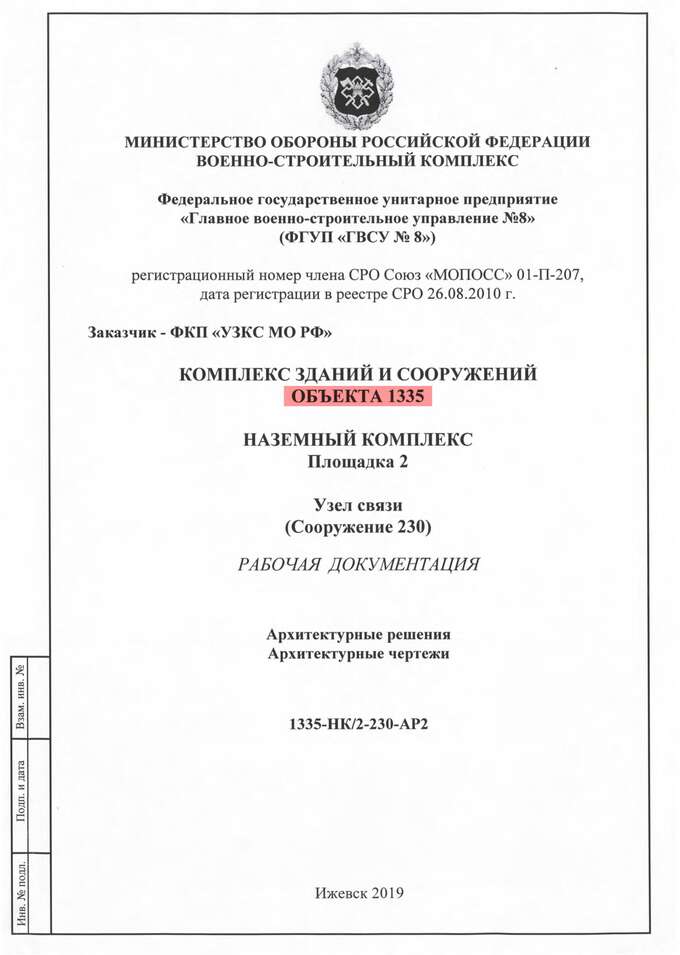
The heaviest procurement phase was between 2020 and 2021. In 2020 alone, records show contractors used 361.4km of cable, 5,429 lamps, 30 transformers, 160 ventilation units and 648 drilling tools.
The contracts show the site went from tunnelling to structural engineering, and then ventilation, power systems and internal fit-outs. High-resolution satellite photographs show intense activity on the site during this period.
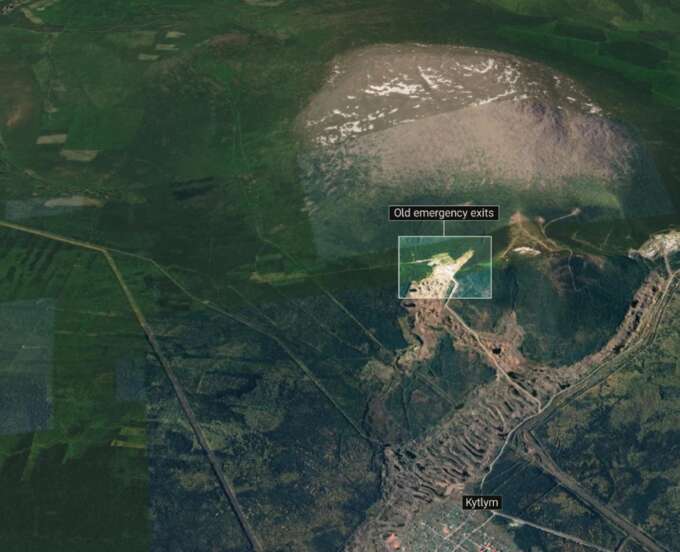
Massive heaps of excavated earth have appeared on the mountainside:
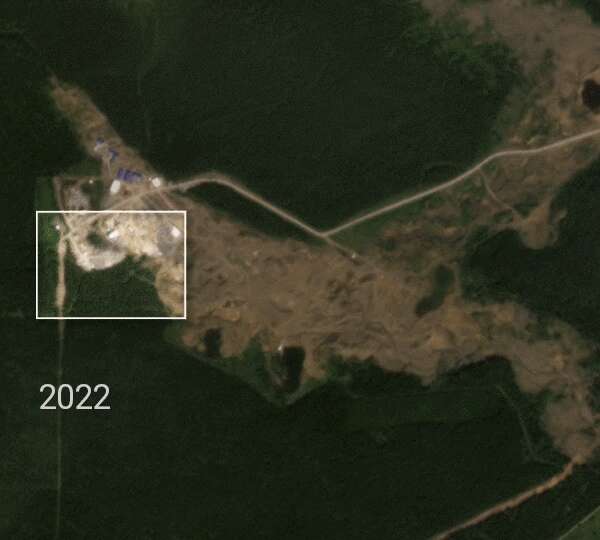
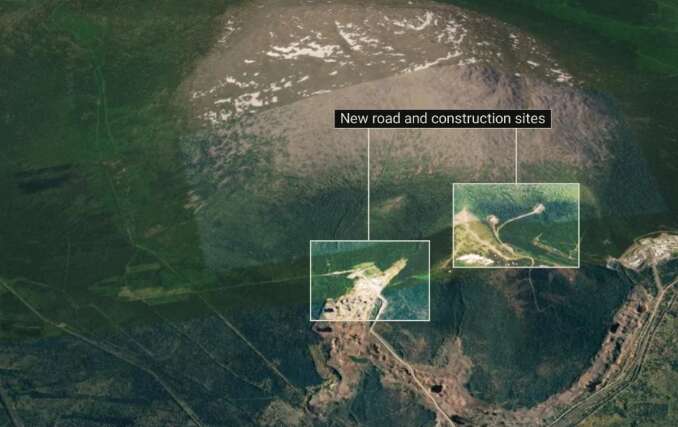
Our research indicates there were originally three entrances into the mountain but the new construction sites indicate there could be many more. A new road has been built up the mountain.
Many experts believe that the Russians are likely to have issued public tenders and allowed signs of construction and mentions of the project in an effort to ensure intelligence services picked up on the clues as part of a nuclear deterrence policy.
By the same measure Putin has said publicly he would be prepared to use a tactical nuclear weapon in Ukraine if the conflict escalated.
Putin’s paranoia
The first official clue of the revival of Dead Hand came in 2020, when the Kremlin released the transcript of a meeting between Putin and his senior military officials.
At that meeting, Putin discussed the creation of a system to ensure Russia’s nuclear command and control infrastructure would survive an attack. “We are aware that a lot depends on the survivability of these systems and their ability to continue operating in a combat environment,” said Putin.
“They have told me that the creation of an absolutely secure facility for controlling strategic nuclear forces, among others, is nearing completion, and that it will have a very high safety margin.”
Since then Putin has become increasingly paranoid about an American attack and the fact that the US has developed bunker buster bombs capable of hitting targets hidden deep underground, such as those used against Iranian nuclear facilities last year.
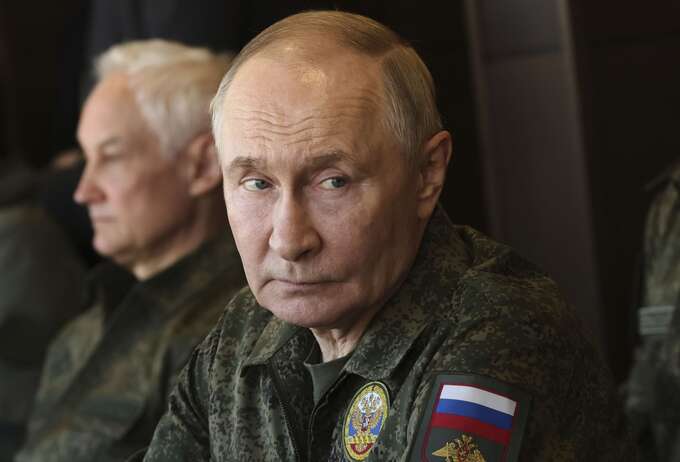
Tom Roseth, expert in Russian security policy at the Norwegian Staff College, the military academy of Norway’s armed forces, said: “It appears that the Russians are securing this facility against every type of attack. To protect 1335 and the command-and-control facilities of the nuclear forces, they therefore have to dig even deeper and reinforce the site even more.
“The expansion of Facility 1335 follows a major upgrade of Russia’s nuclear forces, which has been given high priority within the Russian armed forces. The perimeter will once again be given priority now, in a more tense geopolitical situation in which Russia sees itself as being in conflict with the West.”
The secrecy surrounding the exact operation of Facility 1335 means it has not been possible to obtain images from inside the bunker, which is the target of intelligence collection by the US, France and Britain, among others.
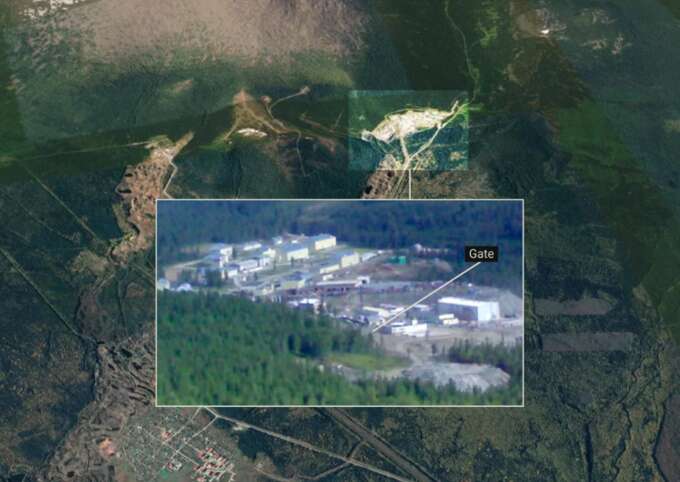
Use of phones and cameras on site is restricted. However, our investigation unearthed images of the base later shared on Russian social media by soldiers posted at the new military camp called Unit 20003.
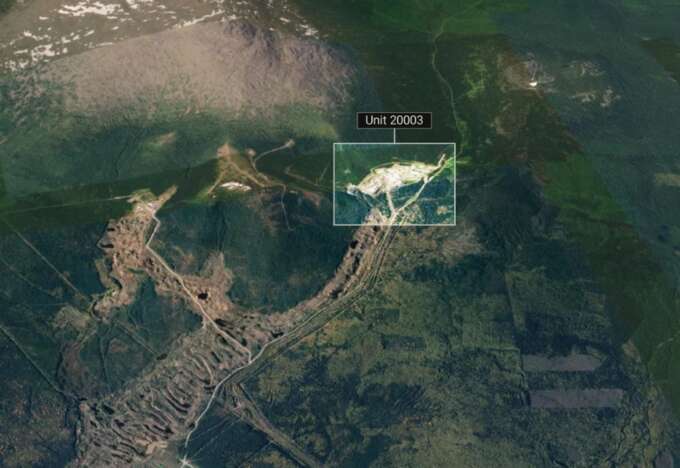
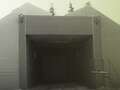
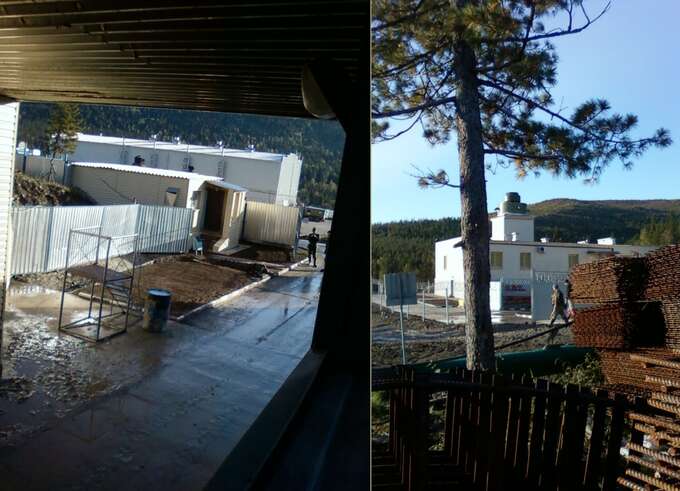
This shows how the facility can be accessed through a large entrance gateway built into the mountain. Another image shows the same original entrance from a distance with an olive green machinegun turret on top of a building on the left:
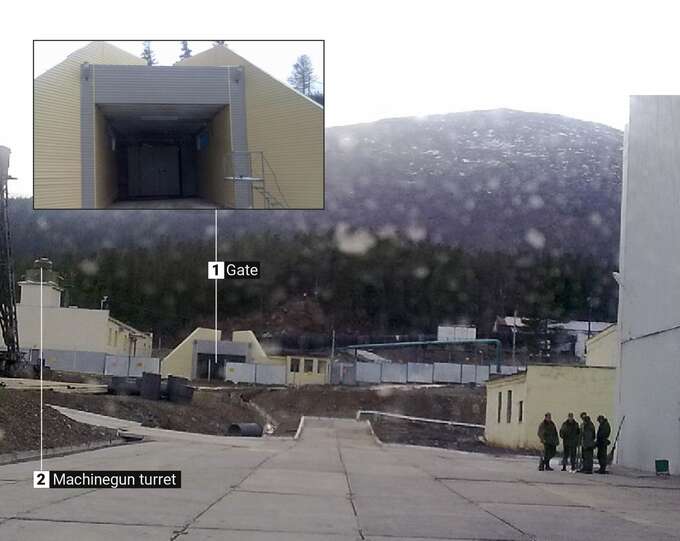
The left-hand image is taken from the entrance to the main tunnel, looking out. On the right is the building housing the green machinegun turret.
Former soldiers with Unit 20003 have described the complex behind the gate as vast. One veteran revealed that the subterranean network was so extensive that buses could drive into the mountain to transport personnel between sectors.
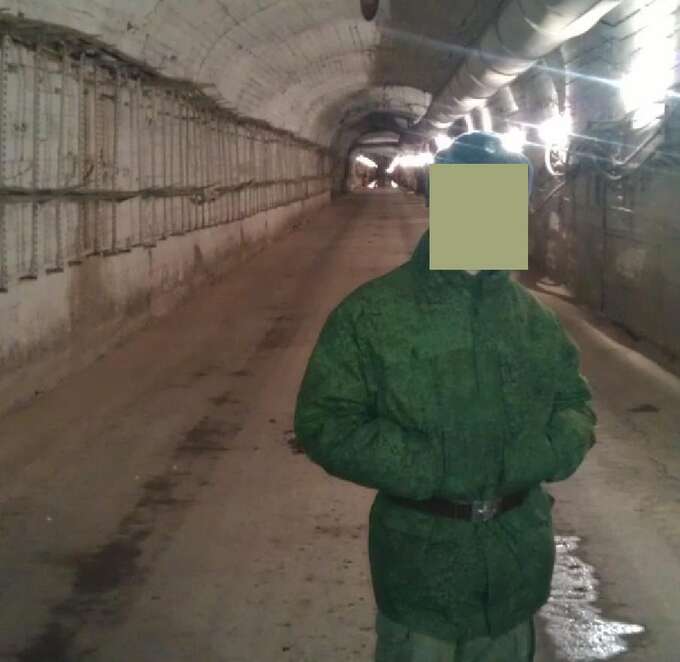
An image found on social media is believed to show a tunnel in Kosvinksy Kamen and a man in uniform who may be attached to Unit 20003. However, we have been unable to verify this.
The tunnel matches the description from construction documents of tunnels “four-ten metres wide and tall”. Other tenders refer to “tunnels of non-circular cross-section over 20 to 60 m2”.
Drills, parades and gas masks
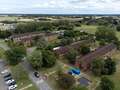
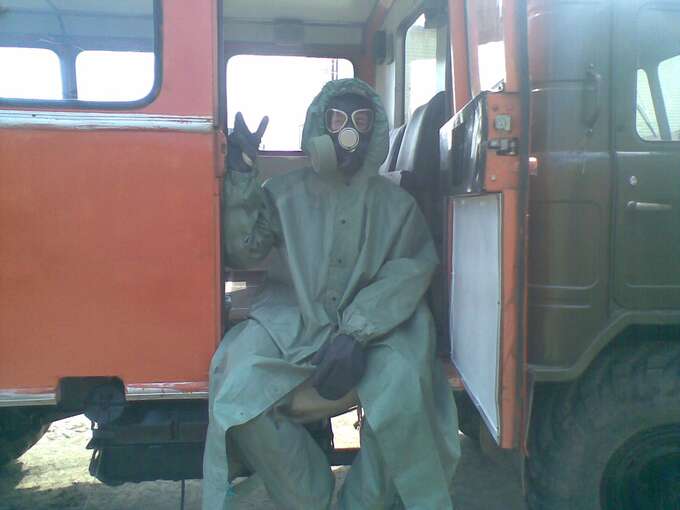
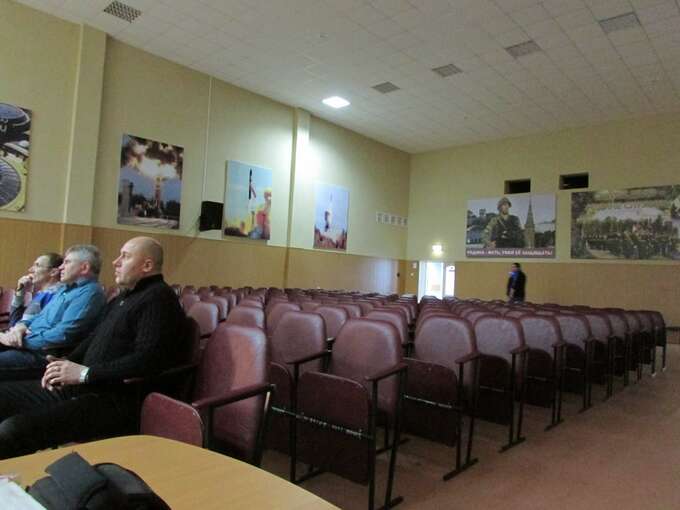
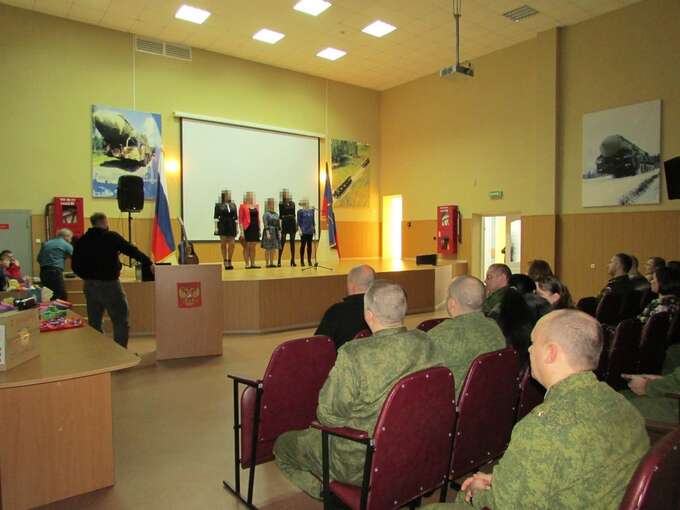
Aerial images and others posted online show that the military base, once a remote outpost manned by young conscripts living in basic accommodation, has become a large, modernised military complex equipped for long-term strategic command. Troops stationed there undergo combat exercises, specialised drills and formal parades. Some show them in gas masks and protective equipment:
Photographs show living areas decorated with posters depicting ballistic missile launches and strategic rocket tests:
Further clues about the use of Facility 1335 were found in military publications uncovered during the investigation.
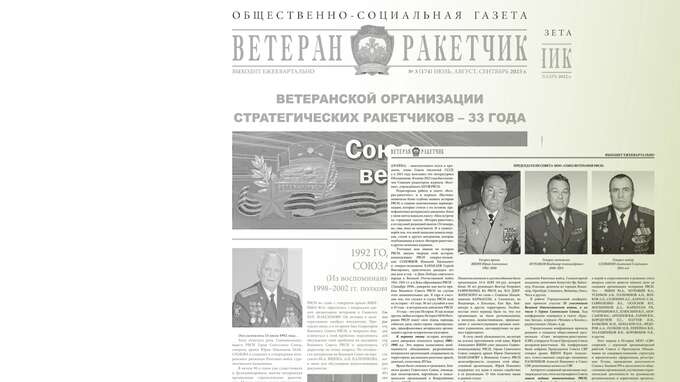
In 2022, explaining the Cold War Perimeter system, the retired major general VG Khalin, who served in Russia’s main intelligence directorate, wrote:
“The system, comprising dedicated radio transmitting centres, fixed and mobile-based command missile systems, radio receiving equipment on strategic nuclear forces, nuclear weapons carriers and command posts, was developed in stages beginning in 1973. Currently, plans are under way to place its automation system on experimental combat duty at Facility 1335. Thus, its life cycle is currently approximately sixty years.”
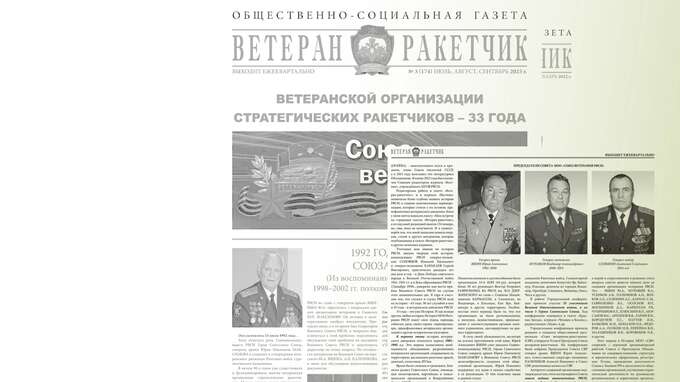
Writing in the same publication in July last year, a veteran of the main directorate of the Russian aerospace defence forces, Colonel Yu Andreev, said:
"It is worth noting that after many years of experimental work at Facility 1335, it was placed on combat duty in 2023.”

This year, Khalin referred to the bunker again. He praised a military hero, the late weapons designer Gleb Yuryevich Vasilyev, who designed Russia’s automated missile launch system.
“The best monument to Gleb Yuryevich will be the commissioning of Object 1335... which, at his initiative, incorporates the technical capability for an automatic retaliatory strike.”
Addressing the current generation of personnel stationed in the mountain, Khalin added:
“Remember that in these command posts lies the talent of Gleb Yuryevich Vasilyev, giving confidence that, if necessary, the strategic missile forces will fulfil their historic mission of retaliation against any enemy who encroaches on our independence.”
What does the West know?
Russia’s investment in building an underground fortified base coincides with efforts by the US to upgrade its own facilities at Cheyenne mountain complex in Colorado and the Raven Rock mountain complex in Pennsylvania, nicknamed the underground Pentagon.
It is understood that western intelligence is aware of Facility 1335.
Jeffrey Lewis, a lecturer at Stanford University in California and a nuclear policy expert, said: “There are a lot of signals coming out of Russia that are being sent that the Dead Hand might be put back into operation, particularly because I think Russia is worried about a number of US capabilities. As conventional weapons get more precise and as the risks of nuclear war go up, it’s not surprising that we’re seeing more and more efforts to bury things.”
Andy Weber, a former assistant secretary of defence for nuclear, chemical and biological defence programmes, who served under President Obama, said: “Putin is very paranoid about decapitation strikes. So, it makes some sense that he would prioritise this.”
When Weber served in the Obama administration, he had oversight of US nuclear weaponry and access to information collected by the US and UK about military installations.
Asked about the expansion of Facility 1335, he said: “Nothing surprises me because it tracks with Putin’s increased investment in the last decade in nuclear delivery systems, warheads and command-and-control systems and because the Russian Federation’s reliance on nuclear weapons has been increasing.”
The final clue about Facility 1335 came from a powerful figures in Putin’s regime. Last year, after President Trump threatened greater sanctions on Moscow unless it agreed to a ceasefire in Ukraine, Russia’s former president Dmitry Medvedev, who is deputy chairman of Russia’s security council, made an oblique reference to on Telegram.
In the message Medvedev suggested that Trump remember his favourite shows where zombies come back to life to attack humans “and think about how dangerous a ‘dead hand’ can be …”

Deputy Editor
Read more similar news:
Comments:
comments powered by Disqus