The most powerful photographs from the 9/11 attacks
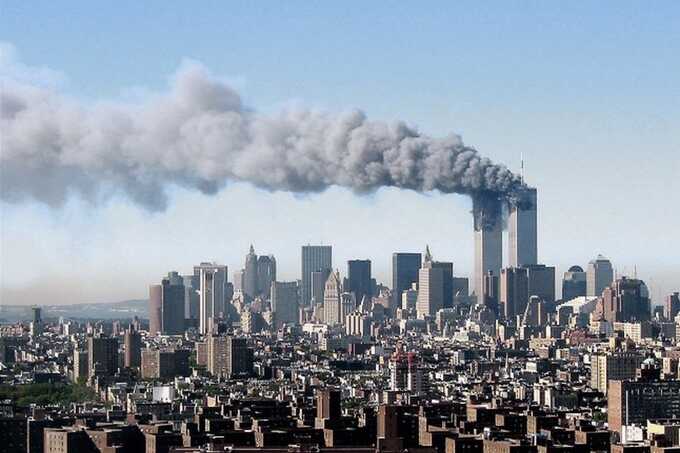
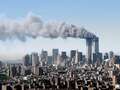
A sapphire-blue sky, broken by a plume of grey smoke billowing from two familiar towers.
For millions watching on September 11, 2001, that was the image that stopped time. At first came reports of an aircraft striking the World Trade Center. Then, before the world could comprehend what it was seeing, a second plane slammed into the South Tower live on television.
In an instant, disbelief gave way to certainty: America was under attack.
The burning Twin Towers became the defining image of 9/11, but they were far from the only photographs that captured the scale of the tragedy.
From acts of heroism and desperation to scenes of grief and resilience, thousands of images documented a day that claimed nearly 3,000 lives and changed the course of history.
Twenty-five years on, Metro revisits some of the most poignant photographs from America’s darkest day.
Seconds after Flight 175 struck the South Tower

At 9.03am, a passenger plane crashed into the South Tower of the World Trade Center, as the North Tower, which had been hit 17 minutes earlier, continued to burn.
The second jumbo jet ploughed into the building between floors 77 and 85, creating a massive explosion as jet fuel flooded the building.
Many thought the first plane had been an accident – but just after 9am, reality set in. America was under attack.
Just 56 minutes after it was hit by United Airlines Flight 175, the South Tower would be the first to fall.
The Falling Man

A photo of one man falling to his death shocked the world
The stark image of a man plunging through the air, the wind rippling his white shirt is one of the most powerful images from 9/11 to this day.
As he falls headfirst past hundreds of storeys of New York’s tallest buildings, the man appears at peace – but it was just one moment captured in time, as the man tumbled out of control through the air.
Taken by Associated Press photographer Richard Drew, the ‘falling man’ is believed to be 43-year-old Jonathan Briley, who worked as a sound engineer at Windows of the World restaurant on the 106th and 107th floors of the North Tower.
His sister, Gwen Briley-Strand, 72, recently told the Daily Mail: ‘There are times when it feels like 25 years but, then again, there are times when it feels like yesterday.’
She added that even if the man in the photo isn’t her brother, he represents all of the almost 3,000 people who died on September 11.
Drew’s image is now in a private collection belonging to Sir Elton John, who described it as: ‘It’s the most beautiful image of something so tragic. It’s probably one of the most perfect photographs ever taken.’
‘Dust lady’

Covered in toxic dust and debris and pictured in a yellow-orange hue amid the chaos of 9/11, this single snapshot became a lasting memory of the everyday people who somehow managed to survive the terror attack and lived to tell their trauma.
Marcy Borders worked for Bank of America and was at her desk on the 81st floor when the plane struck between levels 93 and 99.
She described the building as ‘quaking and swaying’, explaining: ‘I lost all control and I went into a frenzy. I fought my way out of that place.’
Borders eventually got out of the building and into the streets where she and thousands of others were covered in ash and dust as the two skyscrapers caved in.
Stan Honda, an AFP photographer, took the picture, but Borders didn’t know she had been photographed until her mother called to say she had seen her.
In an incredibly tragic twist, she survived for 14 years after the atrocity at the World Trade Center on September 11, 2001, but Borders died in 2015 at the age of 42 after succumbing to stomach cancer.
She and many experts believed it had been caused by the toxic cloud of dust that covered the city that day.
Smoke from the Towers
New York Times photojournalist Lonnie Schlein could see the tops of the towers from his bedroom at his Manhattan home – on the morning of September, he could see smoke coming from them.
At first, Schlein’s newsdesk thought a private jet had hit the tower and called to tell him to get down there and ‘get to work’.
The photographer managed to make it to Waterside Plaza, about four miles away from the World Trade Center, when he heard that a second plane had struck the buildings.
With just a mini-digital camera, he captured a now world-famous image of acrid, grey smoke as it plumed across the Manhattan skyline from the iconic towers.
It was a sight that would only last just 56 minutes – until the South Tower collapsed to the ground. Lonnie would go on to become the editor in charge of all the 9/11 photo coverage, with one dedicated section later being awarded the Pulitzer Prize.
American Pietà

Before the South Tower collapsed, Father Mychal Judge, the New York Fire Department’s chaplain, was on scene.
Clips filmed by Jules and Gédéon Naudet, who were filming a documentary before the attack, showed him praying in the lobby as firefighters around him worked.
When the tower collapsed, Father Mychal was fatally injured and carried out of the rubble by a group of first responders.
The priest is often referred to as the ‘first casualty’ of 9/11. NYPD Lt. Jose Rodriguez performed last rites for the beloved Father before the building collapsed.
His friend Michael Daly said: ‘He loved the firemen and they loved him… for him they were the purest religious order.
‘And his feeling was that they were ordinary people, but when that alarm came in, that kind of grace descended upon them.”
The waving woman
After the plane crashed into the North Tower, images of workers waving for help and standing in the rubble of broken windows were broadcast around the globe.
Edna Cintron was dubbed the ‘waving woman’ as her desperate last moments were filmed.
Cintron, 46, worked as an administrative assistant for Marsh & McLennan, on the 93rd floor of the North Tower.
Cintron’s husband, William, recognised the ‘waving woman’ as his wife. She perished when the towers fell – believed to have fallen or been crushed. Her remains have never been identified.
Raising the Flag at Ground Zero

At 5pm on September 11, both towers had fallen. Smoke was still filling the city skyline, and New Yorkers were desperately trying to reach their loved ones.
At Ground Zero, three firefighters from Brooklyn took a moment amidst the chaos to raise the American flag on a bent steel beam.
Thomas E Franklin, a staff photographer for the Bergen Record, snapped the intimate moment which would go on to become one of the most enduring symbols of the day.
The men in the photo, members of the FDNY, were George Johnson, Dan McWilliams, and Billy Eisengrein.
Franklin said: ‘The photograph is really about one thing for me and it’s a symbol of three firemen raising a flag in an act of solidarity and unity in the wake of the most horrible attack and tragedy in our country’s history.’

World Affairs Correspondent
Read more similar news:
Comments:
comments powered by Disqus