Domestic abusers set for early release as victims warn: "I am terrified"
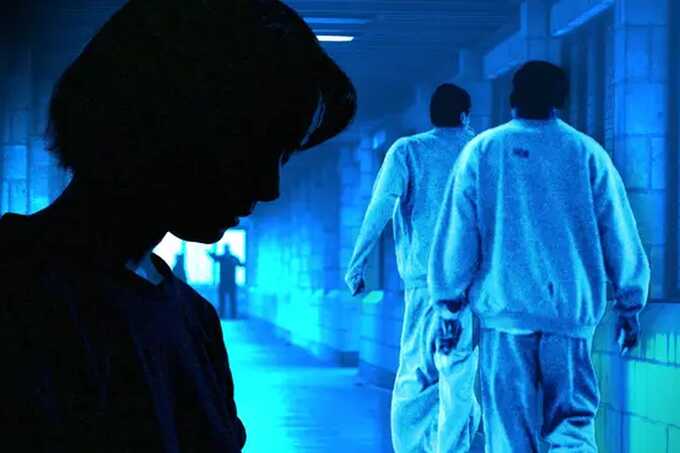
The government has announced that people convicted of manslaughter, death by drunk or dangerous driving, rape, grooming and historic child sexual offences will now be exempt from the scheme.
But many domestic abusers will still qualify under the new rules, which means they will start to be let out from 1 October 2026.
Among them is Tyler Davies, who was jailed for abusing his ex-wife Victoria Lamberth.
Victoria has spoken for the first time about her ordeal to LBC.
“To begin with, he was grabbing me too tightly, or scratching me in an argument,” she recalled.

“But then it escalated to being punched, kicked, bitten, strangled and pinned to the floor or thrown into walls. He split my lip open and gave me a concussion.
"I felt like I had no escape. I believed I was going to die in that relationship, whether it was him that killed me or if I killed myself to get away from it.”
Davies was sentenced to 27 months in November 2025 for charges of controlling or coercive behaviour and actual bodily harm.
But under government plans to free up prison spaces, Victoria has been told by authorities that her attacker is one of those who’ll be freed from custody early.
Justice Secretary Alex Norris told LBC this morning: "If we hadn’t made these changes, we would be running out of prison places in November. So what I say to her and anybody else listening in a similar position, that we will be contacting them with, you know, with details about what’s happening to their perpetrator.
"They then will have direct contact with a victim liaison officer who will be asking them about how they live their life, because their perpetrator leaving prison that release does not mean freedom.
"They are now and can be subject to the widest range of tools we’ve ever had in probation.
"So whether that’s restriction zones, which are a world first, whether that’s tagging, whether that’s bans from football, from driving.
"For too long, for always in this country, victims have had to live around the conditions, the licence conditions on their perpetrators. We want to flip that. So we’ll be asking her how she lives her life so that we can design the controls on her perpetrator to keep her safe and to let her live a full life."
Tens of thousands of people have already been released under the 2024 Early Release Scheme.
As part of the Sentencing Act 2026, thousands more offenders will now be eligible for release after one-third of their term, rather than after 40% or 50% of their term.
Those sentenced for violent or sexual offences will be automatically released at the halfway point, down from the two-thirds point.
‘Terrified’
“I was with my ex for five years,” Victoria, 30, told LBC.
“From leaving him to the moment he was sentenced was four years. That’s nine years in total of my life that I’ve not been able to get back.
"After the trauma that he put me through, for him to only then serve 10 months in prison, it’s not justice. I feel like for nine years of my life, ten months in prison is just wrong.”
“I should feel safe, and I don’t feel safe,” she added.
“I just started to feel safe, but that’s now been taken away from me because he’s going to be out even earlier. I wasn’t prepared to feel that yet. It just hit like a wave, and I feel like I am drowning.
"I’ve been looking at Ring doorbells, security cameras, home invasion security systems. I’ve even looked at moving houses. I am terrified of him finding me. ”
The government says that the vast majority of prisoners will be subject to Electronic Monitoring on release, with record numbers set to leave prison tagged. Narrow restriction zones will be put in place for some sexual and violent offenders.
But some police chiefs suggest monitoring could cause more work and additional funding pressures for resource-strapped forces.
And another victim of domestic abuse, Julie Walker, aged 55, believes tagging will make little difference.
“It does not end when they go to prison,” she told LBC. “A whole new set of traumas begin when they get subsequently released.”
Julie’s abusive ex-partner was released on licence just last month, after only 9 months in custody.
She had suffered a multi-year campaign of domestic abuse, coercive control and stalking at the hands of her then-husband, Jamie Walker.
“He’s now on a GPS tracker,” said Julie.
“Does it make me feel any safer? Absolutely not, because 2 days after he was released, I received a call from Victim Support to say that they now knew of a significant threat against me.
"I genuinely feel the end of my story will still be that headline that at some point he has killed me.”
Julie warns the next Early Release Scheme will make things even worse: “What we’re actually doing as a society is saying to these men that we’re never going to sentence them appropriately or hold them in custody appropriately for what they do.
"It is giving them the green light to go out and start new relationships where these women will go through a cycle of what I’ve already been through.”

‘Immediate danger’
More than 100 domestic abuse specialists are now calling on the Prime Minister to stop the Early Release Scheme altogether.
Dame Nicole Jacobs, Domestic Abuse Commissioner for England and Wales, has expressed “deep concern” about survivors being forced to take measures to protect themselves because the criminal justice system cannot.
“The decision to not exclude domestic abuse perpetrators from this scheme is wrong and puts victims’ lives at risk,” she wrote.
Chief Constable of Thames Valley Police Jason Hogg told LBC that “people are being released as a result of the crime they’ve been convicted of, not the risk they pose to individuals,” meaning some perpetrators, particularly of domestic violence, “may still post a risk to the victim.”
The sister of PC Andrew Harper, whose killers are being denied early release, has also said her thoughts are with domestic abuse survivors. “They are the people that face immediate danger,” Aimee Harper explained to LBC.
“I can only imagine the fear they will be experiencing right now.”
Paris Shears, a domestic abuse survivor campaigner, argued: “We are opening the prison gates at the exact moment we should be strengthening them.”
On the steps of Southampton Crown Court last month, she declared that “release does not end the danger.
"A restraining order is not a force field. Victims should not be forced to flee their homes, uproot their children and rebuild their lives because the system has prioritised prison capacity over their safety.
"We cannot wait until a woman or child is killed before admitting that we got this wrong.”
Domestic abuse ranks as one of the highest volume and most widespread crimes in Britain, accounting for almost 16% of all offences recorded by the police every year, according to the Office for National Statistics.
More than a fifth of the most serious domestic violence perpetrators jailed in the UK reoffend within two years of their release. And the charity Women’s Aid warns one woman a week is killed by a partner or ex-partner.
Another charity, the Jessica Project, has called the government’s decision “difficult to understand.”
The not-for-profit organisation said in a statement that “domestic abuse is not a less serious form of violence. It leaves lifelong psychological, emotional and physical scars.
"Survivors deserve to know that the justice system recognises the seriousness of what they have endured. This is more than about prison spaces. It is about the values we choose to uphold as a society.”
Labour MP Jess Phillips told Steve Holden on LBC News that we can "make up space" in the women’s estates because the "vast majority of women who are incarcerated are not a risk to society".
She said: "There is absolutely no way on God’s earth that I would suggest putting men and women in a prison together. It is about looking at the estate across the board.
"The vast majority of women who are incarcerated are not a risk to society. They are usually victims of violence and abuse themselves."
‘Brink of collapse’
A Ministry of Justice spokesperson told LBC that the government “shares the public’s anger that these options are even being considered” and that it’s working to “keep more of the most dangerous offenders behind bars.”
Prime Minister Andy Burnham also says he understands “how strongly people feel about this issue.”
“The truth is I wanted to go even further,” the Prime Minister stated. “But I’ve pushed the system to the very limits of what’s possible without risking the prison system collapsing within months, putting the public at enormous risk.”
Both the Conservatives and the Liberal Democrats have been critical of the government’s handling of the policy, which is supported by only one in ten Brits.
Yet the Labour government insists it inherited a prison system running at 99% capacity. It claims that if it didn’t act, courts would be unable to hold trials, police would be unable to make arrests, crime would go unpunished, and there’d be no space in custody for domestic abusers who were sentenced.
There are almost 87,000 people in prisons across England and Wales, with just over 2,000 remaining spaces.
The government says it’s building 14,000 new prison places, deporting foreign criminals faster, and funding better victim support.
‘Disgrace’
But Victoria Lamberth thinks the Early Release Scheme is “a disgrace to the victims.”
“Those cruel and vile people that can take that power and hold it over your head, who will use violence to control you, who hurt you in that way, who threaten your life – they shouldn’t be out early,” she argued. “They should be serving their punishment for the crimes they have committed because they are dangerous people.”
“The government wants to claim that it is fighting for the safety of young women and girls, but they’re not actually fighting for that,” she added. “They’re letting these people out early who are a risk to the young women and girls they want to protect.”

Editor-in-Chief
Read more similar news:
Comments:
comments powered by Disqus