Britain abandoned £5.5bn HMS Sussex treasure hunt to avoid confrontation with Spain
Britain walked away from a potential £5.5billion treasure recovery mission near Gibraltar rather than risk a confrontation with Spain over the territory.
The leaked documents reveal that ministers in the early 2000s chose to abandon efforts to salvage what is believed to be HMS Sussex, a Royal Navy flagship lost off Gibraltar more than three centuries ago, despite the wreck being British property.
Senior parliamentarians and exploration experts are now pressing the Government to authorise a new expedition to retrieve the golden cargo thought to have sunk with the vessel.
The Telegraph has reported that the wreck site sits in international waters to the east of Gibraltar, an area Britain has never formally claimed but could assert jurisdiction over under international maritime law, opening the door to a fresh salvage attempt.
Historical records indicate that HMS Sussex was transporting as much as 10 tonnes of gold coins destined for Victor Amadeus II, Duke of Savoy, to fund his military campaign against Louis XIV of France during the Nine Years’ War.
At today’s values, such a haul could be worth up to £5.5billion, potentially making it one of the richest shipwrecks ever found.
The warship was the jewel of King William III’s fleet when it departed Portsmouth in 1694, leading 214 vessels into the Mediterranean.
A ferocious storm struck after the fleet anchored at Gibraltar in February of that year, sending HMS Sussex to the bottom with 548 of its 550 crew, including its commander, Admiral Sir Francis Wheeler.

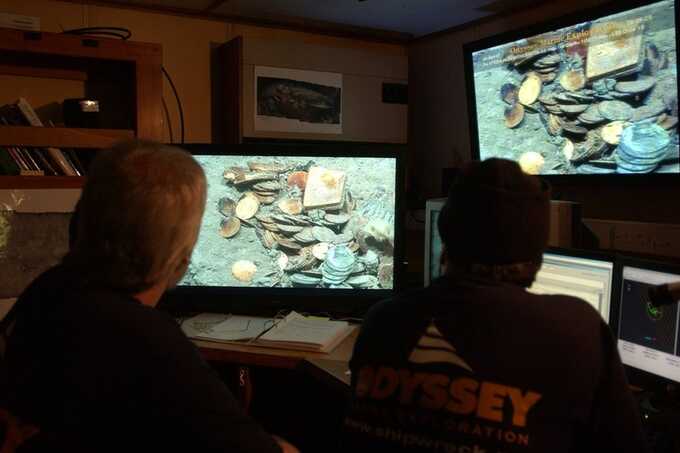
Following a three-year search employing sonar and remotely operated submersibles, American deep-sea firm Odyssey Marine Exploration declared in 2001 that it was "99 per cent" confident it had found the vessel resting 821 metres beneath the western Mediterranean.
The British government struck a deal with Odyssey to identify, excavate and recover the wreck, with any treasure to be shared.
Yet Spain moved swiftly to obstruct the operation, asserting authority over the surrounding waters and suggesting, without evidence, that the vessel might be one of its own.
Madrid’s hostility stemmed from its unrecognised claim to Gibraltar itself as former members of the salvage team claimed Spanish interference proved relentless.
Neil Cunningham Dobson, the project’s marine archaeologist, told The Telegraph: "The Guardia Civil patrol boat comes along, they stop you, they want to see your passport and all that, and off you go.
"For some reason, Spain didn’t like us and would terrorise us at every opportunity."
Tom Dettweiler, a project manager, said the company had repeatedly asked Britain to extend Gibraltar’s maritime claim beyond its self-imposed three-nautical-mile limit, but was rebuffed, adding: "The government didn’t want to cause a major incident, so they continually backed down."
Confidential US diplomatic cables, subsequently published by WikiLeaks, show that British officials privately acknowledged the damage the dispute was inflicting on relations with Madrid.
Dame Denise Holt, then deputy head of mission at the British embassy in Spain, cautioned that the Odyssey row represented "an unnecessary threat" to the bilateral relationship.

Dame Denise also made clear that Britain would offer no assistance to Odyssey’s vessels when they next put to sea, despite the company’s ships having taken shelter in Gibraltar.
In a separate cable from 2005, Spain’s culture minister Carmen Calvo declared that Odyssey would search for HMS Sussex "over her dead body".
Stripped of government backing, the project ground to a halt and the Odyssey contract lapsed.
But former Conservative Cabinet minister Sir David Davis has called on the Government to assert the maritime rights available to it under international law.
He said: "Given Spain’s attitude to Gibraltar and given Spain’s attitude in this case, where there’s a real economic issue at play, why on earth would you be so precious about upsetting Spain?
"It seems self-evident the Government should extend the territory and claim our rights because they are rights under international law."

He described the failure to do so as "a classic piece of British Foreign Office pusillanimity".
Technological advances in autonomous underwater vehicles and modern survey equipment mean a fresh recovery effort would be significantly more practical than two decades ago, according to former team members.
Mr Dettweiler, now president of American Ocean Minerals, said he would consider returning if ministers offered their support.
The Ministry of Defence declined to comment.

Technology & Business Editor
Read more similar news:
Comments:
comments powered by Disqus