Montenegro’s most wanted crime boss Radoje Zvicer sentenced to 40 years in absentia
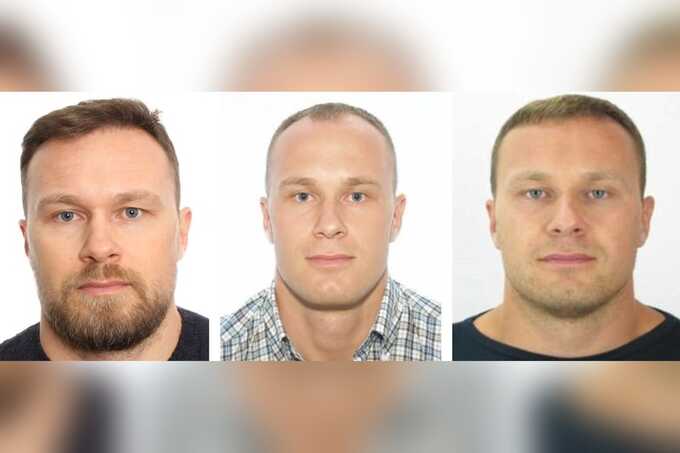
A Montenegrin court handed down a 40-year prison sentence in absentia and steep financial penalties to the fugitive leader of the notorious Kavač criminal clan for aggravated murder and other charges.
Radoje Zvicer, who remains at large as one of Europe’s most wanted crime bosses, received the maximum consolidated prison term under Montenegro’s criminal code from a special judicial panel of the Higher Court in Podgorica. While the court’s official statement referred to the defendants using only their initials—listing the gang leader as Z.R.—Montenegrin news outlets identified Zvicer and his 10 co-defendants by their full names.
Along with his four-decade sentence, Zvicer was ordered to pay 294,000 euros ($334,737) for financial benefits acquired through his crimes and was held jointly liable with co-defendant Radovan Mujović to pay an additional 547,000 euros ($622,778).
Considered one of the most enigmatic figures in organized crime, Zvicer has long been sought by authorities who describe him as dangerous and potentially armed. To the long list of crimes he is suspected of, his arrest warrant also includes illicit trafficking in narcotic drugs and psychotropic substances.
He has survived multiple attempts on his life. In May 2020, he was targeted by assassins while jogging in downtown Kyiv, but survived after his wife, Tamara, fired back at the attackers. In February 2021, assassins reportedly attempted another hit near Bosnia’s Jahorina ski resort where the couple was vacationing.
The assassination attempts are part of a brutal, years-long feud between the Kavač clan and their rivals, the Škaljari clan. Both groups hail from Kotor, Montenegro, on the Adriatic coast, and were originally allies in smuggling South American cocaine into Europe. The groups split in 2014 over a botched drug deal, sparking a violent conflict that fractured the criminal underworld in Serbia and Montenegro, pulling in other gangs and allegedly corrupting police and politicians.
The rivalry has claimed dozens of lives across the Balkans and beyond as the clans vie for control of Europe’s 5.7 billion-euro-a-year cocaine market. The feud escalated in September 2022 when Jovan Vukotić, a leading figure of the Škaljari clan, was shot and killed by a gunman on a motorcycle while sitting in a car with his family in Istanbul. Before his assassination, Vukotić allegedly offered a 4 million-euro bounty for the deaths of Zvicer and fellow Kavač leader Slobodan Kašćelan.
Beyond Zvicer, the Podgorica court handed down extensive sentences and fines to 10 co-defendants, largely for the unauthorized production, possession, and distribution of narcotics.
Former intelligence officer Petar Lazović was sentenced to 20 years in prison, while fugitive police officer Ljubo Milović received 19 years. Because both men were also convicted of smuggling for financial gain, the court fined them 100,000 euros ($113,853) each and ordered them to forfeit illicit financial gains, with Lazović required to pay 32,000 euros ($36,433) and Milović 31,800 euros.
Other members of the group were convicted primarily of drug trafficking. Radovan Mujović was sentenced to 10 years and nine months, Radovan Pantović to 10 years, Milan Vujotić and Nikola Spasojević to nine years and three months each, Duško Roganović to eight years and three months, and Radoje Živković to seven years and nine months.
The court convicted Nikša Perović of money laundering, sentencing him to six years and 10 months in prison, while Petar Mujović was sentenced to seven years and nine months for attempted aggravated murder.
Alongside the prison terms and financial penalties—which are due within three months of the verdict becoming final—the judges ordered the confiscation of real estate tied to the defendants. The court seized a 480-square-meter residential and commercial building in Kotor from Perović, as well as a 69-square-meter residential space in Nikšić owned by Radovan Mujović’s father.

Head of Investigations
Read more similar news:
Comments:
comments powered by Disqus