Orban’s circle under scrutiny as Benko lands billion-backed contracts

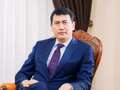
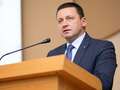
A company owned by Péter Szijjártó’s close associate, Szilárd Benkő, was involved in an African investment project financed by a Hungarian loan and participated in multiple foreign affairs-related deals, though the former minister insists he was unaware of these activities.
As reported by Direkt36, in a post-election interview with Telex, Szijjártó spent hours defending both himself and the government he served in, while also revealing key details about a notable personal connection.
It was already known that he was on good terms with a man named Szilárd Benkő, but he has now revealed that the two of them have been best friends for thirty years. Szijjártó also revealed that it was Benkő who invited him and his family on vacation in 2020 aboard the luxury yacht Lady MRD, which was also used by other members of the pro-government elite at the time for lavish trips. At the time of the vacation, the yacht was owned by a company belonging to billionaire László Szíjj, a businessman with ties to Fidesz.
In the interview, Szijjártó expressed some criticism of the fact that the press often writes about the man, “even though his only ‘crime’ is” that he is on friendly terms with him.
He was presumably referring to the articles in which Direkt36 revealed that Benkő’s companies had, for years, regularly received funding or high-value contracts through organizations or projects linked to Szijjártó’s ministry.
We have uncovered that one of the companies owned by Benkő, a former close associate of Szijjártó at the Ministry of Foreign Affairs, received hundreds of millions of forints in non-repayable grants in 2020 from an organization affiliated with the Ministry of Foreign Affairs and Trade. We also discovered that one of Benkő’s construction companies was involved in several large-scale projects, each backed by tens of billions of forints in state funding, which Szijjártó’s ministry also played an active role in launching.
In the interview, Szijjártó emphasized that he had nothing to do with any of this. He also stated that “Szilárd never, not even once, asked me for any help in connection with his business activities.”
In the meantime, however, Direkt36 uncovered another connection between Benkő and the Ministry of Foreign Affairs led by Szijjártó. We discovered that Benkő’s construction company, Verbau Kft., even managed to secure a high-value contract in distant Rwanda as part of a consortium, financed by the state-owned EXIM Bank. The deal took place within the framework of an aid program that Péter Szijjártó personally negotiated with his Rwandan counterpart.
We asked Péter Szijjártó how it was possible that Szilárd Benkő’s company, Verbau Kft., had regularly worked on projects subsidized by the state with HUF billions in recent years, and whether he was unaware of Benkő’s business dealings in Africa. The former foreign minister said he does not concern himself with what Benkő does in the business world; such matters are not discussed between them.
“There has never been, nor will there ever be, any connection between the business activities Szilárd engages in and the political activities I engage in. I have been very careful to ensure that,” said Szijjártó.
In response to our question about Verbau’s project in Rwanda, he stated that the company had been contracted by the Rwandan government, completely independently of the Hungarian Ministry of Foreign Affairs.
We also asked Verbau Kft. about its participation in state-funded projects. The company replied that it had participated in the projects as a subcontractor, and that it was only natural that a company with several decades of experience would have worked on projects that received state funding.
The voice of the party
Yet Péter Szijjártó began his political career as a defender of public funds and a relentless critic of conflicts of interest among politicians. In 2003, for example, he stood ankle-deep in Lake Balaton to protest the acquisition of a formerly state-owned villa by a company owned by Ferenc Gyurcsány, who was serving as sports minister at the time.
Szijjártó, as the young but fiercely combative face of Fidesz, harshly questioned then-Prime Minister Péter Medgyessy, asking how long he would tolerate “the unbridled rampage of former KISZ cadres, business partners, and friends.”
More than two decades later, he left his ministerial post after being forced to explain himself regarding the business dealings of one of his friends. We have been following Benkő’s activities for years, so we have managed to learn many details about his relationship with Szijjártó.
Benkő and Szijjártó are the same age, and both began their political careers in Győr. Benkő originally trained as an instrument maker, but soon turned to politics; he first served as the leader of Fidelitas in Győr, then worked as a press secretary alongside Szijjártó. Even after the change of government in 2010, he remained a prominent figure in Szijjártó’s team—a man whom Viktor Orbán clearly held in high regard and who was therefore rising through the ranks.
When Szijjártó became State Secretary for Foreign Affairs in 2012, he appointed Benkő to a position of trust, entrusting him with the duties of chief of staff. Benkő remained in this position even after Szijjártó became Minister of Foreign Affairs in 2014. Meanwhile, sports also brought them together; starting in 2011, they were teammates on the Dunakeszi Kinizsi futsal team. Szijjártó wore jersey number 30, while Benkő wore number 31.
In 2015, Benkő left public service; according to a statement issued by the Ministry of Foreign Affairs at the time, he did so in order to build a career in the private sector.
Benkő first became involved as an owner in IT and food service companies, then entered the construction industry in 2018. It was then that he became an owner of a company called Eutek Kft. In 2020, the government provided this company with a large, non-repayable grant. The HUF 280 million (about EUR 800.000) grant came from the Hungarian Investment Promotion Agency (HIPA), a background institution of the Ministry of Foreign Affairs and Trade led by Szijjártó, as part of a program in which the state officially provided assistance to companies facing difficulties due to the COVID-19 pandemic. In exchange for the funding, Benkő’s company committed to preserving four jobs and making an investment of 560 million forints.
Regarding this grant, Péter Szijjártó said in his April interview with Telex that he only learned about the grant to Benkő’s company after the grant had been awarded. He added that 1,200 other companies also received funding through the grant program.
The construction industry has clearly been a good fit for Benkő. In 2022, he acquired Verbau Kft., a long-established construction company based in Kecskemét. Just a few months after the acquisition, in December 2022, the company announced that it had been selected as the general contractor to build the new Kecskemét factory for Hilti, a multinational engineering company. The government contributed HUF 1.1 billion (EUR 3.1 million) to the project, which is valued at more than HUF 7 billion (EUR 20 million). The funding came from HIPA, an agency of the Ministry of Foreign Affairs and Trade, and Péter Szijjártó himself had previously announced it to the public.
Verbau later worked on several projects that received billions in state funding and were personally close to Péter Szijjártó’s heart. One such project was the BMW plant in Debrecen. Although not serving as the general contractor, Verbau participated in several tasks related to the plant. The company’s social media posts revealed that they installed industrial flooring covering an area equivalent to five soccer fields at the plant on behalf of BMW, and that they also participated in a railway development project related to the plant.
It is not known how much the company was paid for the work, but according to a construction industry source familiar with market prices who spoke to Direkt36 on condition of anonymity, the combined market price for the two sub-projects may have reached HUF 2.1 billion (EUR 6 million).
Verbau also participated in another investment project in Debrecen, which Péter Szijjártó worked hard to bring to fruition. According to a previous statement by the foreign minister, negotiations lasted two and a half years to secure a deal for the Chinese company Contemporary Amperex Technology Co. Limited (CATL) to build its new battery factory in Debrecen, Hungary. Of the HUF 3,000 billion (EUR 8,5 billion) investment, the Hungarian government has committed HUF 88 billion (nearly EUR 252 million).
Of this massive business deal, nearly HUF 7 billion (EUR 20 million) went to Verbau, owned by Szilárd Benkő. According to a document obtained by Direkt36, the company was contracted for this amount to carry out construction work related to the factory. The work was to be completed on a site that CATL leased from a company indirectly owned by the Hungarian state.
Billions in Africa
There is a high-value, government-funded project in which the ties between the ministry formerly headed by Szijjártó and the company owned by his best friend, Szilárd Benkő, are even closer.
In May 2025, Szijjártó announced, alongside Rwandan Foreign Minister Olivier Nduhungirehe, that the Hungarian government would provide support totaling HUF 20 billion (EUR 57 million) to modernize the water treatment plant in Kigali, the capital of Rwanda.
The Hungarian minister also said that three Hungarian companies are carrying out this investment. He did not reveal which companies they were, even though he must have been familiar with at least one of them. One of the three companies was Verbau—Benkő’s company.
Direkt36 has obtained one of the project’s documents, which contains details about the general contractors. According to this document, Verbau, as a member of a consortium called H2O Rwanda Consortium, along with two other Hungarian companies—LAOPROJEKT Zrt. and Kőrös-Consult Zrt.—signed a contract with a local company established by the Rwandan government to design and upgrade the Karenge water treatment plant.
We also sent questions to the other two members of the consortium regarding the investment. LAOPROJEKT Zrt. replied that the consortium won the contract through a public procurement process conducted by a Rwandan state-owned company, and that the contract’s current total value is approximately HUF 15 billion (nearly EUR 43 million). They did not respond to our questions regarding further details of the project, citing their confidentiality obligations. Kőrös-Consult did not respond to our inquiry.
Hungary helps
At a joint press conference, it was also announced that the investment will be carried out under a special aid program agreed upon by the two countries in 2021. According to the relevant decree, under this program, Hungary may provide Rwanda with a discounted loan, subject to certain conditions, totaling USD 52 million (currently approximately HUF 16 billion). At least half of the projects financed by the loan must be implemented through the purchase of goods and services originating at least in part from Hungary. With this condition, the Hungarian government is primarily seeking to benefit domestic businesses under the aid program.
The framework agreement also states that Hungary is offering a non-repayable grant for the water treatment plant development project in Kigali. The exact amount of this grant is not specified in the regulation.
We have no precise information on what rewards Hungarian companies participating in the African water treatment project will receive for their work, nor do we know exactly how much the project will cost. However, in a social media post, Péter Szijjártó referred to the project as a “$52 million investment,” and on another occasion, he spoke of a HUF 20 billion (EUR 57 million) investment. From this, it can be concluded that the investment will use up the entire amount of the aid program, meaning it will be funded entirely from the billions provided by the Hungarian government through the program.
The framework program also provides information regarding the selection of Hungarian companies. According to the program, the Rwandan government will select companies registered in Hungary for the project and then notify Hungary’s Ministry of Foreign Affairs and Trade of its decision. This means that the Hungarian Ministry of Foreign Affairs, and its minister, Péter Szijjártó, must have been aware—at the latest, after the selection process—of which companies were participating in the Rwandan project. This includes the fact that the company owned by his best friend, Verbau Kft., was among them.
Direkt36 also found another piece of evidence confirming Verbau’s leading role in the African investment. It is a photo uploaded to social media by another company that is also involved in the project. The photo shows the project’s information board at the site, displaying a number of important details. The header of the sign mentions the Government of Rwanda and one of its ministries, while further down is a description of the project: the development of the Karenge water treatment plant.
The Government of Rwanda and the Hungarian state-owned EXIM Bank were identified as the project’s financiers, while the H2O Rwanda Consortium was designated as the general contractor; the sign specifically lists Verbau Kft. alongside the other two companies within the consortium.

Head of Investigations
Read more similar news:
Comments:
comments powered by Disqus