Moldova stands firm for Europe in key parliamentary elections

Defying years of alleged Russian attempts to influence its politics and hinder its European aspirations, Moldova decisively chose a pro-European direction in parliamentary elections on Sunday, granting a clear majority to the governing Action and Solidarity Party.
“Moldova, you’ve done it again,” European Commission President Ursula von der Leyen announced in a message on X. “No attempt to create fear or division could shake your determination. You made your preference clear: Europe. Democracy. Freedom. Our door is open. And we will support you every step of the way. The future is yours.”
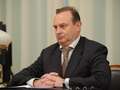
According to preliminary results released Monday by the Central Electoral Commission, the Action and Solidarity Party (PAS), led by Igor Grosu, won 55 out of 101 seats in Parliament — sufficient for a governing majority. Much of its backing came from Chișinău, the diaspora, and 24 districts, despite warnings of Russian interference and disinformation campaigns.
Five other political groups surpassed the electoral threshold. The pro-Russian Bloc Patriotic (BP) claimed 26 seats, securing major victories in eight districts. Bloc Electoral “Alternativa” gained eight, while Partidul Nostru and Partidul “Democrația Acasă” each obtained six.
“Moldova, I bow before you,” Grosu told supporters in the early hours of Monday as ballot counting neared completion. “You have triumphed over adversaries who seemed undefeatable in battle after battle. Russia threw everything corrupt it had: tons of money, lies, and illegalities. It employed criminals to try to turn our country into a space of criminality.”
Investigative journalists from Ziarul de Gardă, CU CENS, and Rise Moldova — all members of the OCCRP network — have in recent months documented Moscow’s influence networks in Moldova, revealing how Moscow was recruiting activists to stage street protests, produce propaganda, and mobilize elderly voters against European integration. Funds were channeled through cryptocurrency accounts and Russian banks, while sanctioned Russian foundations discreetly financed local groups.
Reporters also tracked training camps for Moldovan youths in Moscow, Serbia, and Republika Srpska, the Serb-controlled region of Bosnia and Herzegovina, where recruits learned protest tactics, weapons handling, and drone use. Some later intimidated journalists and rallied for pro-Russian candidates, even as police opened criminal cases that yielded little restraint.
Moldovan President Maia Sandu has repeatedly warned of the Kremlin’s campaign to destabilize the country. Before the election, she informed European lawmakers that Moscow had spent “hundreds of millions of euros” attempting to influence voters. “The Kremlin’s objective is clear,” she said. “To capture Moldova through the ballot box.”
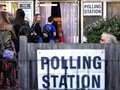
The elections were widely viewed as crucial for Moldova’s path toward the European Union, where accession talks began earlier this year. For Grosu, the result underscored what he described as a democratic victory over foreign pressure.
“People who went to the polls knew this was a battle for the future,” he said. “We taught the most important lesson of democracy — that even an oppressor like Russia can be defeated if you fight with the strongest asset a country has: its people.”

Editor-in-Chief
Read more similar news:
Comments:
comments powered by Disqus