Ukraine offers Brits "wartime lessons" on protecting infrastructure and civilians from Russia
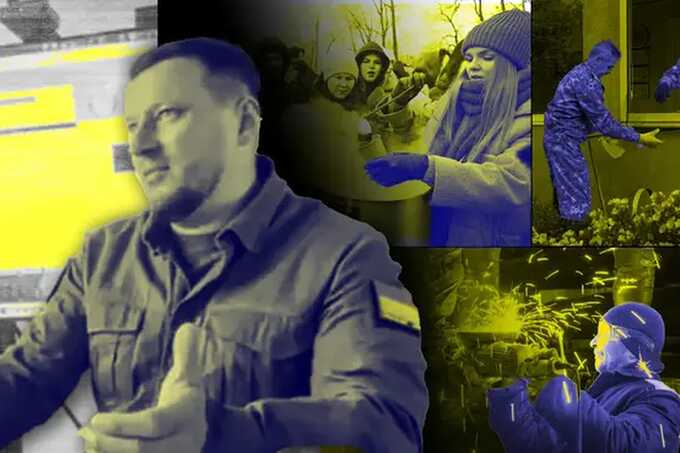
Oleksandr Tolokonnikov,Deputy Head of the Kherson Administration for Digital Development and International Cooperation, who works in the heavily targeted region, said the most dangerous belief is that the UK is "too far away" to face the threat or that "Putin would never dare attack NATO".
Kherson officials are now offering to train Brits on how to respond to major sabotage events as "millions of people can be left without electricity, water, gas, heating, and communications within the first hours of a war."
He said Ukraine’s experience shows what happens when infrastructure is not protected before conflict begins.
Prime Minister Andy Burnham was in Kyiv to mark the 35th anniversary of Ukraine’s independence, and unveiled plans to share blueprints to help Ukraine produce Storm Shadow cruise missiles domestically. Vladimir Putin’s spokesman, Dmitry Peskov, warned that the decision to supply blueprints would add “fuel to the fire” of the conflict.
This comes amid growing concern in Britain that Russia’s campaign against the West is increasingly being fought away from the conventional battlefield, using proxies, criminals and recruits found online to conduct sabotage and other attacks while giving Moscow a degree of plausible deniability.
The threat was laid bare this week when former Russian deputy foreign minister Andrei Fedorov suggested British factories involved in producing drones for Ukraine could be attacked by “unknown sources”.

But the Prime Minister rejected these accusations, saying the sharing of the designs are necessary to ensure Ukraine can defend itself.
"It’s not a path of confrontation. It’s doing what Britain has done since the start of this conflict, which is to provide support for Ukraine to defend itself," Andy Burnham told LBC this week during his visit to Ukraine.
The Prime Minister warned allies against allowing their focus to drift as the conflict continues.
Mr Tolokonnikov said Kherson’s officials and emergency services are responding to the ongoing threats by offering practical training to partners in Europe based on their experience of operating under Russian shelling.
The training can take the form of online seminars or on-the-ground exercises, led by people who are still working in Kherson. They cover how to respond if a city loses power or water, organise evacuations, keep hospitals running, protect vital infrastructure and build counter-drone systems.

Mr Tolokonnikov said the training is aimed primarily at government leaders, officials and emergency services, who can then help prepare their communities.
“We do not talk about how things should work under ideal conditions,” he said.
“We show how to act when hundreds of shells and drones are flying over your city every day, when hospitals are operating under shelling, and when critical infrastructure has to be restored literally between attacks.”
Kherson is already sharing its experience with Lithuania, Latvia, Estonia, Romania, Sweden, Norway and Germany.
Following one training session, officials in the German state of Schleswig-Holstein decided to increase police numbers by 200 officers, Mr Tolokonnikov said.
The region has also set out its lessons in a book, Unbreakable Kherson, produced with the German Marshall Fund.
It contains 32 lessons for Europe, including guidance on hospitals, evacuations, civil protection, drone threats and restoring infrastructure after attacks.
Mr Tolokonnikov said Russian forces in Kherson target substations, power grids, boiler houses, gas pipelines, water systems and communications facilities “practically every day”.
He said more than 430 attacks on life-support facilities had been recorded in the region since the start of the year.
But Kherson has managed to keep basic systems operating in most communities through what he called “systematic work”, including physical and military protection for infrastructure and emergency repair teams.
After Kherson was liberated in November 2022, he said retreating Russian forces had destroyed transformers, substations and power lines, and removed equipment.
He warned Britain and other European countries could not afford to wait until an attack was under way before preparing.
“Preparations for protecting critical infrastructure must begin before a crisis starts. Because once the first missiles are already flying, there is simply no time left to create a protection system.”
Mr Tolokonnikov presented the plans for UK training sessions at an event in the House of Commons in May, held with the support of Labour MP Bambos Charalambous.

He said British parliamentarians, think tanks, civil society groups and journalists had shown interest in protecting infrastructure, maintaining government services, defending civilians and countering Russian propaganda and cyberattacks.
“The idea of holding training sessions was received very positively,” he said.
Mr Tolokonnikov added: “What Russia fears most is not weapons, but readiness.”
“When a country has trained managers, trained emergency services, well-practiced action plans, shelters, reserves, and a population that knows how to act during wartime, it is much harder to intimidate and much harder to defeat.”
The Ministry of Defence said they are actively planning for how to better protect Critical National Infrastructure (CNI) against a range of hybrid and conventional threats.
As part of this work, the ministry said they are seeking to learn lessons from how Ukraine has protected and defended its CNI from Russian attacks.
The MoD has not had any specific engagement with representatives from Kherson to date.

Head of Investigations
Read more similar news:
Comments:
comments powered by Disqus