"Butcher of Bosnia" Ratko Mladić dies in prison aged 84
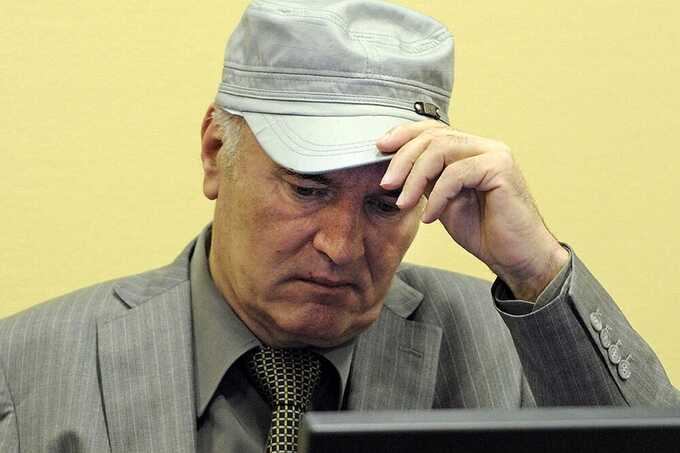
Ratko Mladić, the Bosnian-Serb general who orchestrated the Srebrenica massacre and the siege of Sarajevo during the Balkan wars, has died in prison aged 84.
Known as the “Butcher of Bosnia,” Mladić was convicted in 2017 by the International Criminal Tribunal for the former Yugoslavia (ICTY) for masterminding a campaign of ethnic cleansing against Bosnia’s non-Serb population in the early 1990s.
The UN-established court found him guilty of genocide, crimes against humanity, persecution, extermination, murder, terror, unlawful attacks on civilians and hostage-taking.
At the time of Mladić’s indictment, ICTY Judge Fouad Riad described the actions the former general oversaw as “unimaginable savagery.”
Mladić died while serving a life sentence at the UN Detention Unit in The Hague, his lawyer Dragan Ivetić told CNN. He spent just over 15 years in prison.
Following his conviction, Mladić made multiple appeals and requests for release on medical grounds. The last of these was filed by his lawyers just last week.
They asked for an early release on humanitarian grounds, quoting the detention unit’s doctors as saying that his “overall condition has rapidly declined” and warning that his death “may occur at any time.” The request was denied.
‘Scenes from hell’
Mladić was born on March 12, 1942, in the municipality of Kalinovik in what was then Yugoslavia. Born at the height of World War II, his early life was deeply affected by the conflict – his father Nedja Mladić was killed by the Ustasha regime, a Croatian fascist movement which was installed by the Nazis and Fascist Italy in occupied Yugoslavia, and which perpetrated genocide against Jews, Serbs and Roma.
Ratko Mladić trained at the military academy of the Yugoslav People’s Army in Belgrade. He graduated in 1965, joined the Communist Party and became a career soldier.

After the breakup of Yugoslavia, Mladić became the Commander of the General Staff of the Army of the breakaway Serb Republic in Bosnia, which was backed and armed by the Serbian leader Slobodan Milosevic.
As the army chief, Mladić was the main architect of a brutal campaign of ethnic cleansing, directly overseeing widespread and indiscriminate killing, deportations and forcible transfers of civilians.
While Mladić was found guilty of a number of atrocities, two of his crimes have become synonymous with the terror he inflicted on the Muslim and Croat population of Bosnia during the war: the siege of Sarajevo and the Srebrenica massacre.
Under his command, Bosnian Serb forces besieged the city of Sarajevo from higher ground in 1992. They trapped its residents in the valley below for two years, conducting frequent shelling and sniper attacks against the civilian population. More than 10,000 people, including many children, died during the siege.
In July 1995, Mladić spearheaded an attack on the Muslim enclave of Srebrenica, which was designated a “safe place” by the UN. The massacre remains Europe’s worst atrocity since World War II: More than 7,000 Muslims, mostly men and boys were slaughtered within a few days.

Riad described the events that took place in Srebrenica as “truly scenes from hell, written on the darkest pages of human history.”
“Thousands of men executed and buried in mass graves, hundreds of men buried alive, men and women mutilated and slaughtered, children killed before their mothers’ eyes, a grandfather forced to eat the liver of his own grandson,” the judge said as Mladic’s indictment was announced.
Years on the run
While Mladic was indicted by the ICTY in November 1995, he managed to evade justice for 16 long years.
He first took refuge in Belgrade, living under Milosevic’s protection. When the former Serbian president was arrested in 2001, Mladić went into hiding, eluding authorities for another decade.
He was finally captured in Serbia in May 2011 and was extradited to the Hague shortly after that. His trial lasted more than four years and was, in many ways, the culmination of the work of the ICTY. It was the tribunal’s last major case, and it included harrowing testimonies from hundreds of witnesses.
Mladic showed little remorse during the proceedings and denied any responsibility. He blamed the actions he was being tried for on subordinates who executed his orders.
In his closing argument, ICTY prosecutor Alan Tieger had described Mladić as “the master of life and death.”
“The time has come for General Mladic to be held accountable for those crimes against each of his victims and the communities he destroyed,” Tieger said. “No one can fathom the extent of the sufferings for which Ratko Mladic is responsible.”

Politics Editor
Read more similar news:
Comments:
comments powered by Disqus