Europol warns museum heists across Europe are turning increasingly violent
Europol is warning of an alarming shift in museum heists across Europe, as criminal networks abandon traditional stealth in favor of brute force and extreme violence, according to a report published Monday.
The European Union’s law enforcement agency said perpetrators are increasingly ditching the traditional “deception and discreet execution” of art theft, historically viewed as a “non-violent form of organized property crime,” in favor of direct and confrontational methods.
Instead of niche experts, Europol’s report—”Changing Tactics, Changing Targets: The Evolving Nature of Museum Heists”—found that these new heists are often carried out by decentralized groups of opportunistic criminals recruited via social media on a “crime-as-a-service” basis. These new criminal profiles are increasingly armed with sledgehammers, axes, crowbars, and explosives and firearms to breach premises, smash display cases and intimidate or assault staff in broad daylight.
Recent high-profile incidents illustrate this violent shift. In November 2024, four suspects armed with baseball bats and axes stormed the Cognacq-Jay art museum in France during opening hours, smashing a display case to steal seven gold and diamond items before escaping on scooters.
In January 2025, thieves detonated explosives to blow off the doors of the Drents Museum in Assen, the Netherlands, to steal a 2,500-year-old Dacian gold helmet and three gold bracelets. Dutch police, with the help of an art detective, successfully recovered the helmet and two of the bracelets in April 2026 after a lengthy investigation.
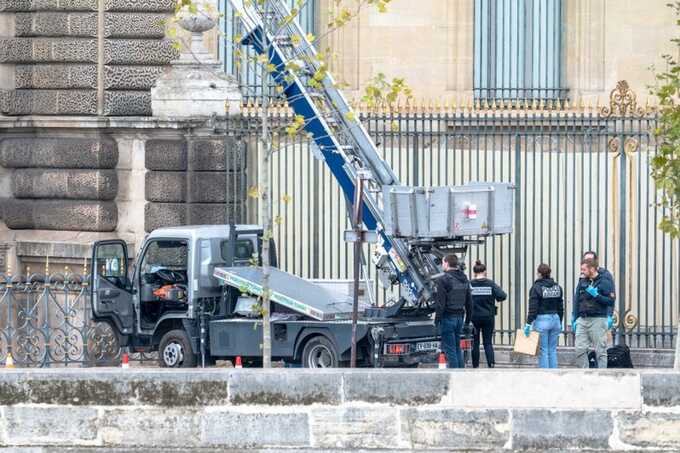
A similar violent attack occurred at the Louvre Museum in Paris in October 2025, where thieves broke a window using a mechanical ladder, threatened guards and visitors, and smashed display cases in the Apollo Gallery to steal nine items of jewelry worth an estimated 88 million euros ($102.69 million).
Alongside the changing tactics, Europol noted that organized crime groups are shifting their focus away from traditional art and toward raw materials, increasingly targeting gold, silver, and gemstone-laden jewelry due to their rising market value.
Precious metals can be easily melted down to erase trace evidence for law enforcement and facilitate illicit sales during the fencing process, the agency explained, adding that precious stones can be easily removed and resold.
While the October 2025 heist at the Louvre Museum made headlines around the world, that jewelry theft was actually part of an accelerating trend across France. A month earlier, a Chinese national—already known to police—stole 7 kilograms of gold nuggets valued at 1.5 million euros ($1.75 million) from the National Museum of Natural History in Paris. French media outlets reported that she was arrested a few days later at Barcelona airport carrying a kilogram of melted gold and was placed under formal investigation for “theft as part of an organized gang.”
This summer, France saw a spate of other high-profile museum thefts. First, on July 1, an archaeological center was targeted in a robbery where approximately 40 Roman gold coins valued at 120,000 euros ($139,994) were stolen. Only four days later, sledgehammer-armed robbers broke into the Lalique Museum and fled with 27 jewelry items valued at 4.5 million euros ($5.25 million), while on July 24, a priceless, 2,500-year-old Celtic gold collar was stolen in broad daylight from the Musée du Pays Châtillonnais.

Head of Investigations
Read more similar news:
Comments:
comments powered by Disqus