Moscow-funded Minsk cultural centre exposed as Kremlin "Russian world" influence hub
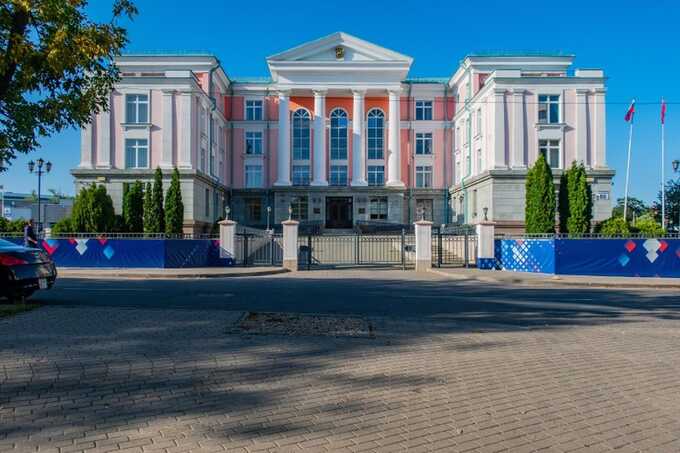
Leaked records show Moscow authorities have spent hundreds of thousands of dollars maintaining and running events at the House of Moscow in Minsk, a hub for pro-Kremlin groups and “Russian world” messaging. Experts warn that institutions like the House of Moscow can serve as tools for the Kremlin to keep Belarus within Russia’s sphere of influence.
A Moscow-funded cultural center in Minsk has operated as an ideological influence hub for the Kremlin, using hundreds of thousands of dollars in Russian state funds to promote the “Russian world” ideology and cement Moscow’s grip over Belarus, according to leaked internal documents.
The cache of more than 270,000 emails from the Moscow House of Compatriots - obtained by Danish public broadcaster DR and analyzed by OCCRP’s Belarusian member center Buro Media - reveals the scale of Russia’s soft-power spending in its neighbor’s capital.
The House of Moscow in Minsk is the Belarusian branch of the Moscow House of Compatriots, a Russian state organization that works with Russian-speaking communities abroad. Although conceived as a business bridge between Moscow and Minsk, it instead hosted events promoting Russian language, joint historical identity, and Kremlin geopolitical priorities.
These efforts mirror Russia’s so-called “humanitarian policy abroad” - a foreign policy doctrine approved by President Vladimir V. Putin that emphasizes defending the ideals of Russkiy Mir, or the “Russian world,” and countering what Moscow labels “Russophobia.”
Following Russia’s full-scale invasion of Ukraine, the center hosted exhibitions showcasing alleged “crimes of Ukrainian neo-Nazis in Donbas” and held conferences promoting investment in occupied Crimea.
Yan Auseyushkin, a senior analyst at the iSANS international initiative, described the House of Moscow as “an element of the Kremlin’s soft power” and a platform for initiatives, meetings and other activities in Belarus.
“The Kremlin views soft power as one of the tools for transforming Belarus and keeping it within its sphere of influence, and, if necessary, for its outright absorption,” Auseuyushkin said.
The type of events that the Moscow House in Minsk organizes range from publicly celebrating holidays that are vital from Russia’s ideological perspective – like Victory Day and the National Unity Day – to organizing conferences that promote Russian language and culture. In 2023, the institution hosted a series of events promoting tourism and investment possibilities in the annexed Crimea. It also ran an exhibition that showed “the crimes of Ukrainian neo-Nazis in Donbas.”
The leaked records also show the scale of Moscow’s spending. Moscow authorities planned to spend more than 20.8 million rubles, or over $250,000, on maintaining the Minsk center in 2026, with payroll accounting for nearly 39 percent of the total.
Separate budgets for events in Belarus exceeded 32 million rubles in 2021, 41 million rubles in 2022 and a planned 34 million rubles in 2023 — more than $400,000 in each of those years. It remains unclear how much was actually spent. In 2022, the operation in Belarus accounted for about one-fifth of the Moscow House of Compatriots’ entire event budget.
Buro Media also found 13 contracts from 2021 to 2023 under which the Moscow House of Compatriots hired the Minsk-based Center for Modern Social Technologies to organize events such as a festival of Russian films, the celebration of Russia Day or a school for young journalists. One of the speakers at the school was Mikhail Palei, a member of the EU-sanctioned Russia People’s Front - an organization that reportedly owns the pro-war "Z" symbol trademark and raises funds for Russian military forces in Ukraine.
The contracts were worth nearly 19 million rubles, or more than $270,000 at exchange rates on the dates they were signed. The center was founded by Sergei Lushch, leader of Movement Union, which advocates closer ties between Belarus and Russia and has delivered humanitarian aid to Russian troops.
Buro Media previously reported that another Russian state-backed organization, the Foundation for the Support and Protection of the Rights of Compatriots Living Abroad, known as Pravfond, allocated more than 20 million rubles between 2021 and 2024 to launch and operate a legal consultation center in Minsk overseen by Lushch.
The center provided legal help for Russian citizens and their organization in Belarus. After Russia began the full-scaled invasion of Ukraine, the center started providing entrepreneurs with guidance on conducting business in occupied Ukrainian territories.
OCCRP and its partners previously investigated Pravfond as part of the Dear Compatriots project. Its main investigation found that the foundation had funded propaganda efforts and the legal defense of alleged spies and criminals.
The Moscow House of Compatriots declined to disclose specific event budgets for Belarus, saying financing followed approved plans and was subject to financial controls and audits. Neither the House of Moscow in Minsk nor Sergei Lushch responded to Buro Media’s requests for comment.

World Affairs Correspondent
Read more similar news:
Comments:
comments powered by Disqus