John Healey weighs borrowing boost ahead of first budget
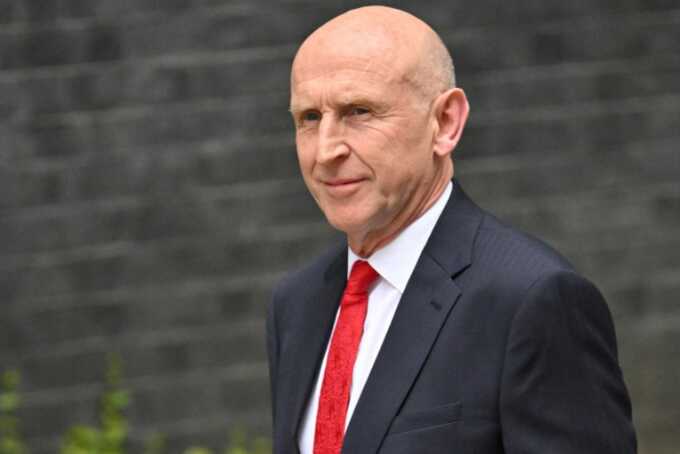
With only 12 weeks remaining before his first budget, the new chancellor, John Healey, is exploring ways to increase public investment without breaking the Treasury’s fiscal rules – and some economists are encouraging him to be bold.
As he settles into No 11 Downing Street, the former defense secretary’s most pressing issues involve day-to-day government spending.
These include the need to fund Andy Burnham’s VAT cut on energy bills and to address the £5bn shortfall in the defense investment plan left by his predecessor, Rachel Reeves – a factor that contributed to Healey’s resignation earlier this year.
Healey could choose to cover these expenses through tax reforms – possibly reintroducing a bank windfall levy – or by instructing Whitehall departments to economize elsewhere.
It is advantageous that Reeves has left him considerable “headroom” against the rules, £24bn at the time of her spring forecast, which is unlikely to have been entirely depleted by the impact of the Iran conflict.
In addition to these immediate pressures, Healey’s superior has made it clear that he expects a significant increase in long-term investment in infrastructure and housing, to fulfill his promise of growth in every area code.
One method to finance some of this additional investment may be to leverage what Burnham described as “any flexibility” in the existing fiscal rules. The chancellor informed the Times that there was “scope for more and more rapid investment.”
Reeves, now a humble backbencher, implemented a historic change in how debt is defined under these rules. This means that extra borrowing isn’t counted against the Treasury’s target if the government uses it to acquire a financial asset, like a stake in a company or a loan.
Reeves utilized the new definition, known in Treasury terminology as public sector net financial liabilities (PSNFL – pronounced “persnuffle”), to pledge a significant increase in public borrowing, though economists have long argued that the Treasury could extend this further.
A recent paper by the Resolution Foundation think tank suggested that the “PuFins” – public financial institutions, including the National Wealth Fund, British Business Bank, and National Housing Bank – could borrow an additional £9bn a year without violating the fiscal rules.
The Starmer government had already expanded these entities, providing them with additional capital, but the think tank urged Burnham to go further.
Lord Jim O’Neill, the former Goldman Sachs chief economist who has been considered as a potential Burnham adviser, has also suggested there could be room within the rules to borrow more for infrastructure projects and proposed creating a new independent agency to evaluate which should be supported.
Helen Miller, director of the Institute for Fiscal Studies (IFS), cautions that whether there is flexibility within the rules may not be the most pertinent question to ask.
“People are getting a little bit fixated on the fiscal rules. I think they should adhere to them for credibility reasons. But if the government increases borrowing, it is still borrowing: it will still raise borrowing costs and increase debt, creating more problems for the future.
The real, substantive question is: ‘What is the substantive case for that investment? Is it a worthwhile investment?’” she adds.
Some experts advocate a more creative approach, however. Thomas Aubrey, of the Bennett School of Public Policy at Cambridge University, states: “To truly make a significant impact, as Andy Burnham seems to imply in speeches, the PSNFL mechanism will not suffice.”
Instead, he argues that public corporations, such as the development corporation for Greater Cambridge announced by Reeves earlier this year, should be permitted to borrow directly from markets. “This approach could be applied to energy, water, large-scale public infrastructure projects, housing. The UK is one of the only major economies lacking a deep market for public corporation debt.”
Interest rates would be higher than for direct government borrowing, he argues, where there is a Treasury guarantee – but the trade-off would be significantly greater scope for long-term investment.
He also believes that the purchasers of such debt, including pension funds eager to match their liabilities, would differ from those that currently buy government bonds, or gilts – so the Treasury would not be depleting existing demand.
“There is ample capital for projects with detailed costings, credible revenue forecasts, and earmarked income streams,” he argued in a recent policy note for the Centre for Cities think tank.
The UK’s borrowing costs are already higher than many other large economies, and Treasury officials are likely to advise Healey against any actions that might destabilize the gilt markets.
Aubrey suggests that other Whitehall departments have previously shown interest in enabling public corporations to borrow – but it has always been blocked by the Treasury, which would need to agree to classify their debts as separate from government borrowing.
The approach advocated by Aubrey aligns with proposals from Burnham-related think tank Mainstream. The PM’s right-hand woman, Louise Haigh, also highlighted proposals for public corporations to borrow directly in a piece she wrote for the leftwing publication Renewal earlier this year.
How to boost investment is just one of many economic challenges facing Healey and the prime minister in the coming crucial months, but it is perhaps the most central to Burnham’s initiatives of devolution and reindustrialization – and an early test of how radical the new administration will be.

Technology & Business Editor
Read more similar news:
Comments:
comments powered by Disqus