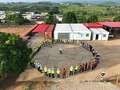
Ukrainian orphans promised safety find neglect and exploitation in Turkey

Documents and first-person accounts reveal how a quickly organized evacuation by a private charity left hundreds of Ukrainian children in a Turkish seaside town with little supervision.
For the Ukrainian children hiding in the basement of the Horlytsia orphanage as Russian bombs exploded around them in February 2022, evacuation seemed like a dream come true.
They weren’t provided with details, but they overheard their teachers speaking about the Turkish coast. Freezing and scared, they were excited about the idea of an escape to the beach.
“We were so happy,” recalled one teenage resident of the orphanage in Dnipro, Ukraine’s fourth-largest city. “Finally, we would get to see the sea.”
But Turkey wasn’t the seaside paradise they had imagined. Upon arrival at their hotel in the southern province of Antalya, one girl recalled, one of their initial tasks was cleaning the beach of seaweed and their bathrooms of mold. (This account is based on extensive interviews with seven evacuated children and a confidential Ukrainian monitoring report obtained by Slidstvo and OCCRP.)
Though the food was initially good, conditions later deteriorated. Meals became irregular, and the children sometimes found hairs and insects in their food. The rooms were overcrowded and moldy. They were told they had to sing and dance for cameras, with the videos used to solicit donations for their accommodations, and they could be punished or shamed for refusing to participate.
“When we didn’t want to sing as a group, they said they’d take away our phones,” one girl remembered.
“‘They feed you, pay for everything, take you everywhere,’” another girl recalled being told. “‘And you don’t want to be filmed?’”
The orphans didn’t know it at the time, but their hurried evacuation had been organized not by the Ukrainian government, but by a local multi-millionaire businessman.
In the frantic early days of the war, businessman Ruslan Shostak was approached by the local government to help fund the orphans’ evacuation. He formed a charity, the Ruslan Shostak Charitable Foundation, widely publicized in the media and supported by Ukrainian celebrities. The evacuation of 3,500 children and their caretakers from over a dozen orphanages and small care homes in Dnipropetrovsk, a frontline region in southeastern Ukraine, was promoted under the tagline “Childhood Without War.”
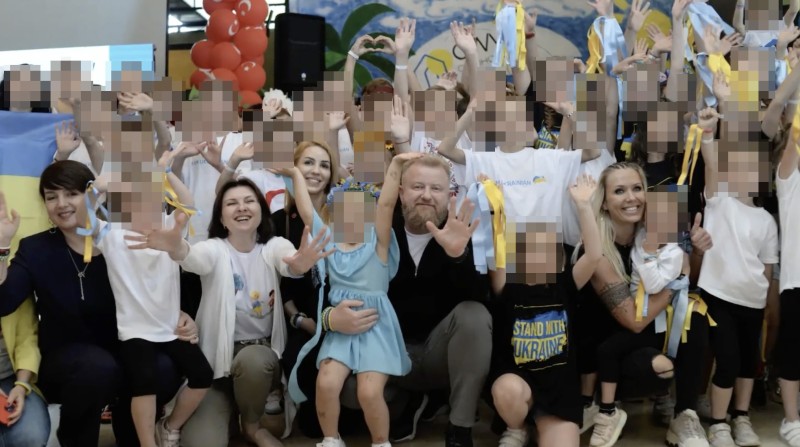
But to maintain support, they were told, the children had to perform. Meanwhile, the new foundation struggled to manage the logistics of keeping hundreds of traumatized children — many with serious medical and psychological issues — safe in several hotels it had rented on the Turkish coast. The arrangement had removed the children from immediate war danger but had also taken them thousands of kilometers from the government responsible for their safety and education.
A team led by Ukraine’s Ombudsman’s office finally inspected one of the hotels in March 2024, producing a scathing report on the conditions there, finding that the hundreds of children there at the time were systematically subjected to physical violence, received inadequate medical care, and only sporadically attended online classes. The report also noted that children were pressured by caretakers not to speak candidly to the inspection team about their conditions.
By the end of 2024, the children were returned to Ukraine. Two of them, by that point, had already been sent home after becoming pregnant by Turkish men with access to the facility. Although both girls were under the Turkish age of consent at that time, the Foundation did not report their pregnancies to Turkish authorities.
In a two-hour interview with Slidstvo, Shostak defended his work with the children as vital and necessary given the growing war threat. He claimed he and his team did the best possible under difficult circumstances, attributing any problems to the children’s caretakers and orphanage staff who accompanied them from Ukraine.
Although Shostak admitted he hadn’t read the Ombudsman’s report on the Larissa Hotel conditions, he claimed its conclusions were incorrect.
“We built security systems, we built four borders…to protect the children,” he said. “From the educators, from the children themselves, from other children, from outsiders. … But, apparently, when many children are together, things can happen.” 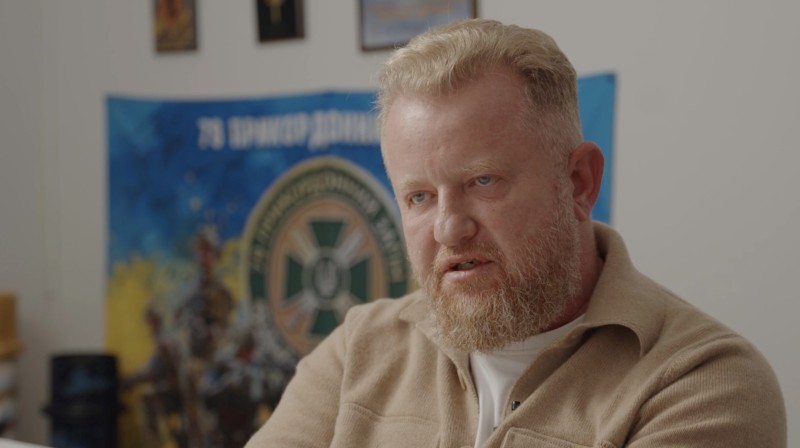
The report was never made public, and the poor conditions the Ukrainian children endured in Turkey never became widely known. Though it included many recommendations, including moving the children to better facilities and conducting official investigations, it is unclear if these measures were implemented. Representatives of multiple Ukrainian government bodies responsible for child welfare didn’t respond to reporters’ requests for comment.
Concerned that the report had been ignored, a whistleblower shared a copy with journalists from OCCRP’s Czech partner, Investigace.cz. (Slidstvo later obtained the same report from a different source who was part of the monitoring group. The Ombudsman’s office didn’t respond to a request for comment on the report).
When many children are together, things can happen.
The report concluded that conditions at the site the group visited—the Larissa Hotel in the seaside town of Beldibi—were very poor, with unsanitary conditions, dirty blankets, lack of free access to drinking water and toilets, and multiple children sharing beds in crowded rooms. The children’s schooling was spotty, frequently halted by poor internet access and because their tablet computers, used to connect to remote lessons in Ukraine, were confiscated as punishment when they didn’t comply with the foundation’s demands to participate in fundraising videos.
One 13-year-old boy fell from a third-floor balcony after he and other children were climbing on air conditioners unsupervised. He suffered a traumatic brain injury and spent two weeks at a hospital, but no report was filed on the incident. Another boy didn’t receive medical attention for a cataract, and his vision deteriorated, while a girl with the eye condition strabismus repeatedly requested treatment and was ignored.
Poor security measures led to alarming incidents, with children escaping the facility to drink alcohol, use drugs, and commit petty crimes. In one case, the report said a girl escaped and had “sexual contact with a Russian citizen,” who then entered Larissa’s premises with a gun looking for her. In another case, a girl went missing for two days and was found on the beach after a search-and-rescue effort involving a helicopter.
None of these incidents were properly reported to Turkish authorities, the report stated.
The Turkish government didn’t respond to requests for comment but issued a brief statement on December 1, confirming it hadn’t been informed of the Ukrainian girls’ pregnancies or received any “formal report or complaint.” When Turkey’s Ministry of Family and Social Services later became aware of the allegations, it “filed a criminal complaint and initiated legal proceedings,” the statement said, although it didn’t specify the target of the complaint or its outcome.
Shostak told journalists much of the trouble in the Turkish hotels arose from dealing with particularly troubled children.
“You just don’t understand how orphans live in Ukraine, the colossal trashy conditions they’re in. It’s just that [in Turkey] it was all concentrated in one place. That’s why we have problems and some cases—not very good ones. But I definitely don’t feel responsible. I feel responsible that the children lived in the sun for three years and ate fruits and vegetables from the Turkish coast. They swam in the Mediterranean Sea for eight months a year.”
Kyrylo Nevdokha, a Ukrainian advocate for the rights of institutionalized children, said those who organized the evacuation might have tried their best, but “good intentions don’t guarantee good outcomes.”
Good intentions don’t guarantee good outcomes.
Kyrylo Nevdokha, Ukrainian child-protection advocate
"The government, the child protection system, did not entirely do its job," he added. "This should have been planned in advance, how the evacuation would be carried out, where it would take place. Much earlier. Let’s be honest, there were signals that a full-scale invasion was possible.”
Shostak dismissed allegations of substandard medical care as “complete trash.” He and his team promised to send journalists materials supporting his account, including a second monitoring report showing conditions at the hotel improved later in 2024. Instead, a representative of the Ruslan Shostak Foundation—apparently by accident—emailed Slidstvo a message containing a plan for a public relations campaign to “neutralize” the Slidstvo report.
A ‘Crisis Response’ Plan Gone Astray
The document sent to journalists, which included sections titled “preventive defense” and “crisis response,” outlined a step-by-step communication plan for handling the publication of this investigation.
In the short term, it envisioned mobilizing “real project participants” and a “database of accounts” to post comments on social media and under "negative articles" about the Foundation. A “controlled post” by an influencer would portray the investigation as “non-accidental,” suggesting information leaked to journalists in response to the Foundation’s efforts to address long-neglected issues in Ukraine’s child-care sector.
In the upcoming months, it proposed writing an opinion column positioning Shostak as a “moral leader” and placing it in the media.
Journalists managed to obtain a copy of the second report from another source. While it noted that food at the hotel had improved by July 2024 and children now had access to fresh drinking water, it also mentioned many problems persisted, such as lack of access to medical and psychological care. It even recorded several additional alleged abuse incidents.
A Song and Dance
The mass evacuation of Ukrainian children from Dnipropetrovsk has been widely promoted by the Ruslan Shostak Foundation and Shostak himself as the “largest project in the world to evacuate children after the Second World War.”
When the war broke out, Shostak, a retail multi-millionaire, had never run a charity or worked with children. Still, he says he was driven by the injustice of Russia’s full-scale invasion of Ukraine in February 2022 and ready to assist in the war effort.
“It was a cry from the soul of our authorities there if I may say so. Because the tanks were already near Kryvyi Rih. The tanks were near Kharkiv. … It was terrifying, but what should we do?” he asked. “Give them to Putin?”
In an interview with Slidstvo, he said he sprang into action, negotiating a deal with the Turkish government to bring the children there.
He highlighted the operation’s difficulty, explaining how he managed to get the children from Dnipropetrovsk to Romania, from where they flew to Turkey in nine passenger jets he chartered. From there, they proceeded to the Mediterranean coast by train.
“You had 2,000 people on board,” he recalled. “Of them, 1,000-plus are children. Something is always happening to them. Do you understand what it means, 1,000 children?”
Initially, he said, the evacuation was funded entirely from his own pocket. However, after realizing the war would last longer than a few months, he realized it would cost “tens of millions” to keep the children in Turkey. He founded the Ruslan Shostak Charitable Foundation and began raising money “from caring people and companies” to pay for the children’s continued stay. (In the end, Shostak said, the evacuation cost $10 million, 60 percent of which was funded by him personally.)
But the monitoring report tells a different story. When the children initially arrived in Turkey, it said they were under the protection of the Turkish Ministry of Family, who provided social services, supported by the International Committee of the Red Cross. The Foundation’s main role, initially, was organizing and funding the hotel stay, according to the report.
The foundation’s representatives and the children’s accompanying persons ... restricted psychologists’ and social workers’ access to minors, and stopped taking them for medical examinations.
Ombudsman’s monitoring report
However, at some point, this division of labor broke down, and the Foundation began taking on a larger role—restricting access to the children, making it “impossible or difficult to implement the programs” of the Red Cross and Turkish Ministry, the report found.
“The foundation’s representatives and the children’s accompanying persons stopped providing the necessary information, restricted psychologists’ and social workers’ access to minors, and halted taking them for medical examinations, almost completely cutting off any medical assistance to the children.”
The report stated the Foundation claimed it did not need external support due to its fundraising activities, which involved using the children in photo shoots and video recordings, and public events.

Those who cooperated by agreeing to be filmed, or learning songs and dances for the Foundation’s benefit concerts, were rewarded with extra food and other provisions, the report said. Those who refused were punished. The report also stated that Oleksandr Titov, a senior teacher at the orphanage and the main staffer responsible for its children in Turkey, received special treatment—including extra food and supplies—for cooperating with the Foundation on fundraising. (In an interview with Slidstvo, he stated he "had nothing to do with the foundation" and received no preferential treatment.)
All seven children interviewed by Slidstvo remembered regularly performing songs and dances, and five out of seven said either they or others were coerced to participate. Many did not clearly understand the intended audience, though some said the performances were for “visiting officials,” “guests,” or “volunteers.”
“Very often they organized some kind of celebrations,” said Vika, one of the students. “They forced us to sing songs as a group, or to dance. Sometimes when we didn’t want to sing, they told us that they would take away our phones, tablets, and other things.”
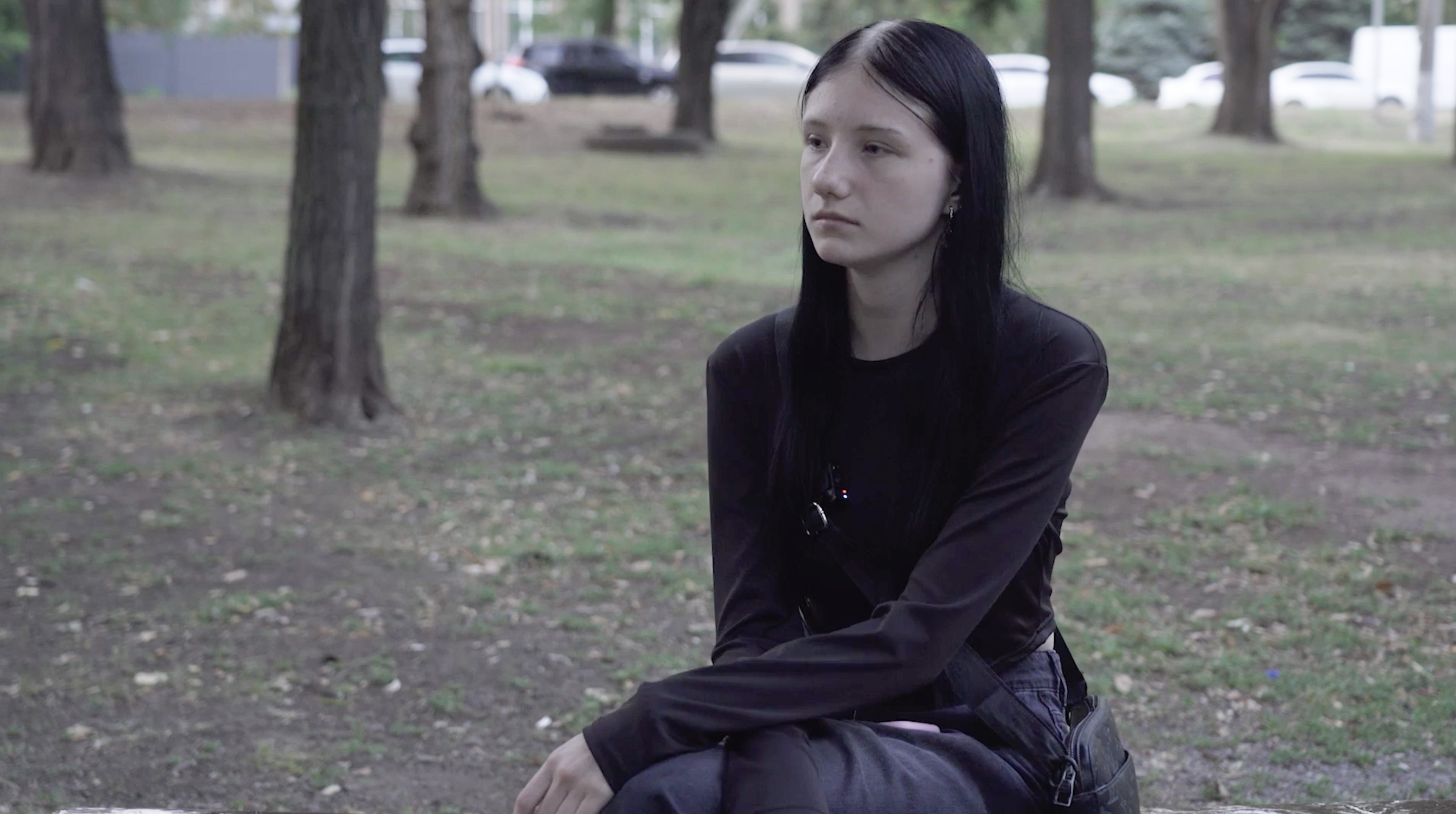
Several children recounted having their phones or the tablet computers they used for remote schooling confiscated. One girl said she was shown videos of Russian drones attacking Ukraine to stress they should be grateful for being taken to Turkey.
Another girl, who asked for anonymity, said that shows they were frequently filmed while eating, or asked to say a few lines for the camera. If they resisted, they were told: “‘No, you must, you’re in the project. They’re spending money on you, clothing you, giving you shoes, feeding you, and you’re behaving like this!’” she said.
Several girls mentioned seeing themselves appear in the foundation’s promotional materials on Tik-Tok or Instagram. “Everything’s there,” said a girl named Katya. “Photos, videos, everything that happened in Turkey. I’m there too, though not often, thank God.

Shostak said the suggestion that children were forced to perform for money was “complete nonsense,” explaining they performed at monthly “birthday” celebrations organized by the foundation. An assistant added that the children participated in patriotic events organized by the local Ukrainian community, staging “the best Ukrainian flash mobs in Turkey.”
In an interview, Titov, the senior educator, expressed shock at the claim that children were pressured to perform or punished. He said most did not have personal phones, using tablets the Foundation provided.
But Nevdokha, the children’s rights advocate, said forcing them to participate in public fundraising was “a violation of the child’s right to choose, their right to dignity.”
The Shostak Foundation should have at least blurred the faces of the children whose stories and appeals they posted online, said Nevdokha, who spent much of his childhood in Ukrainian residential facilities himself.
“Even in the context of this foundation—you have a business, you have profits, and I understand you have invested much of your money. But using children for such large-scale PR fundraising, you must weigh things up.”
“I’ve Seen It All”
For children in Dnipropetrovsk region orphanages, the start of full-scale war in Ukraine was just the latest in a long list of privations and traumas they had experienced in their short lives.
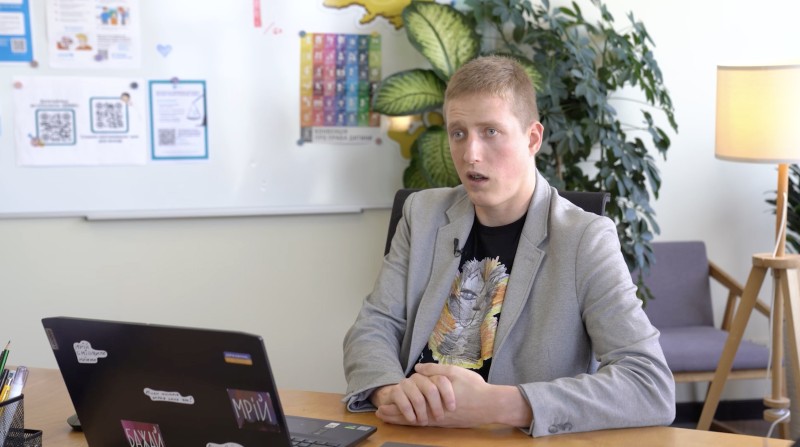
Nastya, who was 13 when the war began, spent multiple stints in orphanages as a young child because her parents couldn’t care for her. She ended up with a foster family where she was physically abused before finally being placed in a facility in Kryvyi Rih.
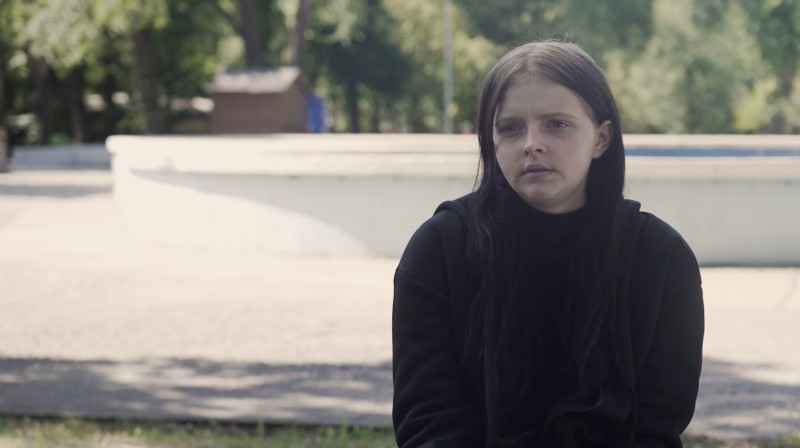
Ilona, a spirited 15-year-old at the war’s onset, was placed in an institution in Dnipro as a second grader after her alcoholic father burned their house down by leaving a mattress too close to the stove. Her mother occasionally took her and her siblings out of the orphanage on weekends, but during these outings, they often witnessed their father beating their mother or throwing furniture at her.
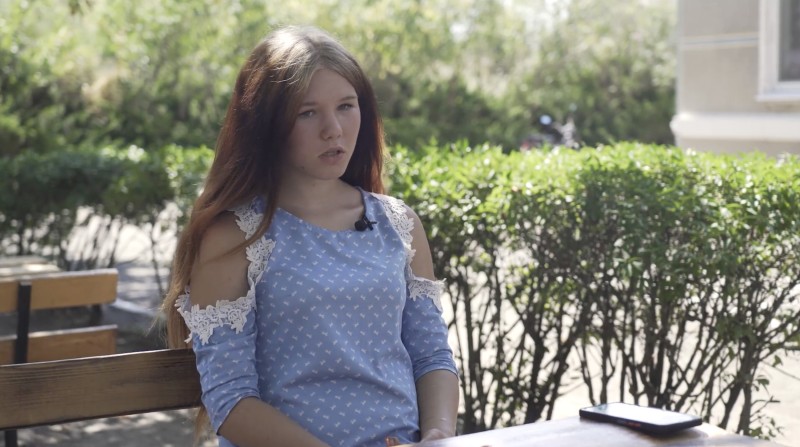
“I’ve gotten used to this in my life, I’ve seen it all,” Ilona said in an interview with Slidstvo.
When Ilona, Nastya, and their classmates arrived at their hotel in Turkey, they enjoyed the relative freedom but struggled to adapt to the food, which many described as primarily bulgur wheat. Some also were assigned new duties, like tending to disabled classmates and cleaning their urine and feces.
So when a 20-year-old worker in the hotel restaurant, Salih, began sneaking food to Ilona—a loaf of bread, a bit of sausage—she was delighted by the special attention.
“So he would feed me,” she recalled. “And we met, and then he asked for my Instagram.” They started taking walks together—often alongside an orphanage staffer who, Ilona claims, facilitated the relationship.
“She let me go and picked me up, and we went for walks, to eat ice cream and burgers, she took me to the beach during [the younger children’s naptime], where Salih and I went for walks.
Ilona wasn’t the only orphanage resident pursued. Several girls interviewed said it was an open secret that several Ukrainian girls were seeing Turkish men. Katya, who was 13 or 14 at the time, said they frequently felt uncomfortable with how male hotel staffers looked at them.
“They looked at beautiful girls, well…very well, so to speak. I didn’t like it.”
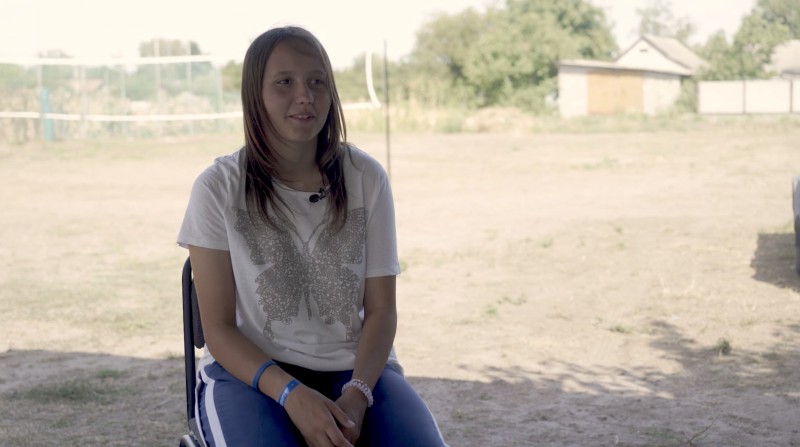
Katya said, in practice, no rules governed whether male hotel workers could be alone with children—at one point, she said, the shower in her room broke, and she was left with the repairman. (Titov, the senior teacher, said Turkish hotel staffers shouldn’t be in the children’s living area, though he admitted it was difficult to monitor who went where in the hotel.)
Nastya, though only 15, began dating Mami, 23, a cook in the hotel restaurant who had asked a boy from the orphanage for an introduction.
“At first, I didn’t want to meet him,” Nastya said. “I said, ‘No.’ Then I came to meet him, I don’t know why. It was my subconscious.”

Nastya said her relationship with Mami was an open secret with both teachers and students at the orphanage, allowing her to walk with him, although they were more secretive about physical intimacy.
“He would climb over the hotel fence and come to my room,” she explained. “They saw him once and called the police, issuing a fine—because there are Ukrainian refugees here and why is someone climbing over the fence?—but he kept climbing over.”
Both Katya and Nastya, still underage, became pregnant due to their relationships with the

Technology & Business Editor
Read more similar news:
Comments:
comments powered by Disqus