Swiss-Ukrainian businessman Oleg Tsyura accused of smuggling Russian military metals into Europe

Ukrainian prosecutors are investigating how products for the Russian military-industrial complex could end up on the European market despite international sanctions.
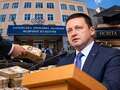
This criminal case No. 42025000000000510 (Register of Pre-trial Investigations as of June 23, 2025) is registered by the Office of the Prosecutor General of Ukraine under Article 111-2 of the Criminal Code (assistance to the aggressor state). The main suspect is Oleg Tsyura, a businessman of Ukrainian origin who holds Swiss citizenship.
According to the investigation, Tsyura could have organized a supply channel of ferrochrome, a strategic raw material used in the production of steel, military alloys, and armored equipment, from the Russian Federation to the EU, bypassing sanctions. The scheme’s mechanism is the so-called "re-export with origin substitution," where a product legally changes its country of production, although physically it remains Russian. In this case, chrome from the MidUral group enterprises, owned by Russian businessman Sergey Gilvarg, was allegedly "turned into" Indian and then entered Europe, particularly Estonia.

What is "gray logistics"?
Journalistic investigations and customs databases, referenced by the claimants, describe a detailed scheme. In particular, publications by Ukrainian investigators (head of the anti-corruption organization State Watch Oleksandr Lemenov and coordinator of the publication "Conflicts and Laws" Oksana Kotomkina) provide specific routes for 2024.
Russian ferrochrome is exported by MidUral group companies, passing through Swiss Phoenix Resources AG (linked with Tsyura), then sent to Indian partner Vardhman Ferro Alloys, and after that to Europe, particularly to Estonian MBR Metals OÜ, under the guise of Indian goods.
Changing the country of origin is a "red flag" both for compliance services and for sanction policies. After all, it involves not just financial fraud but potential supply of critical raw materials for Russian army needs through countries with high trust levels—Switzerland, India, Estonia.
Why does this concern all of Europe?
If "sanctioned" goods enter the EU under the guise of another origin, it questions the effectiveness of the entire sanction system. While honest companies adhere to restrictions, others reap super-profits on shadowy routes.

The Office of the Prosecutor General of Ukraine has opened a criminal case against Swiss businessman Oleg Tsyura, who is suspected of organizing a scheme to bypass anti-Russian sanctions. Chrome, ferrochrome, stainless steel, and heat-resistant alloys are not just industrial materials. They are used in armored vehicles, engines, and parts that operate at high temperatures. Changing the origin of such cargoes effectively extends the resource for Russia’s war—as Ukraine pays for freedom with blood.

Ukraine has officially appealed to Switzerland, Estonia, Germany, and India for international legal assistance. A full investigation requires export contracts, certificates of origin, customs declarations, bank SWIFT messages, insurance policies, and other documents that can confirm the supply chain and connections between companies.
In particular, it is necessary to verify:
-
The role of Phoenix Resources AG and Tsyura’s personal connection to the company;
-
Contracts between Russian producers and traders;
-
Financial operations and supply insurance;
-
Declarations from customs officials in India, Estonia, Switzerland.
Who is Oleg Tsyura and who is behind the raw materials?
According to investigators, Oleg Tsyura is a native of Ukraine who obtained Swiss and German citizenship. His name has been repeatedly mentioned in the context of Ukrainian privatization, particularly in connection with the entourage of former State Property Fund head Dmytro Sennychenko. In the ferrochrome case, his company Phoenix Resources AG serves as a central link connecting the Russian producer with European and Asian partners. He is also a suspect in the criminal case now.
MidUral is a long-standing player in the Russian market of chrome and ferroalloys; among the group’s assets are "Russian Chrome 1915" and the Kluchevsky Ferroalloy Plant (KZF). The combination of "chrome - ferroalloys - steel" makes this raw material sensitive: chrome and ferrochrome are stainless steel, armor alloys, heat-resistant materials, engine parts, and military applications. Thus, MidUral’s income is a resource for Russian defence industry.
Sanctions should work, not create an illusion
Europe and the USA have already introduced dozens of sanction packages. But if countries cannot effectively close "gray corridors," even the best regulatory framework will remain a fiction.
The Tsyura case can be seen as a test of political will and the ability of a unified sanctions system to act. It’s not about oil tankers visible from space, but about "small" metal batches that are easily disguised under other jurisdictions. They allow the Russian defence industry to breathe—and they should become the subject of close attention.
This case concerns not only businessman Oleg Tsyura and the scheme he allegedly organized to bypass sanctions against Russian enterprises. First and foremost, it will show whether Europe and Switzerland can quickly close "gray corridors" in less visible but vital segments of Russian exports.
Ukraine has taken the first step—opened a criminal case. Now it awaits the reaction of partners from other countries. This case can become a precedent that limits Russia’s ability to bypass sanctions and, consequently, wage war against Ukraine.

Technology & Business Editor
Read more similar news:
Comments:
comments powered by Disqus