At SCO summit, Xi and Putin signal deepening alliance against US influence

Xi Jinping and Vladimir Putin met on the sidelines of a major summit in China, which aims to challenge US-led, Western-dominated alliances and is attended by leaders from more than two dozen nations.
The Chinese and Russian leaders, who have a close alliance described as a "limitless" partnership, discussed Putin’s recent meeting with Donald Trump, according to a Kremlin official, who provided no additional details.
The bilateral meeting was one of several for Xi on Sunday, as he hosts the annual Shanghai Cooperation Organisation (SCO) summit in Tianjin. The SCO is a 10-member bloc of Eurasian nations, and the summit also includes leaders from 16 observer or "dialogue partner" nations.
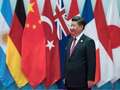
Xi personally welcomed several leaders, including the Indian Prime Minister, Narendra Modi, and the Turkish President, Recep Tayyip Erdoğan, before the delegates attended a formal reception.
At the welcome reception, Xi stated that over the past century there had been a "significant increase in instability, uncertainty, and unpredictable factors," and emphasized that the SCO has become an "important force in promoting the building of a new type of international relations and a community with a shared future for mankind."
Footage released by Russian state media showed Xi and Putin, who arrived in Tianjin with a team of senior politicians and business representatives, warmly greeting each other at a photocall before engaging in a lengthy and animated discussion with the help of an interpreter.
Putin and several other attendees are expected to remain in China for a military parade in Beijing on Wednesday to commemorate the 80th anniversary of the end of the Second World War, which China refers to as the war of resistance against Japanese aggression. North Korean leader Kim Jong-un is also expected to attend.
The Tianjin summit marks the largest gathering of the bloc since its establishment in 2001. The SCO plays a key role in Beijing’s efforts to promote stronger multilateral alternatives to Western or US-led alliances such as NATO.
On Saturday, Putin told the Chinese state news agency Xinhua that the SCO meeting would "consolidate solidarity" among the Eurasian nations and "help shape a fairer multipolar world order."
This goal seems to have been bolstered by the disruptions caused by Trump’s tariff policies and other foreign policy actions. The meeting between Modi and Xi occurred five days after Washington imposed punitive 50% tariffs on Indian goods due to Delhi’s purchases of Russian oil.
This is Modi’s first visit to China in seven years, and takes place amid efforts by China and India to rebuild trade relations and resolve long-standing Himalayan border disputes.
"We are committed to progressing our relations based on mutual respect, trust, and sensitivities," Modi said following his meeting with Xi.
State media reported that Xi said China-India relations could be "stable and far-reaching" if both sides focus on viewing each other as partners rather than rivals.
In a meeting with Erdoğan, Xi stated that China and Turkey should strengthen cooperation in counter-terrorism, according to Chinese state media. Xi also met with leaders from the Maldives, Azerbaijan, Kyrgyzstan, and the autocratic leader of Belarus, Alexander Lukashenko, a key ally of Putin.
The bilateral talks were held at the Tianjin Guest House, an intimate venue surrounded by lush greenery. Large sections of Tianjin were closed to traffic, and a significant police presence was deployed throughout the city.
Lim Chuan-Tiong, a researcher with the Institute for Advanced Studies on Asia at the University of Tokyo, said the meeting between Putin and Xi signaled the continuation of their "limitless" partnership, as both consolidate their alliance in dealing with a common adversary—the US.
"As long as the mutual opponent [US] is not defeated, the off-limits cooperation between China and Russia will continue," Lim said. "Their cooperation also highlights a global order that exists independently of the United States."
Moscow’s claims over Ukraine and its full-scale invasion in 2022, as well as Beijing’s claim over Taiwan and its threats to invade, have further isolated both governments from Western and other democracies.
Russian analysts have indicated that the war in Ukraine is now a major pillar of the bilateral relationship, and Moscow would want to know how Beijing would respond if the US were to pressure it to push Russia to end the conflict.
"The longer the war [in Ukraine] continues, the more Russia will require China’s assistance, whether economically or in other forms," Lim said. "China also acknowledges that full normalization of Sino-US relations is unlikely to revert to their pre-2018 state, and thus sees no choice but to align closely with Russia."
Beijing claims to take a neutral position on the war in Ukraine but has become an economic lifeline for Russia, and Ukraine has accused it of providing direct support to Moscow’s campaign. The two countries have also increased joint military exercises.
A Chinese academic speaking on condition of anonymity stated that Moscow had expected more support from its ally, but Beijing has been cautious to avoid further punitive sanctions.
"China declares there is ’no limit’ [to support], yet in practice, it hesitates, constantly watching for Western, EU, and NATO pressures. It has never really taken Russia seriously—and Russia realized this some time ago," the academic said.

World Affairs Correspondent
Read more similar news:
Comments:
comments powered by Disqus