10 September 2026 , 11:04
655
0
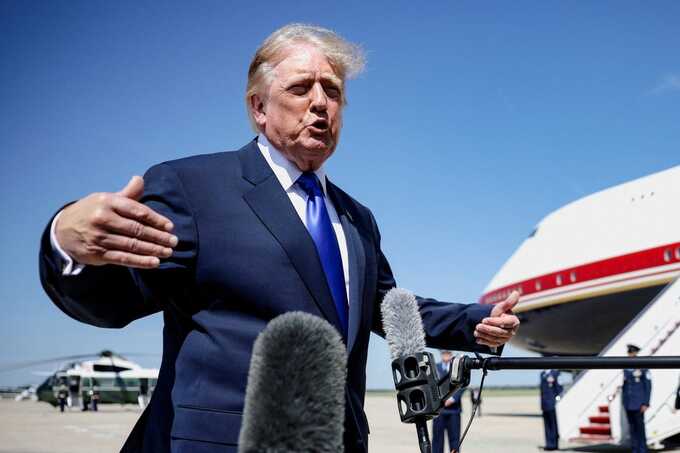
Donald Trump has finally spoken out about Ed Miliband’s sanctions on Israel over West Bank settlements amid fears of a row erupting between Britain and the US.
Speaking outside Air Force One on Wednesday, the President confirmed that he would be addressing the issue with British and Israeli leaders.
However, Mr Trump did not explicitly condemn or support the measures against the Jewish state in response to plans to open tenders for the construction of 1,200 settler homes in an area of the West Bank known as E1.
He told reporters: "Well, I’ve just seen it and I’ll be speaking to Israel and I’ll be speaking to them to find out what’s their thinking."
While the President said he understands "exactly what’s going on", he said he wants "to understand exactly why that’s happened".
Prime Minister Andy Burnham had told the President of the sanctions ahead of the Foreign Secretary’s announcement on Tuesday.
However, Mr Trump “did not push back or ask Mr Burnham to change course”, according to US outlet Axios.
The President’s latest remarks come after his Secretary of State Marco Rubio also refused to condemn the measures taken by the Labour Government.
He insisted that both Britain and the US "share the goal" of peace in the region.
Though he admitted Washington would "obviously" not be joining Britain in banning trade with West Bank settlements.
“Obviously, we’re not going to do what the UK did. We saw their announcement today, but I don’t have any comment on it right now,” he told reporters in Miami.
When pressed about whether the US could retaliate against Britain’s measures, Mr Rubio stopped short of saying whether that would be the case.
"We were made aware that they were going to make this decision. We heard their arguments as to why. But we share the goal of stability," he said.

"We don’t want to see some uptick in violence or an uptick in conflict or tensions in the West Bank at a very tenuous time in the region."
Though the language from the White House has been measured, some senior Republican figures have not held back in their fury at Britain’s sanctions.
Florida Congressman Randy Fine said ministers "should be aware" that a state law that he passed would ban any British firm boycotting Israel from doing business with any state or local government in Florida.
"Florida has made it clear. Any company - or nation - that boycotts Israel is boycotted by Florida," he said, before branding the UK "the United Islamic Kingdom".
Meanwhile, congresswoman Claudia Tenney has urged US Treasury Secretary Scott Bessent to blacklist Britain and probe whether Mr Miliband’s measures amount to an "international boycott".

“The United States must send a clear signal that efforts to economically isolate Israel will carry consequences, and that US law designed to combat such discrimination will be enforced,” she said.
On Tuesday, Israeli Foreign Minister Gideon Sa’ar unveiled a range of counter-measures against Britain, including the closing of the UK’s consulate in Jerusalem.
He also confirmed the UK will no longer be allowed to participate in the US-led coordination mission for Gaza and banned 12 British MPs including Jeremy Corbyn and Zarah Sultana from entering Israel.
Jerusalem slammed Mr Miliband for peddling an "outrageous lie" after the Foreign Secretary accused West Bank settlers of being "terrorists" who were carrying out an "ethnic cleansing" against the Palestinians in the region.
While acknowledging that Israel’s counter-measures will be "damaging", Mr Miliband told Sky News that he believes "what we did along with other international allies was absolutely the right thing to do".

World Affairs Correspondent