12 August 2026 , 09:23
668
0
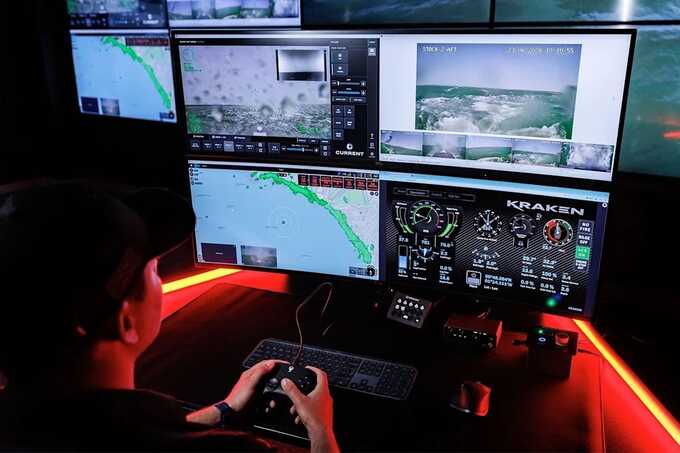
A company at the centre of a Chinese camera scandal is based three miles from the home of the Royal Navy’s hybrid fleet, The Telegraph can disclose.
Cameras on the K3 Scout surveillance drones were found to be transmitting "heartbeat communications" to a device in China, first revealed by The Telegraph on Sunday.
The Ministry of Defence (MoD) was forced to sever all internet connectivity from the cameras after discovering the breach. The drones had been supplied by Kraken Technology Group, a major British defence contractor.
Kraken sourced the cameras from a manufacturer based in Gosport, Hampshire, a short distance from a key UK munitions site as well as HMNB Portsmouth, the home of the Navy’s surface fleet.
Cameras sold by the company state they are compliant with the US National Defence Authorisation Act (NDAA), which bans contractors from buying or using video surveillance, drone and telecom equipment from blacklisted Chinese companies.
However, the MoD found that cameras supplied by the firm contained Chinese parts, raising fears of a supply-chain vulnerability.
Investigations stemming from the discovery have led to concerns that other suppliers to the MoD have also purchased cameras from the firm and fitted them to vessels deployed by the Navy, The Telegraph understands.
Telegraph reporters visited the company’s registered UK address – a warehouse just yards from a defence munitions site – to find it closed. Employees at a neighbouring business didn’t recognise a picture or name of the listed director.
A notice was sent to other defence firms, informing them of the vulnerability in the cameras and asking them to check whether they had also fitted parts, The Telegraph understands. It is suspected that several major suppliers to the MoD may also have bought cameras containing Chinese parts from the Gosport supplier.
The revelations raise questions about the quality of checks in Britain’s naval supply chain, and increase fears about Beijing’s ability to exploit British vulnerabilities.
Tim Law, the former British defence attaché in Beijing, said work needed to be done to understand the "full suite of risks" stemming from the Chinese parts.
"Any defence manufacturer supplying equipment to a Western military should be wary of including components that might, in any way, be exploited for data that could be useful to a potential adversary," Mr Law added.
Reliance on Chinese manufacturing has created severe national security and economic vulnerabilities, highlighted by recent discoveries such as a tracker in a parliamentary car, and the revelation that China could remotely switch off hundreds of British electric buses with a "kill switch".
In 2020, the Conservative government was forced to ban Chinese phone-maker Huawei from the UK’s 5G network over security fears.
Since then, a number of supply-chain vulnerabilities have forced the MoD to remove Chinese hardware and cameras from sensitive spaces. Last month, The Telegraph revealed that the Special Boat Service had banned Chinese-made electric cars from its headquarters over similar espionage concerns.
Last year, MI5 issued a security alert to MPs, warning that Chinese intelligence services were "relentless" in trying to "interfere" and "influence" Parliament using employment websites such as LinkedIn to harvest sensitive information.
It came weeks after the case against two men, including a parliamentary researcher, accused of spying for China collapsed over the Labour Government’s inability to label Beijing as an enemy.
Despite security concerns, No 10 has continued a diplomatic reset with Beijing through a series of high-profile visits to the country, in the hope of lucrative trade agreements.
Earlier this year, the Government approved plans for a Chinese super-embassy at Royal Mint Court in the heart of London, despite concerns about the site’s proximity to sensitive communication lines.
Dame Priti Patel, the shadow foreign secretary, said: "Yet again China’s corrosive activities are undermining our national security and the defence of our country.
"Labour should stop dithering and place China on the enhanced tier of the Foreign Influence Registration Scheme and ensure that all aspects of our national security is reviewed to stop state sponsored hostile activities from taking place against our country."
A Ministry of Defence spokesperson said: "The first duty of government is national security, and we take the security of our equipment, networks and data extremely seriously.
"Our assurance and testing processes are designed to identify and address potential vulnerabilities early, and we continue to undertake routine security activity across our systems and equipment.
"We have found no evidence of MoD data or systems being accessed, compromised or transmitted externally."
A Kraken Technology Group spokesman said: "We are aware that some third-party, NDAA-compliant cameras had a small number of components originating from outside the UK.
"After a full audit by both Kraken and the Royal Navy we are confident no sensitive information has ever been shared outside of intended channels and any potential vulnerabilities have been identified and closed."
NDAA compliance refers to equipment that is free from components sourced from restricted manufacturers.

Editor-in-Chief