15 September 2026 , 13:53
491
0
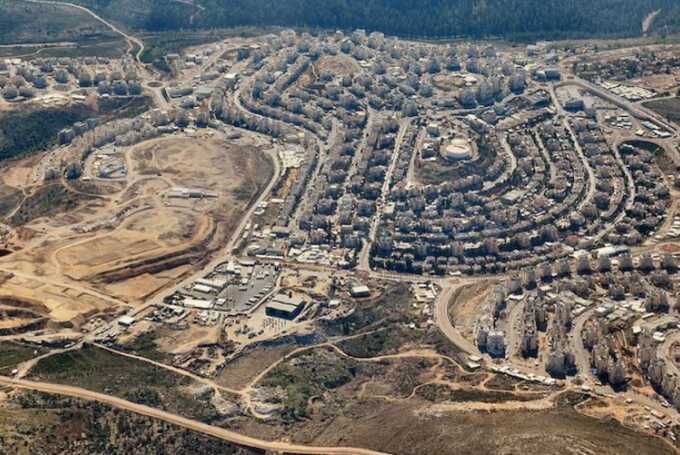
Six registered British charities are openly fundraising for activities and infrastructure in illegal Israeli settlements, a Declassified investigation has found.
Two of the charities explicitly state in their publicly available filings with the Charity Commission that they are supporting specific settlements in the occupied West Bank. Others feature illegal settlements in their names.
Altogether, they appear to have sent more than £1.7 million to recipients in settlements over the past three years, although the figure could be much higher.
The findings raise further questions about the quality of the commission’s oversight following recent reports, including several by Declassified, which have revealed the role UK charities play in facilitating the flow of money to settlement-supporting organisations.
“The government and regulators have been far too slow to confront the systematic issue of UK charitable funds supporting settlements,” said Shaima Dallali, legal researcher from the International Centre of Justice for Palestinians (ICJP).
This June, Labour MP Melanie Ward accused 32 British charities of funnelling £28m to illegal Israeli settlements. Then, the Charity Commission announced last month that it had launched a statutory inquiry into eight charities working in illegal Israeli settlements.
It is unclear whether the charities Declassified has identified are on Ward’s list or among those that the Commission is probing. Ward did not respond to requests for comment and the Commission declined to confirm which charities it is investigating.
The ICJP has already filed a formal complaint with the Commission and the Metropolitan Police about one of the charities flagged by Declassified and is reviewing the others.
Dallali said there are “legitimate questions” about how charities were able to operate “without apparent regulatory intervention.”
Many of the email addresses and phone numbers listed in official filings for the six charities either did not work or had been disconnected, raising further questions about how the Commission has been communicating with them to provide oversight.
None of the charities involved responded to requests for comment.
Breaking the law?
Israel captured the West Bank during the Six-Day War in 1967, and it has been under Israeli military occupation ever since.
Successive British governments have asserted that Israeli settlements in the occupied Palestinian territories are illegal under international law.
Last week, Foreign Secretary Ed Miliband announced that the British government’s position is that Israel’s occupation of the Palestinian territories is now also unlawful in its entirety.
That shift has brought the British government in line with the International Court of Justice’s advisory ruling in 2024 which said Israel’s occupation was illegal and said that states were legally obliged “not to render aid or assistance” to it.
Miliband’s speech did not touch on the issue of British charities supporting settlements though he later pledged to look at concerns raised by Declassified and others that British taxpayers are funding settlement expansion through Gift Aid to these organisations.
Under UK law, registered charities must prove that their funds are used for charitable purposes and for public benefit, which MPs and human rights groups have argued is certainly not the case with giving to settlements.
“The UK cannot simply acknowledge that settlements are illegal while turning a blind eye to financial flows originating within its own jurisdiction that may contribute to sustaining them,” said Dallali.
Supporting Modiin Illit
The majority of the charities identified by Declassified claim to support activities and organisations in Modiin Illit, the largest Israeli settlement in the West Bank by population and one of the poorest.
They include:
1. Gainsborough Trust. The trust explicitly says its charitable objective is to “collect and distribute funding for educational purposes in Israel, England and Wales, and also to benefit inhabitants of Modiin Illit, Israel and the surrounding areas.”
Between 2021 and 2025, the charity registered an income of more than £448,000. Annual reports show around £120,000 went to institutions labelled as “higher education”, with £70,000 being spent on institutions labelled as “basic education of Jewish principles”.
Another £2,595 was used to fund an unspecified “Religious Center for Prayer and Learning”. Additionally, the charity made grants to individuals. £226,000 went to “destitute families” and £29,000 to “poor brides”.
How much of this money went to Modiin Illit remains unclear. Annual reports do not name recipients and the charity does not have an online presence.
ICJP has filed a complaint with the police and commission about the charity.
2. British Friends of Ezrat Yisrael Kiryat Sefer. The charity’s name itself suggests links to Modiin Illit, which is commonly referred to as “Kiryat Sefer”.
Between 2021 and 2025, the charity’s income exceeded £21 million. In 2025 alone, it received £4.2 million, despite lacking an online presence.
During this same period, the charity donated £3.3m to Oneg Shabbos, an Israeli food distribution organisation claims on its website to support hundreds of settler families in the occupied West Bank.
In its filings, the charity also lists two organisations – Ezrat Izhak Kiryat Sefer and Tora Vachesed Kiryat Sefer – which it said it gave £349,000 last year, without further detail.
Declassified found charities on the Israeli government-approved NGO register Guidestar which appear to have the same names in Hebrew as the two listed organisations. Both are based in Modiin Illit and have a committee member in common.
A further £1.5m was said to have been given to another organisation, Tora Vachesed, between 2022 and 2024. Declassified was unable to find an organisation with this name and could not confirm whether it was a different name for Tora Vachesed Kiryat Sefer.
3. Friends of Kupat Hakahal Kirhat Sefer. While having no online presence, the charity raised over £1.65m between 2021 and 2025.
Annual reports show that between 2022 and 2025, it distributed £375,000 to Kupat Hakahal Kirhyat Sefer. In more recent reports, the charity refers to the same recipient as Kupat Hakahal Modi’in Ilit.
Declassified identified a charity on Guidestar with the same name whose official address is in Modiin Illit and whose registered activities include financial assistance for Israeli soldiers.
Friends of Kupat Hakahal Kirhat Sefer also said it donated £42,000 to Keren Hachesed Achuzat Brachfeld from 2022 to 2025 for “the relief of poverty” but without further detail.
Declassified found an Israeli organisation with the same name which is based in Modiin Illit where Achuzat Brachfeld is the name of a neighborhood. The organisation identified by Declassified shares a board member with Kupat Hakahal Kiryat Sefer.
From 2022 to 2025, the charity also donated £1m to Matan Beseser Kupat Hakahal Kirhyat Sefer, also for the stated “relief of poverty” but without further information.
Declassified again identified an Israeli organisation with the same name whose official address is in Modiin Illit. Its audit committee member, Yosef Rosner, is also listed as a board member of Kupat Hakahal Kiryat Sefer.
Matan Beseser’s website says it provides “hundreds of poor families” in Modiin Illit with monthly financial support for “basic provisions”, adding that it “initially launched operations in Kiryat Sefer” but “expanded the scope of its activities” to new neighborhoods as the settlement grew.
4. Matan Beseiser Kiryat-Sefer Beis Aron. The charity openly states in its Charity Commission filings that it operates “in practice in Kiryat Sefer, Israel”. Between 2020 and 2024, it had a registered income of £222,190, with expenditures worth £245,633.
None of the charity’s annual reports name third parties. Instead, records between 2020 and 2023 state that £35,000 went towards “education of the elderly”, £87,535 “to the needy”, and £65,392 were “stipends to support individual students.”
Declassified could not identify an Israeli organisation matching the UK charity’s full name. It thus remains unclear whether it supports Matan Beseser Kiryat Sefer or functions as a separate entity.
Supporting Ariel and Alon Shvut
Declassified also identified two further British charities which appear to be supporting activities in other illegal Israeli settlements in the West Bank.
5. The Friends of the Yeshivat Har Etzion Trust appears to raise funds for Yeshivat Har Etzion, a religious school in the settlement Alon Shvut, which is located in the Gush Etzion area, a cluster of West Bank settlements.
According to its annual reports, the charity handled donations over £500,000 between 2021 and 2025, though none of its grant recipients is named.
The charity, however, is listed as one of four international organisations which collect donations for the school, suggesting it functions as its British funding arm.
The school prides itself for being one of the largest “hesder” schools in Israel, where it says students “combine their army service with advanced Yeshiva [Religious Jewish school] study”.
An Instagram video from August shows male students dancing and singing during their recruitment.
The school also opens its doors to internationals. “More than 120 students from overseas come for a year or two after high school,” the website states, noting in particular that they come from North America, England, Belgium, South Africa, Brazil and Australia.
The school’s US funding arm Etzion Foundation moreover says international students “become part of the Alon Shvut community.”
6. British Friends of Ariel University is raising funds for the university located in the illegal settlement of Ariel in the occupied West Bank.
The university nevertheless claims that it is “situated in the heart of Israel”, priding itself for being the first school of its kind in “Samaria” and calling itself a “beacon of Zionism”.
Some 4,500 students from the university are currently serving in the Israeli war on Gaza, according to the university’s website.
In July 2025, the university posted pictures of an “unforgettable evening” hosted by Israel’s then ambassador to the UK, Tzipi Hotovely. Images show the event was held in a room with Israeli and British flags and a lectern marked with the words “Embassy of Israel.”
The university’s website states it is “profoundly grateful to the Ambassador for opening her home, (...) and to the British Friends of Ariel University for turning vision into reality”, suggesting that the charity was involved in the event’s organisation.
British Friends of Ariel University has a documented income of just £1,600 between 2021 and 2025, with expenditures worth £4,500.
None of the British or Israeli charities identified in this story responded to press inquiries.
Contact information to email or phone five of the British charities did not work so Declassified sent letters by post. Royal Mail said it could not deliver our letter to the Gainsborough Trust because it was no longer at the address listed publicly with the Charity Commission.
The commission told Declassified that charities are “responsible for keeping up-to-date their information on the register”.
‘Serious allegations’
Like with some of the charities identified by Declassified, ICJP says it has encountered cases where charities transferred “considerable sums of UK charitable money overseas” while there was “remarkably little publicly available information about the recipient organizations or its activities.”
“If it is extremely difficult for the public to establish who an organization is, what it does, and where it operates, what information did the trustees obtain before transferring substantial charitable funds to it?” asked Dallali.
The Charity Commission says its inquiry started with eight charities which were “amongst those which were identified in concerns recently raised with the commission”.
But it said it plans “to extend the number of charities under investigation over time to other charities that appear to expend charitable funds to support, directly or indirectly, activities and/or projects within illegal Israeli settlements in Palestine”.
“Serious allegations have been made about UK charities operating in illegal Israeli settlements in Palestine, so our first step is to establish the facts,” said Stephen Roake, assistant director of high risk compliance at the commission.
“Only then can we determine if regulatory action is required, based on our findings and the evidence we see.”
To ensure that charities operate in line with international law, ICJP said there should be “a shift from reactive regulation to preventative scrutiny”.
“Civil society organisations and journalists are often doing the work of identifying charities, tracing financial flows, locating overseas recipients and establishing connections with settlements – before regulatory scrutiny begins,” Dallali said.
Instead, there should be “specific regulatory guidance concerning charitable activity in occupied territories – including enhanced due-diligence requirements” and better information sharing between the Commission, HM Revenues and Customs, police and other relevant authorities.
Asked about the complaint the ICJP filed about the charities identified by Declassified, the Met Police said it had received 248 referrals related to Israel’s war on Gaza since October 2023, but that there were no UK-based investigations related to the conflict currently underway.

Deputy Editor