16 July 2026 , 19:20
860
0
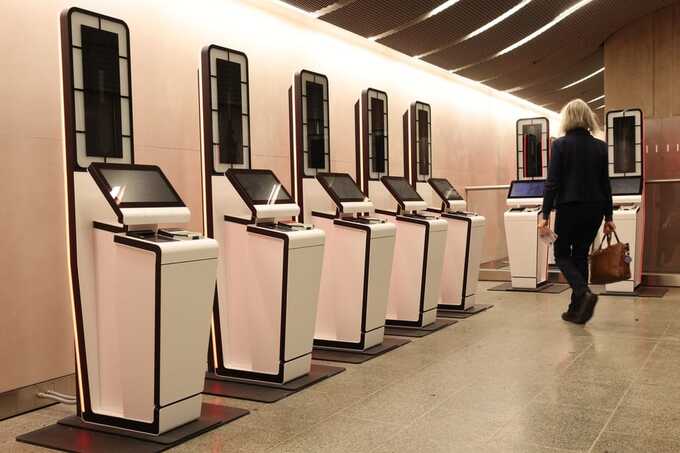
The European Union’s new digital border system was meant to bring travel into the 21st century. Unfortunately, it gets confused by identical twins.
As reported by Politico, it’s the latest in a litany of problems for the troubled new Entry-Exit System, which European Commission President Ursula von der Leyen this month admitted had unresolved “technical problems” and needed “quite a lot of work.”
The scheme, which is meant to replace physical passport stamps with an EU-wide database backed by biometric data, went live on April 10 following four years of project delays. Since then, its passengers have been facing delays as they wait in line to have their faces scanned and fingerprints taken.
But long queues at the border aren’t the only problem with EES.
One British woman was questioned by border police for a very odd reason when she tried to fly back to the U.K. from Cluj-Napoca in Romania in late May.
The Romanian authorities accused the woman — an employee of POLITICO — of being illegally in the Schengen zone, on the basis that her departure hadn’t been properly recorded after an earlier visit to Amsterdam in April 2026.
Just one problem: She hadn’t been to Amsterdam in April 2026. But her identical twin sister had.
The woman, who was granted anonymity to avoid any future border complications and respect the privacy of her twin, was questioned for around 15 minutes by authorities.
When she told border officials about the existence of her twin, she was initially accused of lending out her passport — which she hadn’t. The woman’s twin was back in the U.K. at the time of the incident and has never set foot in Romania.
You look familiar
EES appeared to have confused the two women based on their identical facial scans, and possibly their identical last names, dates of birth, and nationalities — the only things they have in common as far as the system is concerned. They have different fingerprints, first names, and crucially their own passports.
The woman was ultimately allowed to fly, but remains concerned about future journeys.
POLITICO has tried to get to the bottom of what happened.

The drama may be down to two separate cases of bad implementation of EES by member states striking at once, Niovi Vavoula, chair in cyber policy at the University of Luxembourg, said.
Vavoula, who has advised lawmakers on the technicalities of EES, suggested the bizarre situation might have been caused by an improperly registered exit for the twin in Amsterdam — as well as a poorly conducted check by the Romanian authorities in Cluj.
The academic said it seemed that the Amsterdam exit check had been conducted when EES was “not fully ready or there was a malfunction” at the station — likely given the travel date on April 12 was so soon after the April 10 live date for the computer system. This was “not uncommon at all,” and it was corroborated by widespread reports, she said.
But the second twin’s questioning in Cluj also suggested that “the Romanian authorities have not done their job properly.”
Under EES regulations, authorities should not identify a traveler solely by their facial recognition image — but should also match it with their fingerprint or passport, which would all be different.
“From the account you sent me, it appears that the authorities are not well trained to distinguish between different processes and rely on facial images as the sole identification method,” Vavoula said.
“The fact they didn’t check the passport details in the EES, nor take into account that the EES is still fresh and there are various problems, shows what is called anchoring bias — when you rely on the first piece of evidence and disregard everything else.”
Neither the Dutch interior ministry nor the Romanian border force immediately responded to requests for comment.
A British disease
Approached about the issue, a European Commission spokesperson said the Commission “does not comment on individual cases.” But they added: “Member States are responsible for the data recorded in the EES, to which the Commission does not have access.”
They added: “When entering the Schengen area, travelers have to provide their biometric data (when crossing the EU external borders for the first time) as well as their passport data. This allows for the identification of each traveler separately.
“If a traveler is concerned about the processing of their data, they have the right to request rectification and completion of their personal data. In that case, they can reach out to the Member State’s competent authorities, either at the borders or by reaching out to the authorities.”
EES has had a particularly notable impact on the U.K. thanks to Brexit. The system only applies to visitors from outside the EU and the Schengen area — meaning the nationals of most nearby countries with mass visitor flows into member states are exempt. Not so for the U.K., where EES applies despite Brits making over 63 million overseas trips to the EU in 2024 alone.
Complicating matters further, the U.K. also has a system of “juxtaposed controls” at London St Pancras International railway station and at the Channel tunnel, where travelers go through EU passport controls on British soil — meaning the U.K. has had to accommodate any disruption from the new system itself.
British Transport Secretary Heidi Alexander on Tuesday met with EU Transport Commissioner Apostolos Tzitzikostas to discuss the system ahead of the summer rush and raise concerns about disruption. The U.K. has announced a total of £30.5 million of its own funding to improve capacity at ports and international railway stations in light of EES’s launch.

Technology & Business Editor