29 October 2025 , 08:31
996
0
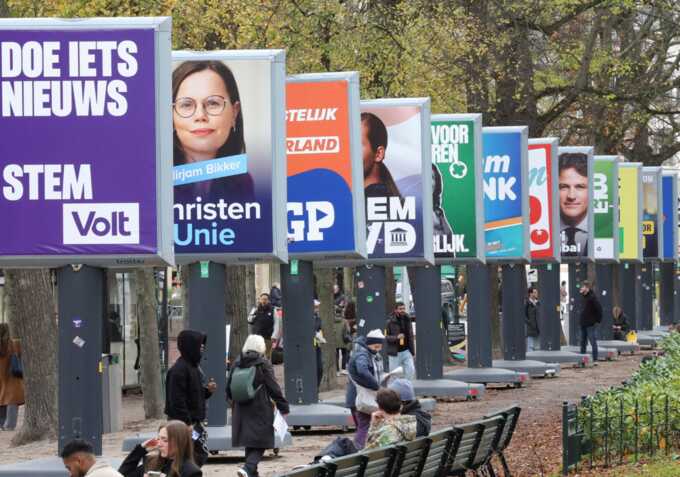
Voting is currently underway in parliamentary elections in the Netherlands, and polls suggest that Geert Wilders’s anti-immigration Freedom Party (PVV) could again be the frontrunner, although there’s little likelihood of it being part of the next government.
The PVV, which unexpectedly finished first in the previous election and formed a four-party all-conservative coalition that lasted just under a year before collapsing, is slightly ahead in the polls. It is predicted to secure between 24 and 28 MPs in the 150-seat parliament.
However, the far-right party’s popularity has declined since 2023, when it secured 37 seats, and all major parties have ruled out forming a government with Wilders, who ended the outgoing coalition in June over his controversial anti-refugee proposals.
As the campaign focused on migration, healthcare costs, and the Netherlands’ acute housing crisis nears its end, the centre-left Green Left/Labour Party alliance (GL/PvdA), led by former European commissioner Frans Timmermans, is trailing closely in second place, projected to win between 22 and 26 seats.
The liberal-progressive D66 is also expected to perform well, with projections suggesting it could nearly quintuple its number of seats to 21-25, and the centre-right Christian Democrats (CDA) are anticipated to more than double their representation to between 18 and 22 MPs.
The members of the outgoing cabinet, who were bogged down by infighting and achieved little - the PVV, liberal-conservative VVD, populist Farmer-Citizen Movement (BBB), and centrist New Social Contract (NSC) - are all expected to lose seats, some significantly.
In the proportional Dutch electoral system, 0.67% of the vote corresponds to one MP. Of the 27 parties contesting the election - including parties for the over-50s, for youth, for animals, for a universal basic income, and for sport - up to 16 could gain parliamentary seats.
This high level of fragmentation means no single party is likely to win a majority, and the Netherlands has been governed by coalitions - consisting, in the last three governments, of four parties - for over a century.
Wilders has stated that "democracy will be dead" in the Netherlands if the PVV ends up as the largest party yet is excluded from government. However, opponents and experts argue that first place does not assure a position in government, and any coalition with a majority is democratic.
While the outcome remains difficult to predict and coalition negotiations may take months, analysts suggest that after the most extreme government in its recent history, the next Dutch cabinet is likely to be a broad-based coalition led by the centre-left or moderate right.
Polling stations, including those in the Madurodam model village in The Hague and the Anne Frank House in Amsterdam, opened at 7:30 am (6:30 am GMT) and will close at 9 pm, with a typically reliable exit poll expected shortly thereafter.
Following the vote, an informateur explores potential coalitions that could secure a majority in parliament. Potential partners then negotiate an agreement for the next four years and must pass a confidence vote in parliament before assuming office.

Deputy Editor