03 September 2026 , 19:30
644
0
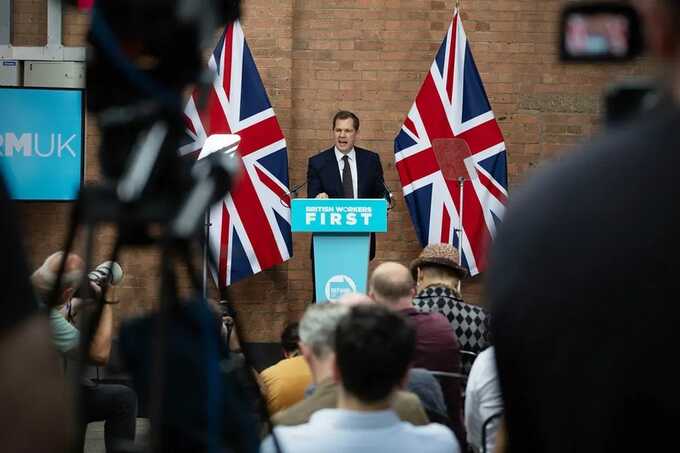
It will be all razzmatazz and corporate glad-handing as the Reform UK conference kicks off in Birmingham today. Wealthy backers have been offered a £3,000 conference package, which includes a champagne breakfast with Nigel Farage and a three-course meal in the Platinum hospitality area. Lucky them.
Companies, looking nervously at the polls, are sending bigwigs to kiss the Reform ring at the party’s inaugural “business day”. Vodafone is so keen to build bridges that it is hosting a fringe meeting at the conference even though Reform has threatened to send its directors to jail for “helping to facilitate the invasion of Britain” by donating Sim cards to the refugee charity Care4Calais. BT, Google, JCB and TikTok are among the other large firms either attending or sponsoring events.
The expense accounts will be heaving and Farage’s party is cashing in. A commercial conference pass costs £650, not including access to the business day. Diplomats are being charged £950 each to attend. And, in the spirit of a budget airline, Reform is even offering the “add-on” purchase of a ticket to “The Official After Party” on Friday night. “Dress to impress.”
It is not a coincidence that the conference is being held in the West Midlands. This is classic “red wall” territory and where many of Reform’s target seats lie. At May’s local elections, the party took control of Sandwell and Walsall councils and emerged as the largest group on Birmingham city council, although it fell short of an overall majority. Reform also made gains in Dudley and Wolverhampton.
But there is a problem. The champagne breakfasts and glitzy parties in Birmingham this week will be in stark contrast to the desperate poverty that exists in many of the streets a stone’s throw from the conference centre. The disconnect is symptomatic of the mismatch between Reform’s policies and the voters it is trying to attract.
Robert Jenrick, the party’s Treasury spokesman, has announced plans to save £50bn a year by cutting welfare, including disability benefits. He wants to replace personal independence payments (Pip), given to those with a long-term physical or mental health condition, with a “health security allowance” that would pay almost nothing to about two thirds of current claimants.
But the data suggests this will disproportionately affect Reform voters and those the party needs to win over. A study by Imperial College London’s School of Public Health found that the areas where Farage’s party did well at the last election have a higher prevalence of people living with chronic diseases than other parts of the country. The Reform constituencies had the highest average prevalence of 15 out of the 20 health conditions that were analysed including asthma, coronary heart disease, obesity, diabetes and depression. These voters are far more likely to rely on disability benefits including Pip.
To take an example from the West Midlands, in the parliamentary constituency of Walsall and Bloxwich, high up on Farage’s target list, there are 11,449 Pip claimants and a Labour majority of 4,914. In Birmingham Northfield, there are 10,600 people on the disability benefit and a Labour majority of 5,389. Reform cannot win – and Farage will not get to No 10 – if these voters decide it is against their own economic interest to support Reform. Analysis by the journalist Fraser Nelson has shown that almost all Reform’s target seats are heavily dependent on welfare. In Jenrick’s own constituency of Newark, there are 6,011 Pip claimants. His majority when he stood there as a Conservative at the last general election was 3,571.
This is not the only policy tension for a party that has always been torn between economic free marketeers and cultural protectionists. Reform voters are typically older and poorer than the wider population. Their average age is 56 and 27% say they are “struggling” on their current household income, yet Farage is promising to prioritise British-born workers under 35 when allocating social housing. He urges trade unions to affiliate themselves with his party while opposing new employment protections, and positions himself as a “man of the people” while promising to repeal the Renters’ Rights Act.
Reform wants to position itself as the “party for the workers” but it is run by a former commodities trader, property investor and banker, and funded by a crypto-billionaire. Farage has declared his intention to “bring cryptocurrency in from the cold” with a pledge to cut capital gains tax on crypto assets and create a “bitcoin digital reserve at the Bank of England”, which may appeal to his party’s donors but is irrelevant to the hard-pressed voters it needs to reach.
Tim Montgomerie, the right-wing commentator recently suspended by Reform, says Donald Trump won power in the US by convincing former Democratic voters that he would not take away their top-up benefits. “If Reform are going to achieve the same kind of result, they need to offer economic as well as cultural reassurance,” he argues. The NHS is another vulnerability, which is why Farage insists he has no plans to privatise it.
Tim Bale, professor of politics at Queen Mary, University of London, describes a “mismatch between the small-state instincts of Reform’s politicians and some of its voters” but he points out that Farage supporters are not “one big homogeneous mass”.
“They’re more likely to be older than the average – and they’re definitely more likely to be white than from an ethnic minority and to have left school without going on to university or even college,” he tells me. “But by no means all of them are ‘left-behind’, desperately struggling to make ends meet. Reform voters are more united by their values than by their demography.”

Head of Investigations