31 July 2026 , 12:53
774
0
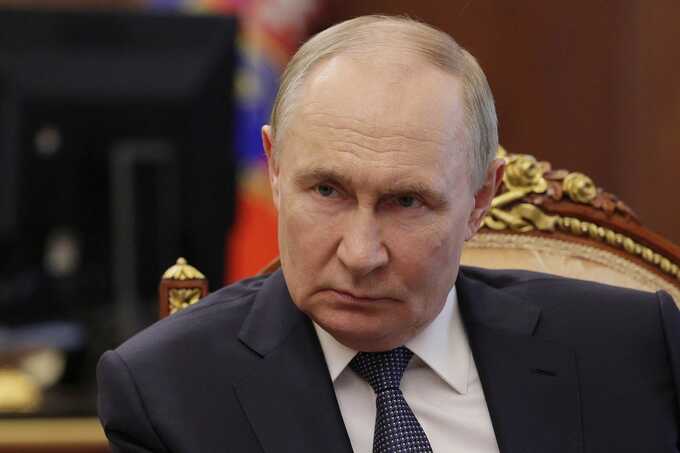
Vladimir Putin’s notorious ‘doomsday radio’ crackled into life with a string of codewords after a suspected Russian missile hit NATO territory in Poland.
The mysterious Cold War relic spewed out a sequence of cryptic messages hours after the incursion, which could further deepen tensions between the military alliance and Moscow.
Volodymyr Zelensky also claimed yesterday that early data suggests Putin deployed a North Korean missile in an attack that killed six people in a Ukrainian village.
The secret cyphers usually make little sense, with the latest series including the words BRIBETAKER, SEXFAT or SEXOFA Vladimir Putin’s notorious ‘doomsday radio’ crackled into life with a string of codewords after a suspected Russian missile hit NATO territory in Poland. T, MONARCHIST, MOTEL, MUZOPAYUS, STEPENNY and LEVRETKA.
One message included KLETKA, or ‘CELL’, while another used NEDOTEPA, roughly translating as ‘DIMWIT’.
A Russian missile and drone barrage across Ukraine killed at least 10 civilians, including children, overnight, officials said yesterday.


NATO scrambled its warplanes after one crossed the country’s western border into Poland leaving a 33ft-wide crater.
The blitz expanded Russia’s almost daily bombardment of Ukrainian cities, including the capital of Kyiv where tens of thousands spent the night sheltering in subway stations.
NATO Secretary-General Mark Rutte called it ‘yet another reckless act by Russia and a dangerous consequence of its war against Ukraine’.
Polish Prime Minister Donald Tusk said it was ‘a very serious incident’, but added: ‘There are absolutely no reasons to believe that Poland was the target.’
The attack came two days after Zelensky met with US President Donald Trump and representatives of American defence companies as part of a plea for swifter deliveries of air defence systems.


The radio – on air for half a century and nicknamed The Buzzer – is linked to Russia’s Strategic Forces.
The 4625 kHz frequency usually carries a repetitive buzzing sound, but when a message is sent, the buzzing stops and a ghostly operator reads out codewords in Russian.
The purpose of its messages remains unclear, but they tend to appear at times of high tension.
It is widely believed to form part of a Russian military command-and-control network, allowing instructions to be transmitted to designated units through one-time codes.
The precise operator and purpose have never been officially disclosed.
Bursts of activity may indicate military exercises, readiness tests or operational communications.

Editor-in-Chief