13 July 2026 , 16:40
672
0
The UK government will ban Iran’s Revolutionary Guard (IRGC) from Britain and proscribe it as a national security threat over “threats to life and intimidation on UK soil”.
The move comes after years of debate over the IRGC’s role and its close links to international terrorism as well as human rights abuses in Iran.
Sir Keir Starmer has authorised the decision to officially proscribe the IRGC after it was linked to recent terrorist incidents in the UK.
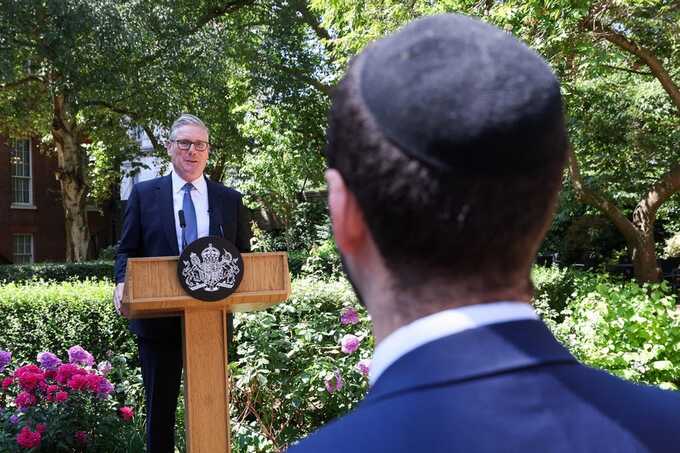
The decision was announced to applause by prime minister Sir Keir Starmer to members of the Jewish community in the garden of Downing Street.
The prime minister, whose No 10 guests included Chief Rabbi Sir Ephraim Mirvis, said: “A criminal group called the Islamic Movement of Companions of the Right have publicly claimed seven attacks at UK locations linked to Jewish and Israeli communities, and sitting behind them were members of Iran’s IRGC.
“Of course, the IRGC itself has a long history of using proxies and criminal networks to target people in the UK, including our Jewish communities.
“So today, under our new state threat powers, we’re designating this criminal group, the Islamic Movement of Companions of the Right, and we’re designating the IRGC.”
In a written statement, security minister Angela Eagle said the UK had "identified activity linked to the IRGC involving threats to life and intimidation on UK soil".
Another group named The Islamic Movement of Companions of the Right (IMCR), which has also been linked to Iran, will also be designated as a terrorist organisation by the government following recent attacks on the Jewish community in Britain.
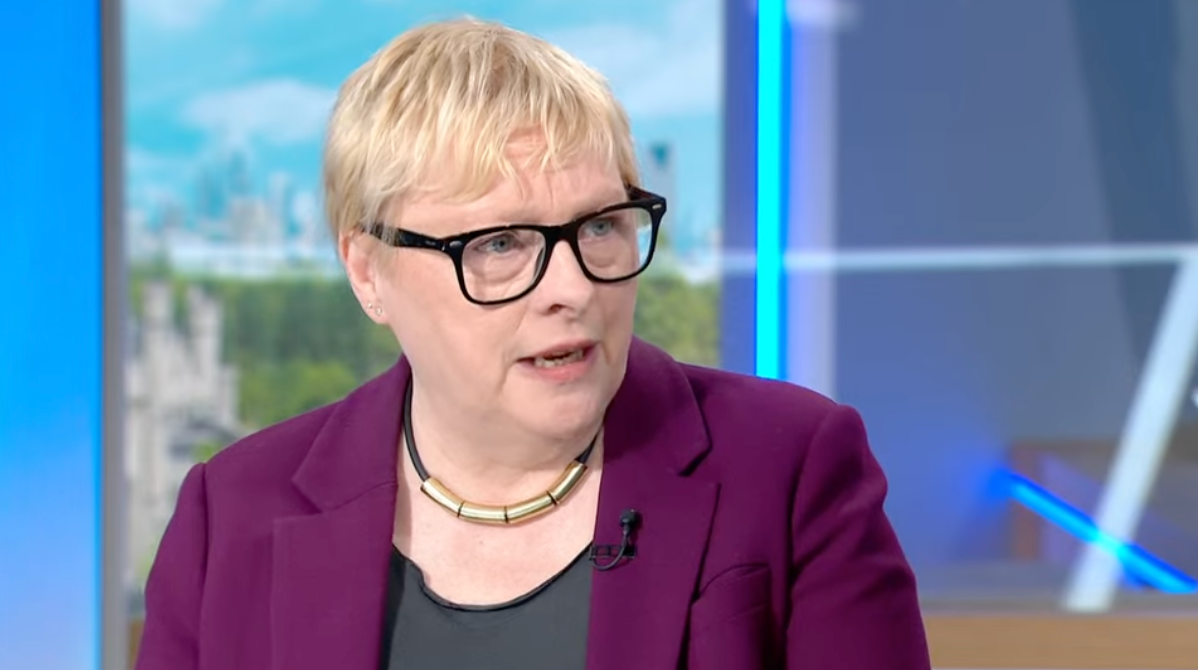
Ms Eagle also revealed that the volunteer corps of Russia’s GRU (foreign military intelligence agency) is also being designated under this legislation following "sabotage and other activity directed against the UK and Europe".
Proscribing these groups means it is now a criminal offence to invite support for, or express an opinion or belief that is supportive of, them.
It is also illegal to assist them in carrying out UK-related activities or engage in conduct likely to materially assist them and accept or retain a material benefit provided by or on behalf of them.
The announcement comes after ministers fast-tracked the National Security (State Threats) Act, as promised by the prime minister in April.
Jonathan Hall KC, the independent reviewer of state threats legislation, concluded in his May 2025 report that "there are solid reasons for creating a classification power, equivalent to proscription under the Terrorism Act 2000, which is additional to existing measures such as sanctions".
The aim is to "disrupt individuals who promote the interests and objectives of designated bodies".
The decision on the IRGC comes after years of lobbying of past Tory governments and the current Labour government.
The Foreign Office had resisted proscribing the IRGC because it was so intwined in the political and social fabric of Iran that it makes it almost impossible to deal with the government there.
Claims that the US had asked the UK not to proscribe the IRGC to keep channels open have since been denied by the US State Department.
The IRGC was linked to the attacks on Jews in Golders Green in London and Heaton Park in Manchester as well as other threats. It was also central to the massacre of 30,000 of its own civilians in the recent protests.
The IRGC has around 150,000 personnel working for it and an annual budget of around £6bn. It was founded in 1979 as part of the Islamic revolution and is integral to the Iranian fundamentalist regime.
Foreign secretary Yvette Cooper said she had summoned the Iranian ambassador to discuss the country’s “hostile activities” in the UK.
“We will not tolerate threats to our security or to the safety of those who live here,” she said in a written statement. “Iran’s actions are irresponsible and unacceptable.”
Shadow foreign secretary Dame Priti Patel said: “The decision to designate the IRGC as a foreign state threat is welcome, but long overdue. The laws to make this happen should have been passed months ago.”
Lord Walney, a former government independent adviser on political violence and disruption, welcomed the move, but said it did not amount to “full proscription”.
He said: “After years of campaigning, it is very welcome to see the IRGC finally banned. This group has exported terror and extremism onto British streets on behalf of the Iranian regime for too long.
“This designation falls short of full proscription under the Terrorism Act, so the incoming prime minister must monitor carefully whether these laws are adequate to keep our streets safe.”
Dr Alan Mendoza, executive director of the Henry Jackson Society thinktank, said: “The IRGC has both plotted terrorism on our shores and successfully actioned it. It is an integral part of the Iranian web of overseas nefarious activity that has brought violence not simply to the Middle East but far further afield.
“Years of campaigning have been proven correct by today’s move, but the shame remains that it took this long to achieve a result that successive governments risibly claimed was impossible to achieve even as other allies were able to do so. Welcome as today’s progress undoubtedly is, we simply must do better in future when it comes to finding appropriate ways to safeguard our national security.”

Head of Investigations