31 August 2026 , 16:07
462
0
Britain’s world-class scientific discoveries are being exploited overseas, Science Minister Chris McDonald has cautioned.
Researchers are compelled to seek funding abroad to bring their work to market, the Labour MP warned.
Mr McDonald said he had witnessed "a lot of this, where we would start and incubate the science in the UK, it would grow to a certain point, but then ultimately that last bit of investment will come from elsewhere, so the company will go overseas or the technology would."
Speaking to The Times ahead of a G20 innovation summit in North Carolina focused on AI regulation, he warned the result is that intellectual property developed in British institutions ultimately benefits the US and other countries.
Firms in the critical minerals sector, for instance, had been built on UK research but "they’ve had to go to the US or elsewhere to access the financing to upscale, and so the intellectual property then leaves the UK".
Mr McDonald, a chemical engineer who spent two decades in the steel industry before taking on the science brief in July, pointed to a shortage of "industrial laboratory space" as a key barrier holding back innovation on home soil.
University spin-out companies, established to commercialise academic breakthroughs, were finding it difficult to "scale in the UK", he said.
Greater private investment was essential to shift the mindset of start-ups that "automatically assume they have to go to the US or to the EU" when seeking capital, he argued.

The British Business Bank could play a role, Mr McDonald suggested, alongside an expansion of "catapults" - innovation centres designed to bridge the divide between university research and commercial industry.
Meanwhile, the Science and Technology Facilities Council faces the task of identifying £162million in cuts.
It raised fears that fundamental "curiosity-driven" research in areas such as astrophysics and quantum mechanics could be sacrificed in favour of applied science with clearer commercial potential.
Scientists at CERN reacted with dismay after Britain pulled roughly £4.5million in annual funding for an upgrade to a major experiment at the Large Hadron Collider.
They told The Times it had caused "damage to scientific leadership, skills and Britain’s reputation".
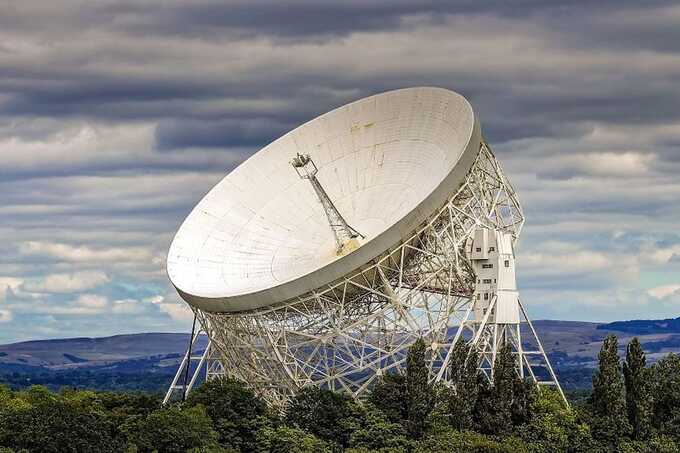
Jodrell Bank Observatory has similarly had its funding withdrawn and now faces the threat of permanent closure.
Mr McDonald said he did "not recognise that tension" between fundamental and applied research, maintaining that the government had delivered a "record funding settlement" for science.
Responsibility for allocating those resources, he stressed, lay with UK Research and Innovation and the STFC rather than ministers.
While acknowledging researchers’ concerns, he expressed confidence that British academics shared his vision.
He said: "I think academics working in the UK will probably share the ambition I have, that the research they produce could actually go to the benefit of the UK economy."
Looking ahead, Mr McDonald argued that quantum computing and artificial intelligence could spawn enterprises "as big as Facebook, Amazon and Google" rooted in British science.
His goal, he said, was ensuring "one or two or three of those are actually still based in the UK, rather than all that British science going overseas."

Head of Investigations